
Can you modify a fire rated door? Sometimes, but only when the proposed work is permitted by the door assembly’s listing, follows the manufacturer’s instructions, and is accepted by the authority responsible for the building. Cutting, drilling, adding hardware, changing glazing, or altering the frame without that confirmation can compromise the opening and create an inspection problem.
Request a professional fire door inspection before drilling, cutting, or changing hardware.
A fire door is not simply a heavy door. It is one part of a tested opening protective assembly that includes the leaf, frame, hardware, glazing, seals, and installation details. A seemingly minor field change can affect how those components perform together. Property managers should pause before authorizing work and have the existing opening evaluated first.
Industry standards provide another useful reference point. The NFPA 80 standard development page explains the scope of the standard for fire doors and other opening protectives. Project teams should still confirm the rules that apply to their specific building and opening.
This guide explains the practical decision process for New York City owners, facility teams, and contractors. It is general guidance, not project-specific approval. The correct path depends on the labels, listing, manufacturer documentation, condition of the opening, and direction from the applicable authority.
Can you modify a fire rated door safely?
A fire-rated door may be modified safely only when there is a documented basis for the work. That basis may come from published listing information, the door or hardware manufacturer’s instructions, or a formal field evaluation by an accredited provider. The contractor’s ability to make a clean cut is not proof that the change is permitted.
Before work begins, identify the labels on the door and frame. Record the manufacturer, rating, and any legible model or listing information. Then define the proposed change precisely. Replacing an existing component with a compatible item at an existing preparation is different from creating a new opening, drilling a new pattern, or removing material from the edge of the door.

Approval must come before alteration
The safest sequence is evaluation first and physical work second. If the listing and manufacturer documentation clearly cover the proposed modification, the work can be planned to match those requirements. If they do not, the owner may need written direction, a field evaluation, or a replacement assembly. Proceeding first and asking for approval later can turn a manageable repair into a more expensive replacement.
The whole opening matters
The door, frame, closer, latch, hinges, glazing, seals, and fasteners work as a system. Changing one component may affect clearances, closing force, latching, or the integrity of the opening. A qualified inspection should therefore review the complete opening rather than only the visibly altered area.
Why fire door listings control field modifications
A listing connects a labeled product to a tested or evaluated construction. It defines the configurations and components for which the rating applies. When a field modification falls outside those conditions, the existing label alone does not automatically confirm that the altered assembly remains acceptable.
This is why improvised changes are risky even when the door still opens and closes. Everyday operation does not reproduce fire exposure. The opening must also retain its protective function, remain self-closing and latching where required, and avoid damage that can interfere with performance.
Door and frame labels provide the starting point
Labels help an inspector identify what is installed. They should not be painted over, removed, or treated as permission for any desired alteration. Photograph each label before work. If a label is missing or illegible, additional investigation may be needed before anyone can determine an appropriate repair path.
Manufacturer instructions define permitted preparation
Manufacturer instructions can establish which hardware preparations, fasteners, glazing kits, and installation methods are compatible with the opening. If instructions cannot be located or do not address the proposed change, do not assume the work is acceptable. Seek a qualified evaluation instead.
Common fire door modifications and their risks
The level of risk depends on what material is removed, which component is changed, and whether the proposed configuration is covered by documentation. The table below is a planning aid, not an approval. Have the actual opening inspected before selecting a path.
| Proposed change | Why it can be risky | Likely approval path |
|---|---|---|
| Drilling holes | May penetrate protected construction or create an unlisted hardware preparation | Confirm listing and manufacturer instructions before drilling |
| Cutting a vision lite | Removes door material and requires compatible glazing, beads, and kit | Use an approved configuration or obtain a formal evaluation |
| Adding or changing hardware | Can affect latching, closing, reinforcement, and fastener locations | Verify compatibility and preparation requirements |
| Modifying the frame | Can affect anchors, clearances, reinforcement, or opening integrity | Evaluate the complete assembly before work |
| Repairing minor damage | An improper patch can conceal or worsen damage | Use a documented, compliant repair method |
Drilling and hardware changes
A new closer, lock, access-control component, kick plate, or surface-mounted device may require holes or fasteners that were not part of the original preparation. Even a small hole can matter if it is in the wrong location or conflicts with internal reinforcement. Before adding hardware, verify that the device is suitable for the rated opening and that the fastening method is permitted.
Vision lites and glazing
Cutting a new vision opening is a substantial alteration because it removes a section of the door and introduces a glazing system. The glass, frame, glazing beads, fasteners, and opening dimensions must work together. Do not rely on ordinary glass or an improvised trim kit. A qualified party should confirm an approved configuration before any cutting begins.
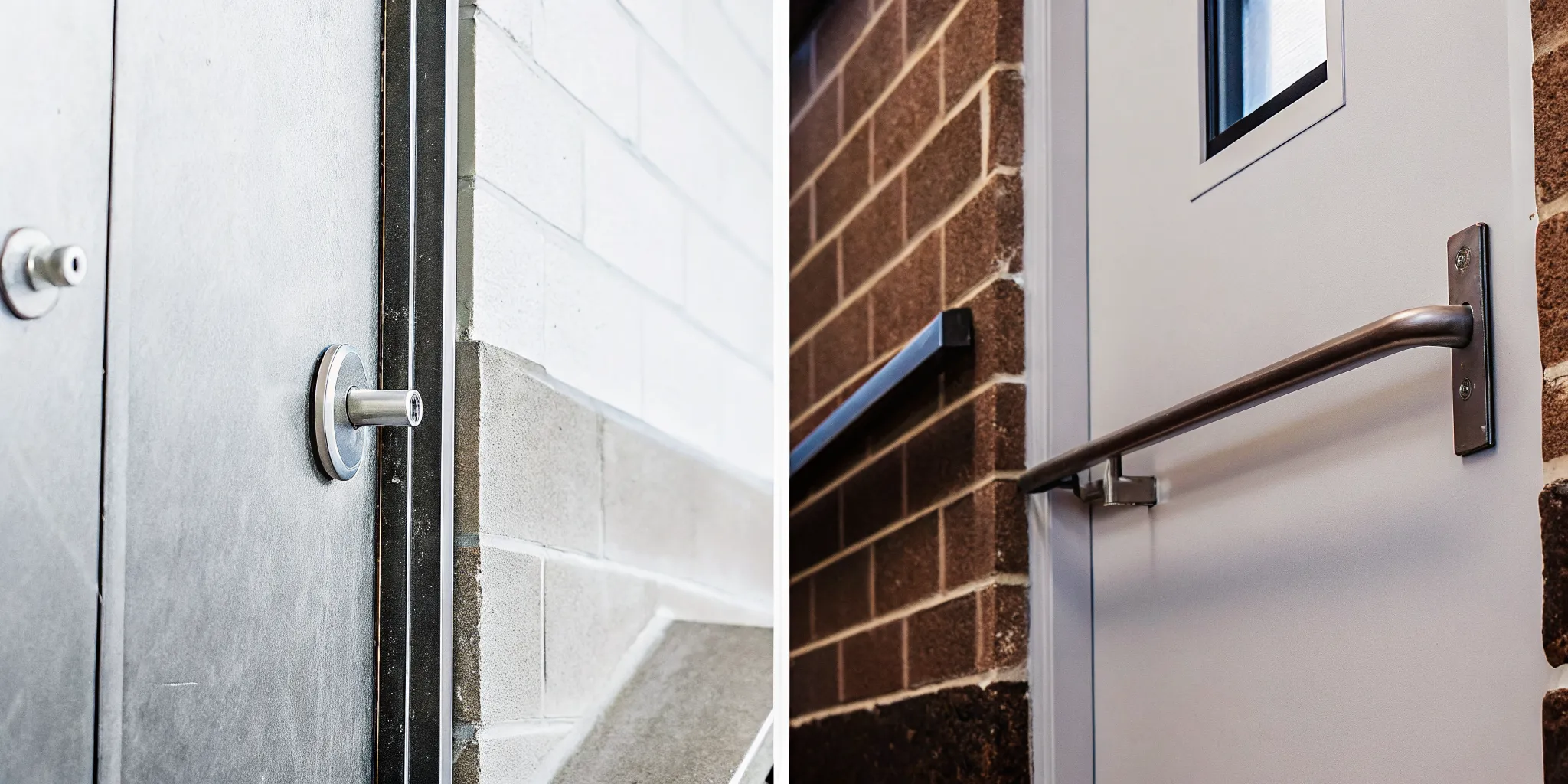
Frame alterations
Frames are frequently overlooked during door work. Welding, drilling, moving strike preparations, cutting anchors, or changing the opening size can affect alignment and performance. If the frame is damaged or incompatible with the desired hardware, an evaluation may show that professional fire door repair in NYC is possible. In other cases, replacement is the more reliable choice.
What should you do before altering a fire door?
A documented process protects the building owner and gives contractors clear direction. Use these steps before authorizing any field modification:
- Stop and define the scope. Describe exactly what will be drilled, cut, removed, replaced, or added. Include dimensions, hardware model numbers, and the reason for the change.
- Inspect the entire opening. Photograph labels, hardware, glazing, frame conditions, clearances, and visible damage. Confirm whether the door closes and latches without assistance.
- Collect documentation. Locate manufacturer instructions, product data, listing information, prior inspection records, and drawings for the opening.
- Confirm the permitted path. Ask a qualified fire door professional whether documentation covers the work or whether manufacturer input, authority review, or field evaluation is needed.
- Use qualified personnel. Ensure the installer follows the approved method and does not expand the scope in the field without review.
- Inspect and document completed work. Verify operation, condition, and compliance after the modification. Retain photographs and supporting records.
Do not let schedule pressure determine the method
A tenant move, security upgrade, or hardware failure can make a quick field fix attractive. However, doing unapproved work may create delays during the next inspection and increase total cost. An early assessment helps the owner compare repair, evaluation, and replacement before materials are ordered.
Document the decision even when the proposed change is rejected. A short written record of the requested scope, why it was not approved, and the selected alternative can prevent a future contractor from repeating the same unsafe modification. That history is useful in large properties where facility personnel and vendors change over time.
Repair, field evaluation, or replacement?
There is no universal answer for every altered or damaged fire door. The right response depends on whether the opening can be returned to a documented compliant condition. Owners should compare three possible paths.
When repair may be appropriate
Repair may be suitable when the issue is limited, the underlying assembly remains serviceable, and there is a documented repair method. Examples may include correcting compatible hardware, resolving alignment problems, or addressing limited damage using an accepted method. A fire door repair assessment can identify whether the problem is truly repairable before work begins.
When field evaluation may be needed
A field evaluation may be considered when the desired or completed condition is not clearly covered by available documentation. But the assembly may still be capable of meeting applicable requirements. The evaluator reviews the opening and determines the required next steps. Owners should not assume that every alteration can be approved after the fact.
When replacement is the safer choice
Replacement may be the most dependable option when the door or frame has extensive damage. Labels and documentation cannot support a compliant path, the proposed modification is too substantial, or the existing assembly cannot accept the required hardware. Planned fire door replacement in NYC can remove uncertainty and provide a coordinated opening suited to the building’s needs.
How to verify an approved modification
Completion of the physical work is not the end of the process. The opening should be inspected after the approved modification to confirm that it operates correctly and that no additional damage or unintended change occurred.
Check operation and visible condition
Confirm that the door swings freely, closes completely, and latches without manual assistance. Review the frame, hinges, closer, latch, seals, glazing, and altered area. Look for loose fasteners, open holes, binding, excessive clearances, field damage, or components that interfere with closing.
Keep a clear project record
Retain before-and-after photographs, the approved scope, product data, instructions, invoices, evaluation documents, and inspection results. These records help future facility teams understand what changed and why. They also make later maintenance decisions more efficient.
Continue regular inspections
An approved modification does not eliminate the need for ongoing inspection and maintenance. Doors experience wear, impacts, hardware changes, and building movement over time. Routine review can identify developing issues before they become larger compliance or operational problems.
When should an NYC property manager call a professional?
Call a qualified fire door professional before work if the proposed project involves cutting the door or frame. Adding a vision lite, changing the opening size, installing unfamiliar hardware, or drilling beyond an existing documented preparation. An inspection is also appropriate when the label is missing, the door does not close and latch, the frame is damaged, or prior alterations are visible.
Prepare for the visit by gathering any available drawings, inspection reports, hardware schedules, and photographs. Explain the operational goal, such as improving access control or replacing damaged hardware, rather than prescribing an unverified field fix. This gives the inspector room to identify a compliant and practical solution.
Universal Fireproof Door serves New York City properties with fire-rated and custom steel door work. A site-specific inspection can help distinguish a repairable issue from an alteration that needs evaluation or full replacement.
Frequently asked questions
Can you drill into a fire-rated door?
Only drill when the proposed holes and hardware preparation are supported by the applicable listing and manufacturer instructions or another approved path. Do not assume a small hole is harmless. Have the opening reviewed before drilling.
Can a vision panel be added to an existing fire door?
It may be possible in an approved configuration, but cutting a vision opening is a major modification. The opening dimensions, glazing, kit, and installation method must be verified before work begins.
Can you add hardware to a fire-rated door?
Compatible hardware may be added when its use and preparation are permitted. Confirm the hardware model, reinforcement, fasteners, locations, and effect on closing and latching before installation.
Does an altered fire door always need replacement?
No. Some conditions may be repairable or suitable for evaluation. Replacement is often safer when damage is extensive, documentation does not support the altered condition, or the assembly cannot accept the required change.
Request a fire door inspection before making changes
Do not let an unverified modification create a larger problem. Universal Fireproof Door can inspect the opening, review the proposed work, and help determine whether repair, evaluation, or replacement is the appropriate next step.