
Door replacement cost factors are the key variables that determine your total expense when upgrading doors in residential or commercial properties. A standard entry door project runs from $1,200 to $6,000 or more installed, depending on material, installation scope, and customization. Property owners and managers who understand these drivers before requesting quotes avoid budget surprises and make faster, smarter purchasing decisions. The three biggest cost levers are material choice, installation type, and the condition of your existing frame.
1. How door materials drive replacement costs
Material selection is the single largest door replacement cost factor you control before a contractor sets foot on your property. Steel, fiberglass, and solid wood each occupy distinct price bands and deliver different long-term value.
- Steel doors cost $300–$1,450 installed at the entry level. Steel is the most secure and affordable option, but it dents and can rust without proper coating.
- Fiberglass doors run $800–$3,600 installed. Fiberglass offers the best balance of durability and appearance for most property owners, with mid-tier units landing in the $1,100–$2,300 range.
- Solid wood doors start around $1,000 and climb past $5,300 installed. Wood is premium in appearance but requires regular maintenance to prevent warping and rot.
Finishes and coatings add to base material pricing. A factory-applied paint finish costs less than a custom stain or a specialized rust-inhibiting coating for exterior steel. For commercial properties, top door materials like steel and hollow metal also carry fire-rating certifications that affect unit price.
Comparing doors only on upfront quotes misses the impact of manufacturing quality, internal fill, and metal thickness. A thicker steel gauge or a polyurethane foam core costs more at purchase but reduces energy loss and extends service life. That gap in quality shows up in performance within the first few years.
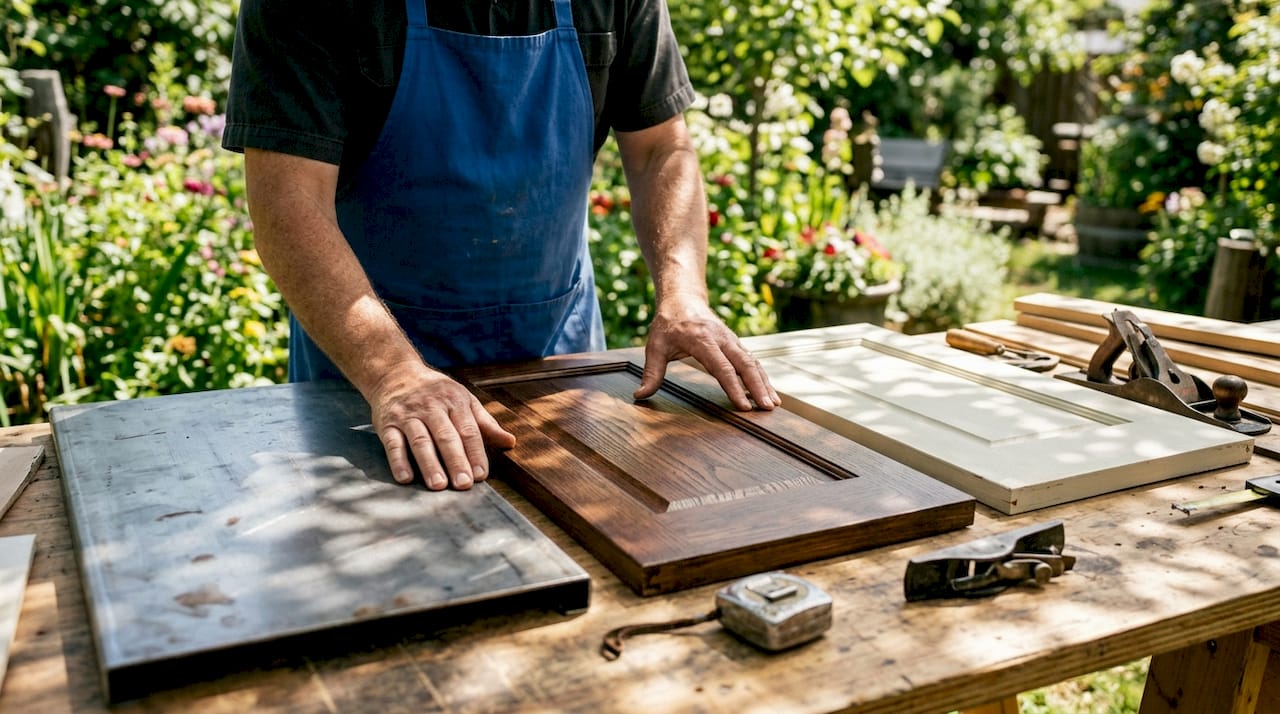
Pro Tip: Request the gauge specification for any steel door you quote. A 16-gauge steel door is noticeably stronger and more dent-resistant than a 24-gauge unit, and the price difference is often smaller than you expect.
2. How installation scope shapes your total bill
Installation type is the second major cost driver, and it is one that property owners frequently underestimate. The cost of door installation breaks into two main approaches: slab-only replacement and full pre-hung system replacement.
A slab replacement swaps only the door panel, keeping the existing frame in place. Labor for a slab swap runs $325–$1,150 depending on fitting complexity and framing condition. This approach costs less upfront but depends entirely on the existing frame being square, sound, and properly sealed.
A pre-hung replacement includes the door, frame, and all hardware as a single unit. Labor for pre-hung installation runs $188–$550, though the unit itself costs more. Pre-hung systems add roughly $300–$800 over slab-only swaps on average. The payoff is better sealing, longer operational life, and full warranty coverage.
Here is how installation scope affects your total budget:
- Slab-only swap. Lowest upfront cost. Best when the existing frame is plumb, dry, and undamaged.
- Pre-hung replacement. Higher upfront cost. Best for older frames, energy upgrades, or any project where the current frame shows wear.
- Full-frame modification. Required when resizing the rough opening or adding sidelights and transoms. Full-frame modifications add $500–$1,500 compared to basic swaps.
- Structural framing work. Triggered when the rough opening is out of plumb or undersized. This adds labor time and material cost before the door unit even arrives.
Labor typically accounts for 30% to 35% of total door replacement cost. Regional labor markets move that number significantly, which is covered in the hidden costs section below.
Pro Tip: Always ask your installer to assess the rough opening condition before finalizing a quote. A frame that looks fine from the outside can hide rot or misalignment that doubles your labor cost.
3. Customization features that add to door replacement expenses
Upgrades beyond the base door unit add cost quickly, and many property owners budget for the door without accounting for the extras. These additions are legitimate investments in appearance, security, and function, but they need a line item in your estimate.
- Decorative glass. Glass inserts and sidelite glazing add $300–$1,800 depending on style and size. On French or patio doors, glass selection can exceed the cost of the door panels themselves, making it one of the most overlooked budget items.
- Sidelights. A single sidelight adds $300–$600 to the project. Double sidelights run $500–$1,000. Full sidelight units with frames cost $1,200–$2,800 each when purchased as complete assemblies.
- Transom windows. A transom above the door adds $200–$500 and requires framing adjustments to the rough opening.
- Premium hardware. Multi-point locking systems and heavy-duty commercial hardware run $400–$1,200. Smart locks add $250–$650 on top of standard hardware costs.
- Custom sizing. Non-standard door dimensions require custom fabrication. Custom sizing eliminates the cost savings of stock units and extends lead times.
- Special finishes. Custom paint colors, wood stains, and powder-coat finishes each carry a premium over standard factory options.
The cumulative effect of these upgrades is significant. A base steel door at $800 installed can reach $2,500 or more once you add a sidelight, decorative glass, and a smart lock. Budget for the full configuration, not just the door panel.
4. Hidden and underestimated factors that affect final cost
Several cost drivers sit outside the door unit itself, and they are the ones most likely to cause a budget overrun. Understanding them before you sign a contract puts you in control.
The condition of your existing frame and threshold is the most common surprise. Rotted or out-of-plumb frames add $200–$1,200 unexpectedly. Replacing a frame and threshold entirely costs $800–$2,000 in labor alone. Inspecting the frame before finalizing your quote is not optional.
| Hidden cost factor | Typical cost impact | Why it gets missed |
|---|---|---|
| Rotted or damaged frame | $200–$1,200 added | Not visible until old door is removed |
| Out-of-plumb rough opening | $300–$800 in framing labor | Requires measurement before quoting |
| Permit fees | $50–$300 depending on jurisdiction | Often excluded from contractor quotes |
| Disposal of old door and frame | $50–$150 | Rarely itemized upfront |
| Regional labor premium | +15% to +35% in high-cost markets | Varies by metro area |
Regional labor rates create a wide price spread for identical door units. West Coast projects run 20%–35% above national averages. Northeast projects run 15%–25% above average. Southeast and Midwest projects typically run 5%–15% below average. Local overhead and day rates can cause a 2–3x variation in labor pricing between metro and smaller-town locations for the same door.
Poor installation also carries a hidden long-term cost. A door installed out of plumb or without proper weatherstripping fails faster, voids manufacturer warranties, and creates security vulnerabilities. The cheapest quote often becomes the most expensive outcome.
5. How to estimate and budget your door replacement project
Accurate budgeting starts with measurement and condition assessment before you contact a single contractor. Property owners who skip this step receive quotes that shift dramatically once work begins.
- Measure the rough opening. Record height, width, and depth. Note whether the opening is square by measuring both diagonals. A difference of more than 1/4 inch signals a framing issue.
- Inspect the frame and threshold. Press a screwdriver into the wood at the corners and base. Soft spots indicate rot that will add cost.
- Identify your configuration. Decide upfront whether you need sidelights, a transom, or a specific hardware package. Every addition needs its own line item.
- Get at least three quotes. Request itemized quotes that separate material, labor, permits, and disposal. Lump-sum quotes hide the variables that cause overruns.
- Apply a regional adjustment. If you are in a high-cost metro area, add 15%–35% to national average estimates when setting your initial budget.
- Reserve a contingency. Set aside 10%–15% of your total budget for frame repairs or unforeseen framing work. Most projects that run over budget do so because of frame condition.
For commercial properties, the factors affecting door installation prices also include fire-rating requirements, ADA compliance, and hardware specifications that residential projects rarely face. These add cost but are non-negotiable for code compliance.
Key takeaways
Material choice, installation scope, and frame condition are the three variables that determine whether your door replacement comes in on budget or runs over.
| Point | Details |
|---|---|
| Material sets the price floor | Steel starts lowest; fiberglass offers the best long-term value; wood costs the most to buy and maintain. |
| Pre-hung beats slab-only for most projects | Pre-hung systems cost $300–$800 more upfront but deliver better sealing and full warranty coverage. |
| Frame condition drives hidden costs | Rotted or out-of-plumb frames add $200–$1,200 before the new door unit is even installed. |
| Customization adds up fast | Sidelights, decorative glass, and smart locks can double the cost of a base door installation. |
| Regional labor moves the total significantly | West Coast and Northeast projects run 15%–35% above national averages for identical door units. |
What I’ve learned about door replacement costs after years in the field
The number I see property owners get wrong most often is not the door price. It is the frame. Every time a project blows past budget, the culprit is almost always a rotted sill, a frame that is two inches out of plumb, or a threshold that has been leaking for years without anyone noticing. The door quote looked fine. The frame inspection did not happen.
My honest advice: always choose a pre-hung replacement over a slab swap unless the existing frame is less than five years old and you have documentation that it was installed correctly. The $300–$800 premium for a pre-hung unit is the cheapest insurance you can buy on a door project. A slab dropped into a compromised frame will fail within two to three years, and the warranty will not cover it because the frame was not part of the original installation.
On the material side, fiberglass is underrated for commercial and residential applications alike. Property managers who default to wood for aesthetics end up spending on repainting and resealing every few years. Fiberglass holds its finish longer and handles humidity better. Steel is the right call when security and fire rating are the priority, which is most of the time in commercial settings.
The last thing I tell every property owner: get the itemized quote. A lump-sum number tells you nothing about where the money is going. When you see labor, materials, permits, and disposal broken out separately, you know exactly what you are paying for and where you have room to negotiate.
— Esteban
Ufiredoors steel doors for property owners who need it done right
Property owners and managers who need accurate pricing and fast turnaround get both from Ufiredoors. As a New York-based manufacturer and installer with over 20 years of experience, Ufiredoors builds steel stiffened doors locally using UL-approved materials and installs them in commercial, residential, and industrial properties across the region.
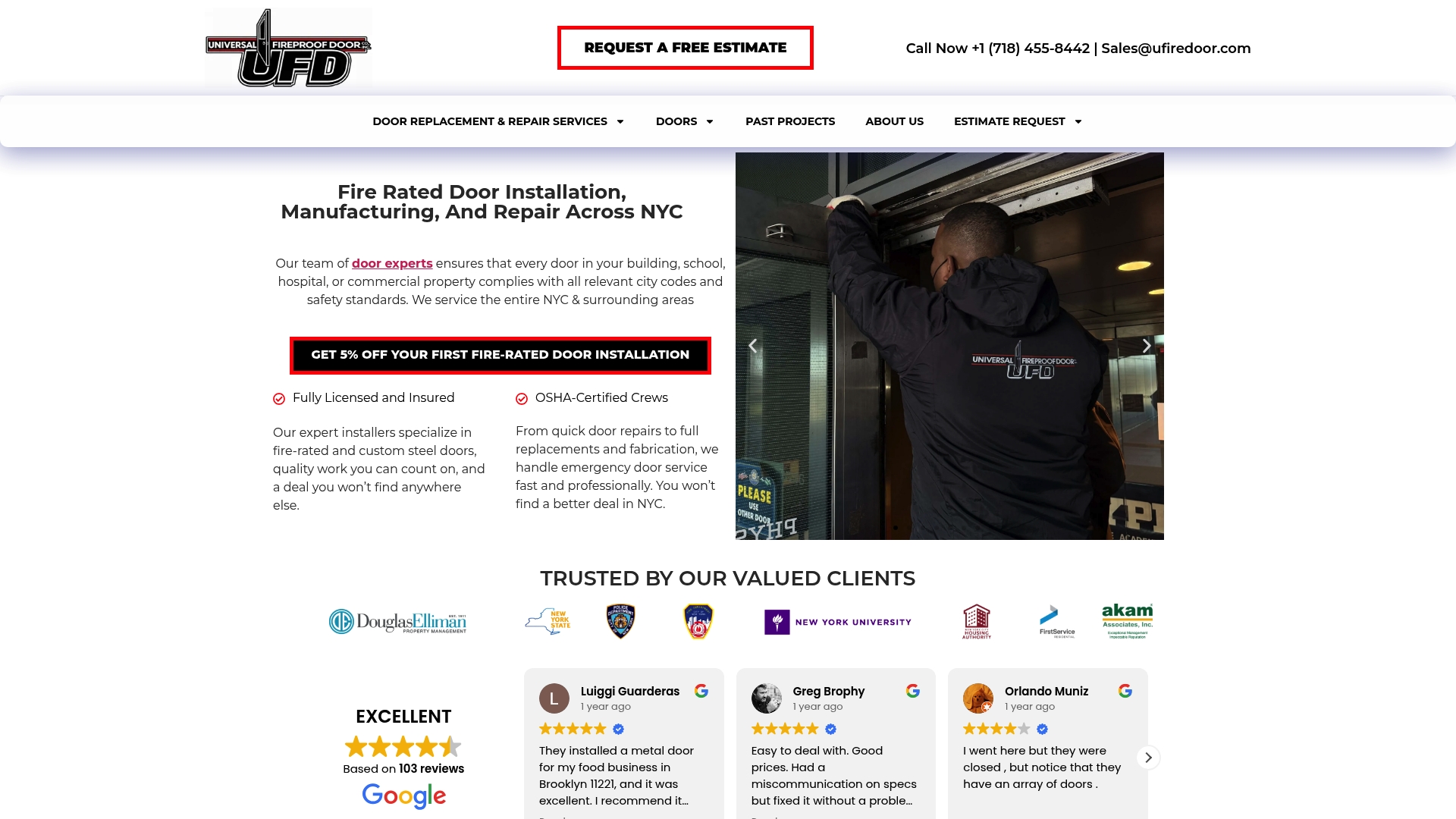
Every project starts with a free site estimate, so you know the full cost picture before committing. Ufiredoors handles fabrication, installation, and ongoing maintenance under one roof, which eliminates the coordination gaps that cause cost overruns. For properties that require fire-rated steel doors built and installed in 3–5 days, Ufiredoors delivers on that timeline without cutting corners on code compliance or material quality.
FAQ
What is the average door replacement price in 2026?
Entry door replacement projects typically run $1,200–$6,000 or more installed, depending on material and configuration. Steel units sit at the lower end; solid wood units at the higher end.
How much does labor add to door replacement expenses?
Labor accounts for 30%–35% of total door replacement cost on most projects. Regional labor markets and job complexity move that figure up or down significantly.
Is a pre-hung or slab replacement better for most properties?
Pre-hung replacement is the better choice for most properties because it includes a new frame, delivers better sealing, and carries full warranty coverage. Slab-only swaps work only when the existing frame is confirmed to be sound and square.
What customization features add the most to door costs?
Decorative glass adds $300–$1,800, sidelights add $300–$1,000, and smart locks add $250–$650. On French or patio doors, glass selection alone can exceed the cost of the door panels.
How do I estimate door replacement costs accurately?
Measure the rough opening, inspect the frame for rot or misalignment, identify your full configuration including hardware, and get at least three itemized quotes. Add a 10%–15% contingency for frame repairs before finalizing your budget.