
Fire Door Assembly Components: Complete Checklist
A fire door is easy to recognize, but its protective function depends on much more than the door leaf. Every part of the opening must work together so the door can close, latch, and resist the passage of fire and smoke as designed. A damaged frame, loose hinge, blocked closer, or unreadable label can turn an otherwise solid-looking door into a compliance concern.
This guide explains the main fire door assembly components and gives building teams a practical pre-inspection checklist. Use it to identify visible concerns, organize records, and know when to call a qualified professional. It is a preparation tool, not a replacement for a formal fire door inspection.
What are the main fire door assembly components?
A fire door assembly is the complete rated opening. It includes the door, frame, hardware, glazing, labels, and other listed materials needed for the opening to perform as a system. Looking at only one item can hide a problem elsewhere. For example, a good closer cannot overcome a bent frame that prevents the latch from engaging.
Door leaf and frame
The door leaf is the moving panel. The frame supports it and provides the surface against which it closes and latches. Both parts should be free of holes, major dents, separation, and damage that could interfere with operation. The frame must remain securely anchored and aligned.
Inspect the leaf and frame as one working system. If the leaf sags, rubs, or strikes the frame, the cause may be worn hinges, loose anchors, impact damage, or movement in the opening. Photograph the complete opening before focusing on individual defects so the service team can see how the parts relate.
Labels and identification
Labels help identify rated components and their intended use. Inspectors generally need to see them, so paint, damage, or later alterations should not make them unreadable. Building staff should never create a replacement label or guess at a rating. A qualified professional can evaluate missing or obscured identification. For more detail, read the guide to fire door relabeling.
Glazing and vision panels
Some assemblies include rated glazing and vision-light kits. Glass, glazing beads, fasteners, and the surrounding door construction all matter. Cracked glass, loose trim, or an unapproved replacement requires evaluation. Ordinary glass should not be substituted simply because it fits the opening.
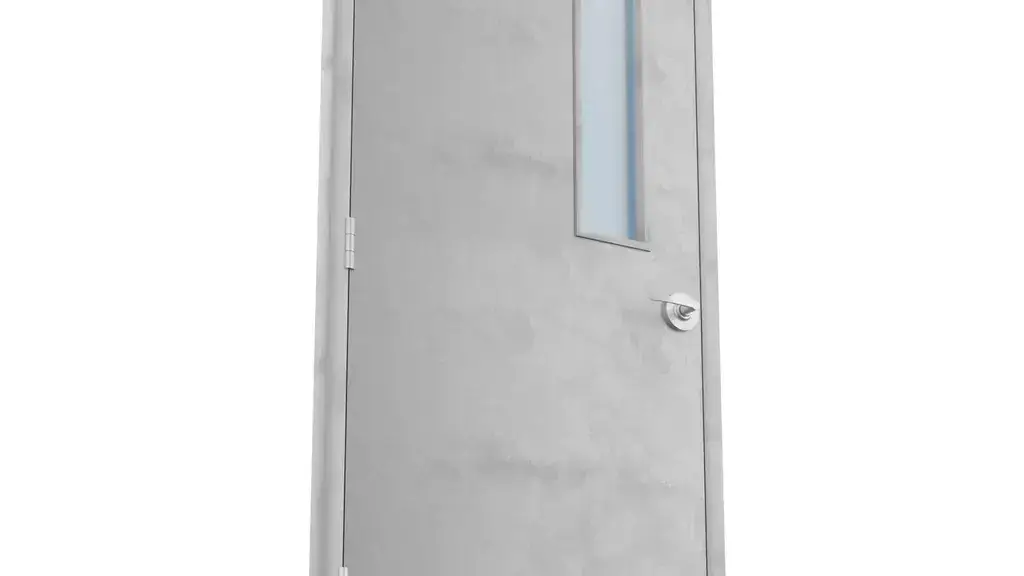
The glass and its surrounding kit must be treated as connected components. Check both faces for cracks, loose beads, missing fasteners, and changes to the opening. The related guide to fire-rated vision lite doors explains why the complete glazing system matters.
Door, frame, labels, and glazing
Begin a pre-inspection at the top of the opening and work down both sides. This simple routine makes it less likely that a team will miss a label, damaged edge, or loose part. View the door from both sides and operate it several times under normal conditions.
Check the door surface and edges
Look for holes, deep dents, corrosion, split seams, and evidence of field modifications. Pay close attention to the top and latch edges because these areas are often overlooked. Signs of drilling or hardware removal should be documented. Do not fill holes with general-purpose materials without confirming an approved repair method.
Review the frame and opening
Inspect the frame for movement, damage, corrosion, and separation from the wall. Make sure the door does not rub or bind as it swings. An opening that has shifted can prevent complete closing or positive latching even when the hardware appears intact.
- Look for movement where the frame meets the wall.
- Check the head and jambs for dents, corrosion, or separation.
- Watch whether the leaf follows a smooth path through the full swing.
- Record where rubbing, scraping, or binding occurs.
Keep labels visible
Find the labels on the door and frame, then photograph them for the building record. Check any labeled glazing or hardware as well. If a label is covered with paint or cannot be read, record the condition and ask a fire door professional about the appropriate next step.
How does fire door hardware protect the opening?
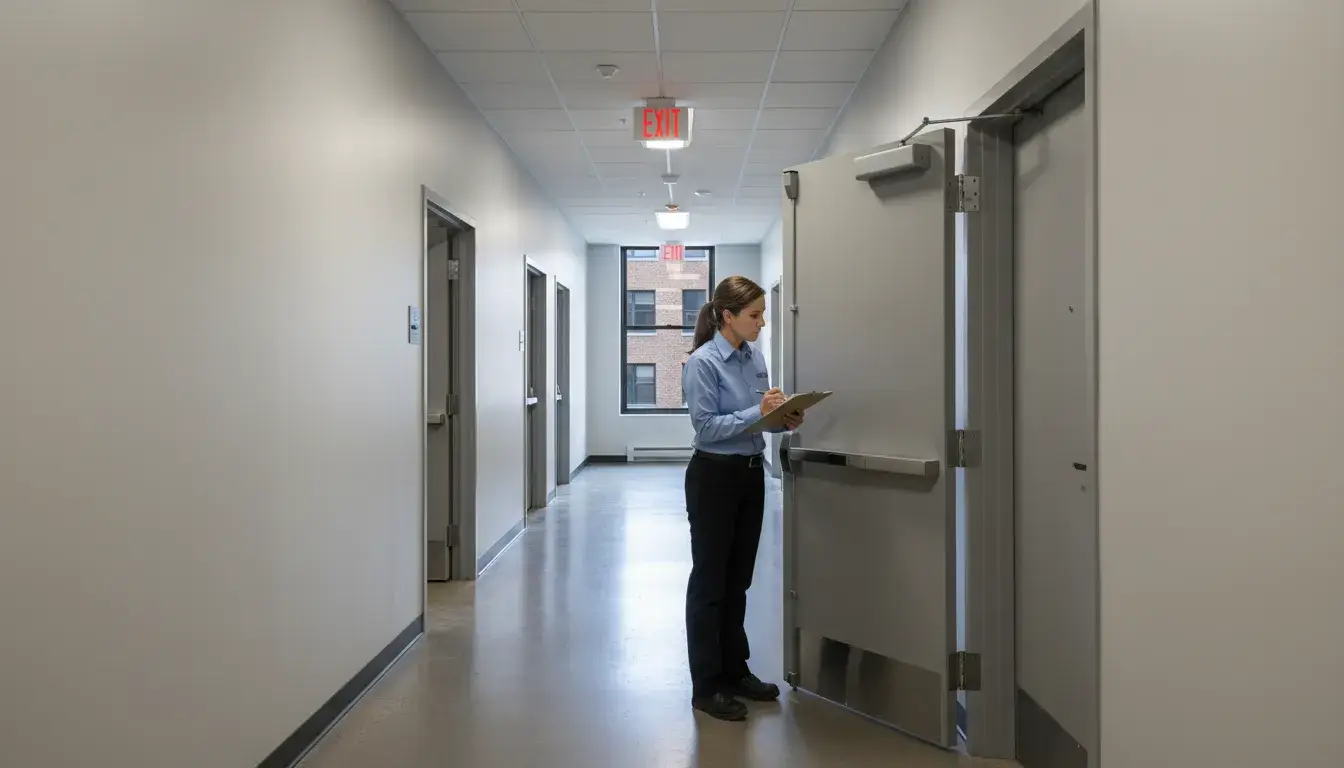
Hardware controls how the door moves, closes, and secures. The correct parts must be installed in the correct locations and remain firmly attached. Missing fasteners, improvised substitutions, or incompatible components can affect the entire opening.
Hinges and pivots
Hinges or pivots carry the door and allow it to swing. Look for loose or missing fasteners, wear, unusual movement, and binding. A sagging door may scrape the frame or floor and may not align with the latch. Building teams should report these conditions rather than forcing the door into place.
Open and close the door while watching each hinge. Movement between a hinge leaf and the door or frame can indicate loose attachment. Metal dust, noise, or a changing gap can point to wear. Record what you see instead of making an improvised adjustment.
Closer
The closer should return the door to the closed position after normal use. Test from a fully open position and from a smaller angle. Watch the complete cycle. The door should not stop short because of a weak closer, obstruction, damaged hinge, or frame problem.
A closer is only one part of the closing sequence. It must move the door through the swing and leave enough momentum for the latch to engage without slamming. The commercial door closer guide covers common closer types and warning signs.
Latch, lock, and exit hardware
When the door reaches the frame, the latch should engage without someone pulling or pushing it into place. Test the opening using its normal operating hardware. Panic or fire exit hardware should remain secure and operate as intended. Tape, wedges, and improvised hold-open devices should be removed.
Pairs, coordinators, and flush bolts
Pairs of doors may include coordinators, astragals, or flush bolts that control the closing sequence. Both leaves must complete their intended movement. If one leaf blocks the other or the pair does not latch correctly, document the sequence and arrange service.
Test a pair several times from normal open positions. Note which leaf should close first, whether the coordinator controls that order, and whether both latches engage. A repeatable video can help a technician understand an intermittent sequence issue before arriving onsite.
Seals, clearances, and field modifications
Perimeter materials and the spaces around a door may look minor, but they influence how the assembly performs. Requirements vary by the listed assembly and location, so building staff should avoid applying a single rule to every opening.
Inspect seals and gasketing
Look around the perimeter for missing, loose, torn, painted, or damaged seals. Some openings use smoke gasketing or intumescent materials. Do not replace these with generic weather stripping. Record the product condition and confirm the proper listed replacement before work begins.
Watch for clearance problems
Observe the gaps around the door and look for obvious inconsistency, rubbing, or excessive space. Flooring changes, frame movement, hinge wear, and paint buildup can alter clearances over time. A qualified inspector can measure and evaluate gaps against the requirements that apply to the opening. The guide to fire door gap requirements provides more context for building teams.
Avoid unapproved alterations
New locks, access-control devices, signage, hooks, and surface-mounted items can lead to drilling or other changes. Before altering a rated opening, confirm that the work and parts are appropriate. If electrified hardware is present, include it in the operational test and document any issue.
Pre-inspection checklist for building teams
A consistent process helps facilities teams find obvious defects before the formal visit. Assign each opening a location or asset number, then use the same sequence every time.
- Identify the opening. Record the floor, room, stair, corridor, or other clear location. Photograph the complete opening from both sides.
- Find the labels. Check the door, frame, glazing, and labeled hardware. Note labels that are missing, damaged, covered, or unreadable.
- Look for damage or alterations. Record holes, dents, corrosion, cracked glazing, loose trim, missing fasteners, and signs of drilling or removed hardware.
- Check the path and swing. Remove movable obstructions. Open the door normally and watch for binding, scraping, unusual movement, or interference.
- Test closing and latching. Release the door and confirm it closes and latches without assistance. For pairs, observe both leaves and their closing sequence.
- Review seals and perimeter conditions. Look for damaged or missing materials and obvious clearance concerns. Do not make an improvised repair.
- Document and escalate. Create a concise issue list with photos, then arrange evaluation of defects before inspection day.
Building teams that want a qualified review can learn more about fire door inspection in NYC. Early documentation helps the service team understand the number of openings and the concerns that require attention.
Request a qualified review of your fire door assembly components before inspection day.
Build a useful opening record
A simple record should identify the opening, its location, the date checked, and the person who performed the check. Add full-opening photos, close-ups of visible defects, and a short operational note. Avoid vague entries such as “door bad.” State whether it binds, fails to close, or closes without latching.
Use the same naming convention for every opening. Consistent records help building teams compare conditions over time and give service technicians a clearer starting point. Keep repair documentation with the inspection history so future staff can see what changed and when.
Common fire door defects and next actions
Most issues become easier to correct when they are identified early. Treat each concern as part of the complete assembly rather than as an isolated cosmetic defect.

| Component | Warning sign | Next action |
|---|---|---|
| Door and frame | Holes, dents, corrosion, or separation | Document and request professional evaluation |
| Labels | Painted, missing, or unreadable | Ask a qualified professional to verify the assembly |
| Hinges and closer | Loose parts, binding, or incomplete closing | Keep the opening clear and arrange service |
| Latch and strike | Door closes but does not latch | Request adjustment or repair |
| Glazing and seals | Cracks, loose trim, or missing material | Confirm listed replacement requirements |
Do not rely on quick fixes
Wedges, tape, improvised fasteners, and general-purpose sealants can hide a problem without correcting it. Do not prop the door open, drill new holes, or substitute hardware as a temporary solution. For conditions connected to a citation, review Universal Fireproof Door’s fire door violation removal service in NYC.
Maintain useful records
Record the opening location, component involved, visible condition, and operational result. Keep clear before-and-after photographs, completed repair information, and inspection reports with the building’s life-safety records. Good documentation helps future teams understand the assembly’s history.
Frequently asked questions about fire door assemblies
What is included in a fire door assembly?
A fire door assembly is the complete rated opening, not only the door leaf. It generally includes the door, frame, labels, glazing where present, hinges, closer, latching hardware, and any required seals or coordinating hardware.
Can building staff repair a fire door?
Building staff can document conditions and keep the opening clear, but repairs and field modifications should be evaluated by a qualified fire door professional. Unapproved drilling, hardware substitution, or glazing changes can affect the assembly.
Why must a fire door latch?
Positive latching helps the closed door remain secured in its frame. A door that swings shut but does not latch should be documented and serviced before inspection.
Does a pre-inspection replace a formal inspection?
No. A building-team check helps identify obvious concerns and prepare records, but it does not replace a formal inspection by a qualified professional.
Schedule a professional fire door inspection
A complete review of fire door assembly components can help your team find defects before they become larger compliance concerns. Universal Fireproof Door serves New York City buildings with inspection, service, and violation-removal support. Call 347-458-3542 or schedule a fire door inspection in NYC to discuss your openings and next steps.