
A fire door hold open device can improve traffic flow without sacrificing the protective purpose of a rated opening, but only when the holder, closer, latch, power, and release signal work together. Unlike a wedge or hook, a properly coordinated device releases the door automatically so it can close and latch when required. Owners, facility managers, and contractors should evaluate the entire opening before selecting hardware, then verify the complete release-to-latch sequence after installation.
Request a professional fire door hold-open hardware assessment in NYC.
When may a fire door legally remain open?
A fire door may remain open only through an approved, listed hold-open arrangement that releases automatically when required and leaves the door able to close and positively latch. Wedges, hooks, kick-down stops, and improvised restraints defeat that essential function.
The important distinction is not whether the door is open. It is whether the opening can return to its protective position without relying on a person to remove an object. During normal building use, a listed electromagnetic holder can retain the leaf and keep a corridor clear. When the approved releasing condition occurs, the holder lets go, the closer moves the leaf, and the latch engages at the frame.
The complete opening must remain functional
Compliance and reliable performance depend on the complete opening, not just the visible magnet. The rated door, frame, labels, hinges, closer, latch, holder, armature, wiring, power supply, detection equipment, and alarm interface have to function as a coordinated assembly. A new holder cannot compensate for a binding hinge, weak closer, damaged latch, obstructed swing path, or poorly aligned frame.
Project conditions also matter. Occupancy, door location, opening configuration, building systems, and the intended release method can affect selection and coordination. Before hardware is ordered or a rated opening is modified, the project team should confirm applicable requirements with the design professional and authority having jurisdiction. This avoids treating a catalog part number as a complete solution.
How does an electromagnetic fire door holder work?
An electromagnetic holder uses energized magnetic force to retain an open door. When its power is interrupted by the approved release arrangement, the magnet releases the armature and the door closer moves the leaf to the frame for positive latching.
A typical arrangement includes an electromagnet mounted to a wall or floor and an armature plate secured to the door. The mounting location and armature geometry allow clean contact when the leaf reaches its intended open position. While the magnet is energized, it retains the armature. The closer remains loaded and ready to move the door as soon as the magnetic hold is removed.
Release, travel, and latch are separate steps
A successful operation has three observable stages. First, the holder releases without delay. Second, the closer moves the leaf through its entire swing without binding or hitting an obstruction. Third, the latch enters the strike and keeps the door closed. Testing only the magnet misses defects in the two stages that actually restore the barrier.
The door may release yet stop short because of hinge friction, floor contact, air pressure, a weak closer setting, or an object in its path. It may reach the frame but fail to latch because of alignment, damaged hardware, or insufficient closing force. These conditions require diagnosis at the opening, not a bypass that leaves the door permanently open.
Fail-safe behavior supports the closed position
A properly designed arrangement releases the door when power to the holder is lost. This fail-safe behavior makes the closed and latched position the expected result of a power interruption instead of allowing the opening to remain unprotected. Manual release controls may also let authorized staff close the door without waiting for an alarm condition.
Why are wedges and improvised stops unsafe?
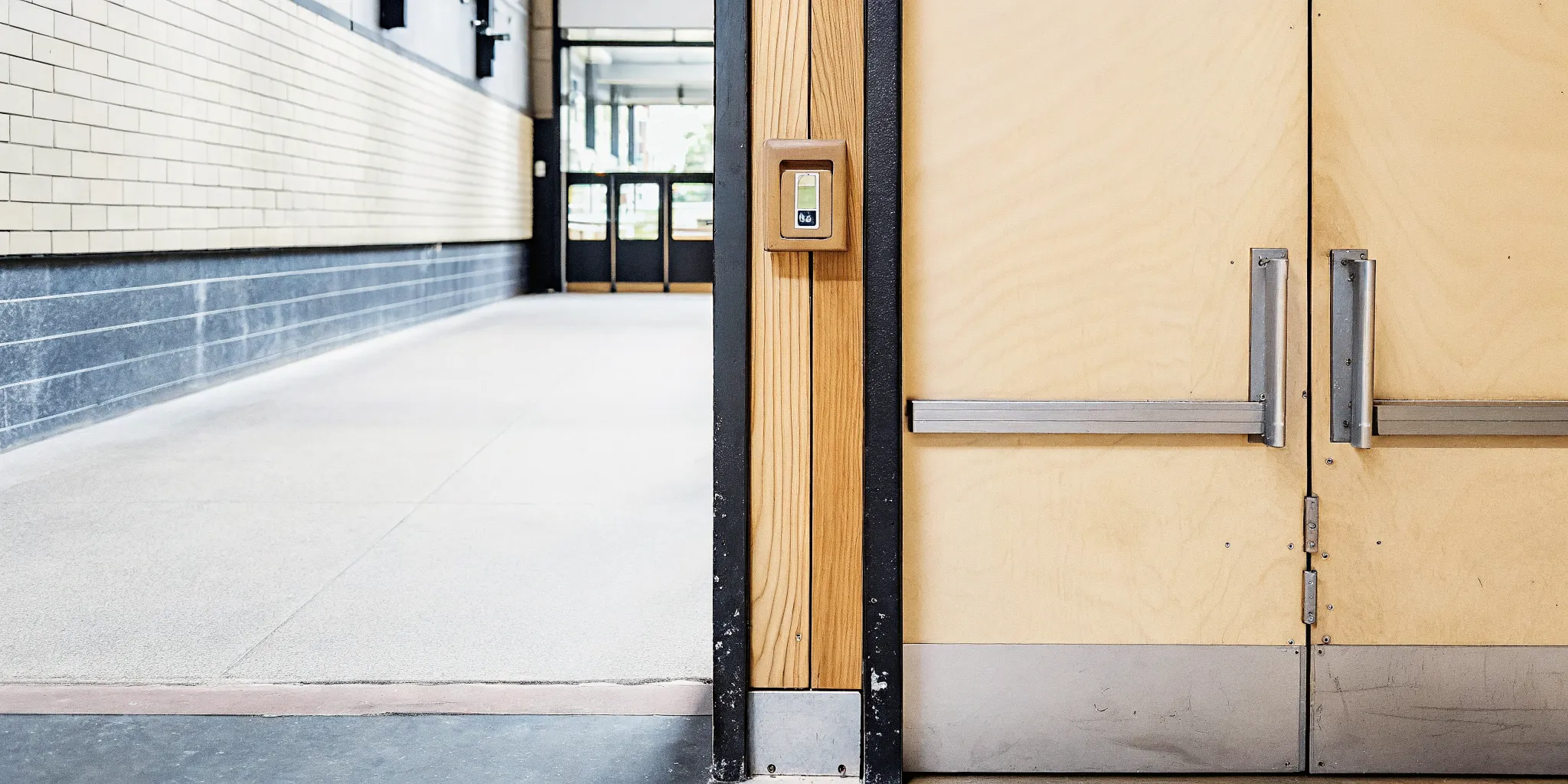
Wedges and improvised stops are unsafe because they prevent automatic closure and depend on someone being present to remove them. If smoke or fire develops, a propped door cannot promptly restore the rated barrier it was intended to provide.
Convenience often drives unsafe practices. Staff may use wood blocks, cords, hooks, cartons, or kick-down stops to ease deliveries and foot traffic. None of those items can receive a release signal. Even a well-maintained closer becomes useless when a physical restraint prevents the leaf from moving.
Correct the cause, not the symptom
Repeated propping often signals an operational or hardware problem. The door may be difficult to use, close too aggressively, conflict with traffic flow, or lack a suitable coordinated hold-open solution. Property teams should document why the door is being propped, remove the unsafe restraint, and assess the underlying condition. Substituting one improvised stop for another simply preserves the risk.
Inspectors can readily observe a wedge, disabled latch, or tied-open rated door. A clear correction record should identify the affected opening, the unsafe condition found, the work completed, and the final functional test. For help resolving an observed condition, review Universal Fireproof Door’s fire door violation removal service in NYC.
Fire door hold open device selection checklist
Select a holder by documenting the rated opening, release method, power, mounting conditions, compatible hardware, and required closing performance. The best choice is a coordinated system that releases reliably and allows the existing door to close and latch every time.
- Record the opening. Note the location, door and frame labels, leaf size, swing, hardware, wall construction, and current condition.
- Define the operational need. Identify why the door must remain open, when it should be held, and who uses the route.
- Confirm compatible listed hardware. Evaluate the intended holder and releasing arrangement for the specific application rather than choosing by appearance alone.
- Identify the release signal. Document how the device will interface with the approved alarm or detection arrangement.
- Verify power behavior. Confirm that an interruption releases the holder and allows the door to return to its safe position.
- Inspect closer and latch performance. Test whether the unrestrained door already travels fully and latches positively.
- Plan mounting and wiring. Check the surface, clearances, voltage, pathway, wire protection, and armature alignment before installation.
- Protect the swing path. Locate furniture, carts, displays, and other objects away from the closing arc.
- Plan acceptance testing. Assign responsibility for testing the approved release, power-loss response, full travel, and positive latch.
- Create a maintenance record. Give the opening an identifier and retain device, test, repair, and follow-up information.
Do not select holding force in isolation
A stronger magnet is not automatically a better solution. Holding force, projection, mounting height, armature position, door movement, and surrounding construction all influence performance. Excess force does not repair poor contact or unstable mounting, while a mismatched device can create new operational problems. Selection should follow a field survey and coordinated design review.
Plan a coordinated rated door and hardware installation with Universal Fireproof Door.
What should installation coordination and documentation include?
Installation coordination should connect the door professional, electrical or alarm trades, building representative, and design team around one documented sequence. Records should identify the opening, approved hardware, power and release interfaces, test results, deficiencies, and corrective work.
Hold-open work crosses trade boundaries. The door professional understands the rated opening and hardware relationship. Electrical and alarm professionals address power, controls, and the approved releasing interface. Building representatives manage access, operating schedules, and system notifications. When each party works from an isolated scope, gaps can appear between a correctly mounted holder and an incomplete release sequence.
Use an opening-specific coordination record
Give each affected opening a consistent identifier tied to its floor and location. Before work begins, capture photographs, label information, existing hardware, observed damage, and a concise description of the intended operation. Record who is responsible for the holder, wiring, alarm connection, door adjustments, system coordination, and final acceptance. This makes ownership visible before a failed test exposes a gap.
Product information, approved submittals where applicable, wiring information, and field changes should remain associated with that opening. If site conditions require a different mounting position or hardware choice, document the change and obtain appropriate project review rather than improvising silently. The goal is a record that another qualified professional can follow later without guessing what was installed or why.
Plan testing before energizing the holder
Coordinate functional testing with responsible building personnel so connected systems are managed safely and occupants are not surprised. Establish the expected release inputs, who initiates them, who observes the door, and how results will be recorded. If the leaf does not close and latch, note the actual symptom instead of merely marking the device as failed. Specific observations shorten diagnosis and reduce repeated visits.
Common hold-open failure scenarios
Common failures include a magnet that does not release, a released door that stops short, and a door that reaches the frame without latching. Diagnose the observed stage first, then inspect the related electrical, mounting, closer, hinge, alignment, and obstruction conditions.
| Observed symptom | Possible causes | Appropriate next action |
|---|---|---|
| Magnet stays engaged during an approved release test | Release circuit, relay, power supply, interface, or device issue | Have qualified door and system professionals evaluate the complete release path |
| Holder releases intermittently | Loose wiring, unstable power, poor armature contact, movement, or damage | Inspect electrical connections, mounting, and alignment |
| Door releases but stops before the frame | Weak closer action, hinge friction, air pressure, floor contact, or obstruction | Inspect the entire opening and clear the swing path |
| Door reaches the frame but does not latch | Strike or latch alignment, damaged hardware, or insufficient closing force | Correct the confirmed defect and repeat the full test |
| Door rebounds after contact | Closer adjustment, air movement, alignment, or interference | Diagnose the closing condition rather than restraining the leaf |
Small defects can combine
A slightly worn hinge, minor latch misalignment, and changing corridor pressure may each seem insignificant, yet together they can prevent reliable latching. Avoid assuming the most visible component is the only problem. Observe repeated cycles, compare conditions, and correct confirmed causes while preserving compatible rated-opening hardware.
How should hold-open devices be inspected and tested?
Inspect the complete opening visually, then run a controlled functional test that confirms holder release, unobstructed travel, full closure, and positive latching. Document the result and repeat the complete sequence after any repair or adjustment.
Begin with a visual review
Check that the door and frame labels remain visible, the closer and latch are present, fasteners are secure, and the swing path is clear. Look for wedges, hooks, tape, cords, damaged wiring, loose components, or objects positioned to obstruct closure. Inspect holder and armature contact for alignment and visible damage without altering controls or connected systems.
Observe the entire functional sequence
Coordinate the approved release test with responsible personnel. Confirm that the holder releases promptly, then watch the leaf travel from the fully open position to the frame. Verify that it latches and remains closed. Where the project requires a power-loss check, coordinate that procedure as well. A release alone is not a passing result.
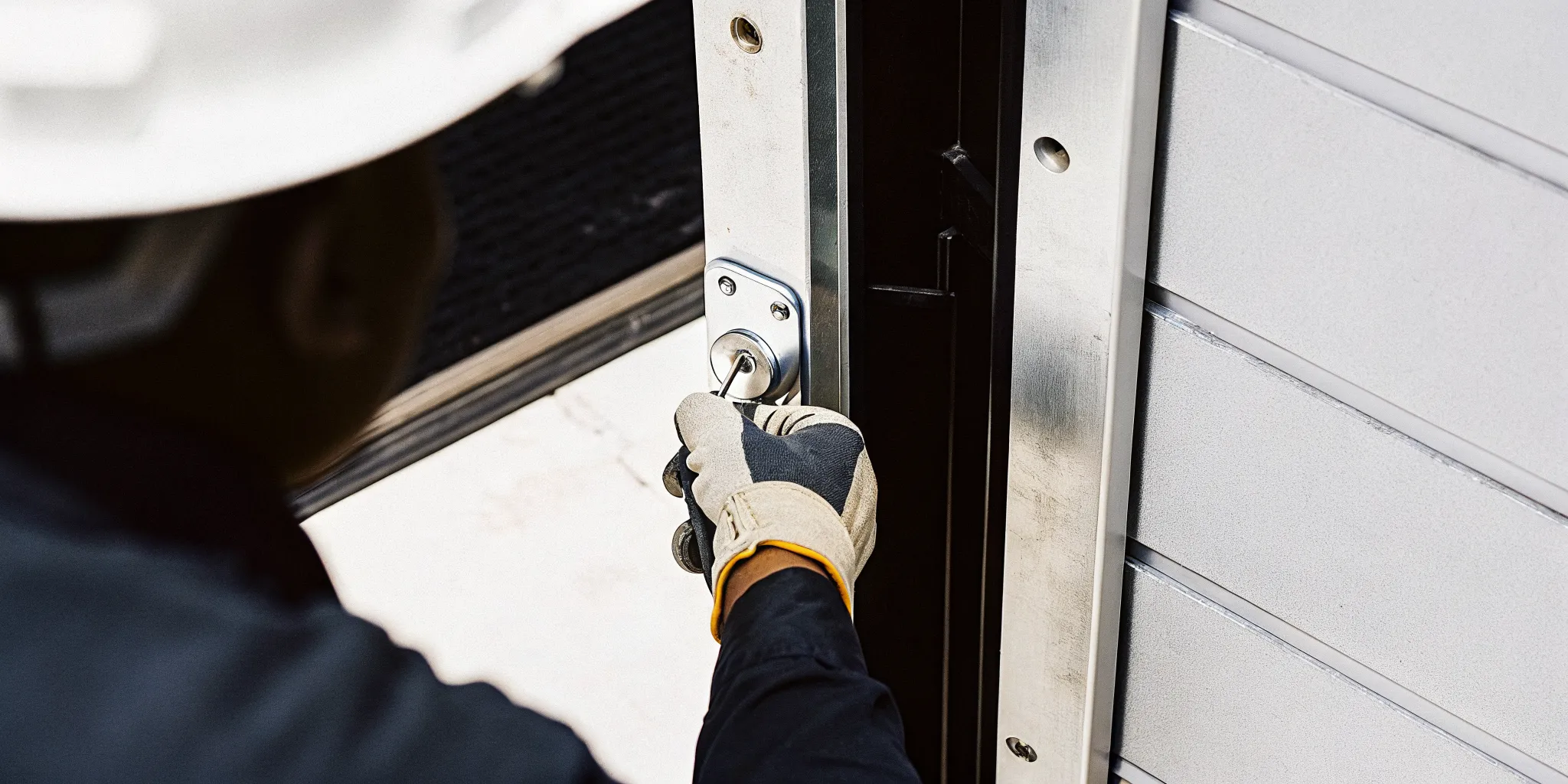
Record the date, opening identifier, test method, release response, closing result, latch result, observed deficiencies, corrective action, and retest result. If broader opening review is needed, Universal Fireproof Door provides fire door inspection services in NYC.
What post-installation maintenance protects performance?
Post-installation maintenance protects performance by keeping the holder aligned, wiring secure, swing path clear, closer effective, and latch functional. Routine observations plus documented functional testing help teams find gradual changes before the opening fails when needed.
Conditions around a door change after installation. Carts and furniture move, wall-mounted components loosen, doors sag, hinges wear, latches shift, and building pressure varies. Cleaning, renovation, and unrelated trade work can also affect wiring or hardware. A device that passed its initial test therefore still needs ongoing attention as part of the opening’s maintenance program.
Give staff a simple observation routine
Staff who work near the opening can report practical warning signs: intermittent holding, buzzing, poor armature contact, unexpected release, dragging, slow travel, impact with nearby objects, or failure to latch. They should also remove movable obstructions and report improvised restraints promptly. They should not bypass a detector, alter a release circuit, tape a latch, or adjust specialized hardware beyond their authorization.
Close the loop after service
Every repair should end with the same full functional sequence used for acceptance. Update the opening record with the symptom, confirmed cause, parts or adjustments, responsible trade, and retest outcome. Reviewing recurring issues can reveal a root condition, such as repeated obstruction or alignment movement, that isolated repairs may miss.
Frequently asked questions
A compliant hold-open arrangement retains a rated door for normal use but automatically releases it so the closer and latch can restore the protective opening. The answers below address common selection, operation, and maintenance questions.
Can a fire door be held open during normal business hours?
Yes, when an approved automatic releasing system holds it open and allows it to close and latch when required. A wedge, hook, or ordinary stop does not provide that response.
Does an electromagnetic holder replace the door closer?
No. The holder retains the open door while energized, but the closer must move the released door fully to the frame so its latch can engage.
What happens when power to a fire door holder fails?
A properly designed fail-safe arrangement releases the door when power is lost. The closer should then close the leaf and permit positive latching.
Who should install a fire door hold open device?
Qualified professionals familiar with rated openings, electrified hardware, alarm interfaces, and project-specific requirements should coordinate the installation.
How often should a held-open fire door be checked?
Building staff should include the opening in routine observation and arrange formal inspection and functional testing at the intervals required for the building and opening. Any failed release, closure, or latch should receive prompt attention.
Can a stronger magnet fix a door that will not stay open?
Not necessarily. Poor armature alignment, unstable power, loose mounting, door movement, or unsuitable hardware may be responsible. The complete opening should be assessed before changing holding force.
Get a coordinated hold-open solution for your NYC building
Universal Fireproof Door can assess a rated opening, identify unsafe hold-open conditions, coordinate suitable electrified hardware, and verify the door’s release, closure, and latching performance.
A reliable solution begins with the actual opening and ends with a documented functional test. If a wedge, unreliable holder, or closing problem is affecting your property, arrange an assessment before the condition becomes more disruptive.
Request a fire door hold-open hardware assessment or call (718) 455-8442.