
Smoke can move through an opening before flames ever reach the door, which makes correct gasketing and reliable door operation critical for NYC facilities.
Schedule a fire door compliance review
Fire door smoke seal requirements depend on the opening classification, adopted code, and listed assembly. Labels, approved schedules, listings, and project documents identify the tested components needed to limit air leakage. Facility teams should preserve those parts, confirm the door closes and latches, and avoid unapproved substitutions.
For NYC facility managers, the safest approach is to verify each opening instead of relying on a general rule. The first step is understanding what fire door smoke seal requirements actually require.
What do fire door smoke seal requirements actually require?
Requirements vary by the opening designation and approved assembly. A fire rating alone does not prove smoke-control performance. Teams must verify whether the opening is designated for smoke and draft control, then maintain the listed gasketing, door bottom, threshold, hardware, closing, and latching conditions.
Fire door smoke seal requirements are specific to the opening. The wall type, location, use, adopted code, and approved design determine whether a door must provide only fire protection or must also limit smoke and air leakage. A label showing a fire-protection rating answers only part of the question.
Start with the opening designation
Facility teams should first confirm whether the opening is identified as a smoke and draft control door assembly. Project door schedules, approved plans, labels, and listing information can show whether smoke-control performance is required. A reference to UL 1784 or an S label may indicate that the opening was evaluated for air leakage, but the complete approved documentation remains the best guide.
Do not assume that every rated door needs an added perimeter seal or door sweep. Adding a component without confirming compatibility can change how the assembly closes, latches, or performs. The same caution applies when a seal appears small or cosmetic. If it is part of the listed assembly, it matters.
Look beyond the seal itself
A compliant opening must work as a system. The door should close from the fully open position, latch without help, and remain free of damage or field changes that affect performance. Gasketing cannot compensate for a door that binds, a closer that stops short, a latch that misses the strike, or gaps that exceed the approved limits.
Use approved evidence, not guesswork
When documents conflict or are missing, consult the manufacturer listing, qualified fire-door personnel, and the authority having jurisdiction. They can help determine the applicable requirement for that specific opening. This evidence-led approach avoids two costly mistakes: omitting a required smoke-control component or installing a part that was never evaluated with the assembly.
Smoke seals, gasketing, sweeps, and thresholds compared
Terms such as smoke seal, gasketing, sweep, and intumescent seal are often used as if they mean the same thing. They do not. Each component has a distinct job, and a listed opening may use one, several, or none of them.
| Component | Typical location | Main purpose |
|---|---|---|
| Perimeter gasketing or smoke seal | Head and jambs | Limits air and smoke leakage when compressed by the closed door |
| Door bottom or sweep | Bottom edge | Helps control leakage at the floor line when included in the tested design |
| Threshold | Floor beneath the door | Provides a durable transition and may work with an approved door bottom |
| Intumescent material | Door edge, frame, or hardware location | Expands under heat as part of a tested fire-protection design |
Perimeter gasketing controls leakage
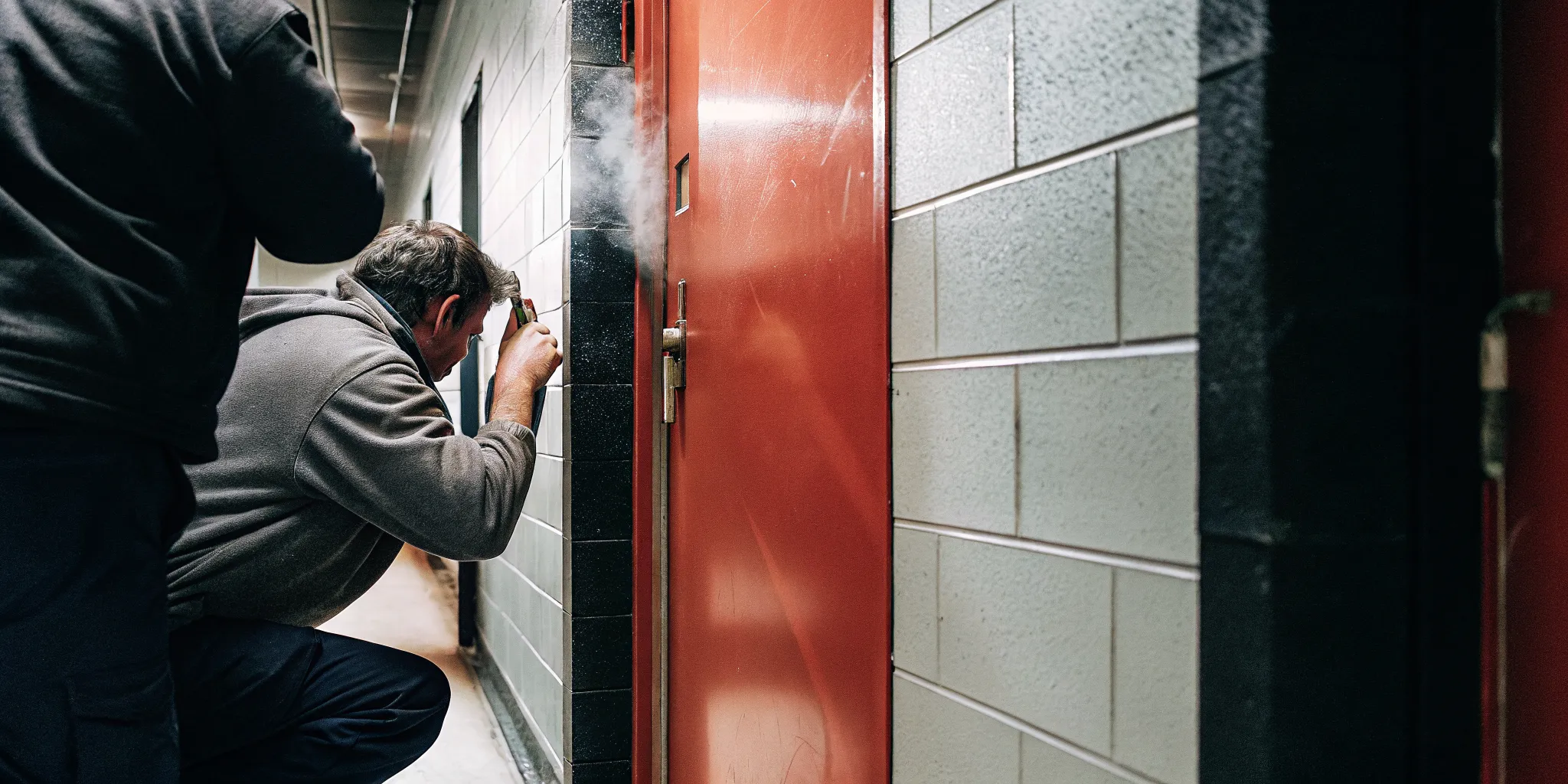
Perimeter gasketing usually compresses against the door at the head and jambs. It must make consistent contact without preventing the door from closing and latching. Loose sections, tears, paint buildup, missing corners, and poor alignment can create leakage paths.
Door bottoms and sweeps need careful selection
A sweep can reduce the open space beneath a door, but that does not make every sweep acceptable on every rated opening. Its profile, mounting method, clearance, and relationship to the threshold must match the approved solution. A sweep that drags can stop the door from closing. One mounted too high can leave a leakage path.
Intumescent seals serve a different purpose
Intumescent products react to heat and are not a direct substitute for smoke gasketing. Some products combine functions, while others address only one. Facility teams should never choose a replacement based on appearance alone. Confirm the exact product and listing before work begins.
How can you verify the correct listed assembly?
Verify the assembly by matching the door and frame labels, approved door schedule, project documents, and manufacturer listing. Confirm that every installed component is permitted for that opening. When evidence is incomplete or conflicting, consult qualified fire-door personnel and the authority having jurisdiction before changing parts.
Finding the right listed assembly starts with a close look at the door and its records. You should check the labels on the door and frame first. These tags show the fire rating and the lab that tested the unit. In many homes, hall doors are 20-minute fire doors that must also work as smoke and draft control doors. These labels prove that the door can stop heat and smoke as intended.
Check the door labels
Every fire door needs a label from a testing lab. This tag shows the fire rating in minutes or hours. It also lists the name of the lab. Look for these labels on the hinge edge of the door and the frame. If the door has smoke-control requirements for door openings, the label often has an “S” mark. This mark means the door passed air leakage tests to meet IBC limits.
Review the building records
Labels can be painted over or lost, so you must also check the door schedule and files. These records show the parts that make up the whole unit. They list the glass, hinges, and locks used for that door. These parts must match the tested listing for the door to be valid. You can also search online books from labs like UL to find the full details for any door model.
Avoid unverified changes
Making field changes to a listed door can ruin its rating. If you add parts that were not tested with the door, it may fail in a fire. Teams should only use parts that match the first listing. When you are not sure, you should talk to the local building head. They help make sure the door meets building safety and air quality rules. Regular checks under NFPA 80 keep these doors ready for a real fire.
Which smoke-seal problems cause inspection failures?
Common inspection failures include missing, torn, painted, hardened, or poorly aligned gasketing; excessive gaps; unapproved replacement parts; and doors that do not close and latch. A seal cannot compensate for damaged hinges, a binding leaf, an ineffective closer, or incompatible hardware.
Fire inspectors check every part of a smoke door to keep you safe. They look for small flaws that let thick smoke pass through a hallway. Smoke seals are thin, but they do a big job. If a seal fails, the whole door fails the check. You should find and fix these issues before your next building walk-through. Common issues that fail fire door smoke seal requirements include wear, bad fit, and wrong fixes.
Broken or missing gaskets
A missing seal is a common reason to fail an inspection. Often, the glue on the back of the seal dries out. This makes the seal peel off the frame. A seal that is not in place cannot block smoke. You might also find seals that are torn or cut. Heavy use wears down the rubber until it no longer fills the gap. Inspectors will mark any seal that is loose or falling off as a failure.
Seals also get hard as they age. Heat makes the seals stiff over time. A stiff seal will not bend when the door closes. This leaves holes that let smoke move into safe areas. If your doors have old or broken seals, you should get fire door repair NYC to fix them. Keeping seals in good shape is the best way to avoid a failed check or a fine.
Poor fit and large gaps
A smoke door must seal the entire opening. If the door hangs low or sits crooked, the seal may not touch the frame. This leaves a path for smoke to leak out. Gaps at the top or sides of the door are major red flags. These gaps often happen because hinges get loose or the door warps. You must ensure the door fits the frame perfectly to pass the test.
Air flow rules for these doors are very strict. Large gaps allow too much air and smoke to move through. Experts say that keeping seals tight is vital for safety. In fact, keeping doors and windows closed is a key way to protect indoor air quality from smoke soot. A door that does not latch or close on its own will also fail. If the door stays open, the seal cannot do its job.
Paint and wrong parts
Some owners fail checks because they paint their smoke seals. Paint is a big problem for fire door safety. It makes the seal hard and sticky. A painted seal might stick to the frame, which makes the door hard to open. Even if it opens, the paint stops the seal from filling small gaps. You should never put paint or stain on any part of a smoke gasket or seal.
Adding new parts to a door can also lead to a failure. Drilling holes or adding locks that are not rated for fire can ruin the seal. Only use parts that are made for your door model. If you use the wrong screws, you might create a leak. Inspectors check for these changes during every visit. Use rated parts to keep your smoke barrier intact and your building safe.
Request qualified fire door repair in NYC
How should facility teams maintain smoke seals?
Facility teams should visually inspect gasketing, test door closing and latching, keep labels legible, document findings, and replace damaged parts only with approved components. Routine checks can identify peeling, cracking, paint buildup, poor contact, and floor-clearance problems before they become inspection failures.
Site teams must keep smoke seals in top shape to meet fire door smoke seal requirements. These parts stop smoke from moving through a building during a fire. If a seal is torn or missing, it cannot do its job. Steady checks help find small issues before they become big safety risks. This upkeep ensures that smoke door units stay within the air leakage limits set by building codes. Most codes say that air flow should stay below 3.0 cubic feet per minute per square foot of door space.
Check seals for wear and tear
Walk through your site and look at each door. Smoke seals are often made of rubber or plastic. Over time, these parts can get hard or crack. Look for gaps where the seal meets the door frame. A tight seal is needed to block smoke. If you see a gap, the door may need a new seal right away. These seals must work well at both room heat and high heat to pass UL tests. Keeping doors closed and well-sealed is a key step to keep air clean inside a building.
Test door closing and latching
A smoke seal should not stop a door from closing. Open the door and let it shut on its own. It should latch tight without any extra push. If the door sticks, the seal might be too thick or out of place. This can lead to a door that stays open during a fire. This test is a simple way to check if your seals are set up right. Fire rules say doors must latch from any spot to keep people safe. If the seal is too tight, it can put stress on the door closer and hinges over time. This makes the door hard to use and can cause parts to break.
Use the right parts for repairs
When a seal fails, you must find a fit that matches the door’s fire rating. Do not just buy any seal from a local shop. You must use parts that are listed for your exact door model. Using the wrong part can void the door’s safety label. This could lead to fines or failed checks. Also, check the sill or floor under the door. A large gap at the bottom can let smoke pass even if the top and sides are sealed. Some doors need a special sill seal to meet draft control rules. These seals help the door unit pass the UL 1784 air leakage test.
Keep clear records of all work
Log every check you do on your smoke doors. Note the date, the door number, and what you found. If you fix a seal, write down what part you used. Building rules often need these records for yearly fire safety checks. Safe building logs help teams track long-term wear across the site. Using secure online tools for these logs can protect your facts from loss or theft. Keeping good notes shows that your team treats fire safety with care. It also makes it easy for fire marshals to see that you follow the law.
- Look for damage. Check the full length of each seal for rips, cracks, or loose spots.
- Check the fit. Make sure the seal touches both the door and the frame when the door is shut.
- Run a swing test. Open the door and let it close to be sure it latches by itself every time.
- Check the labels. Verify that the seal and door labels are still clear and easy to read.
- Clear the path. Ensure no dirt or paint has built up on the seal that could stop it from working.
- Fix issues fast. Replace any broken seals with new parts that match the door’s first listing.
- Update your logs. Record the check in your site’s fire safety book with the date and result.
Safe doors save lives. While site teams can do basic checks, they should not skip pro checks. Large repairs or major changes need a skilled person. This keeps the site in line with all local fire codes and keeps the building safe for everyone. Steady care for smoke seals is a small task that makes a big change in a crisis.
What should NYC facility managers prioritize?
NYC facility managers should prioritize opening-specific documentation, scheduled inspections, prompt repairs, and accurate maintenance records. High-traffic openings deserve extra attention because repeated use can loosen hinges, damage seals, and affect closing or latching. Qualified local support helps teams resolve defects without compromising the listed assembly.
Managing a building in New York City comes with many tasks. Facility managers must keep people safe while meeting city rules. Fire doors and smoke seals are a big part of this work. If a door fails, smoke can move fast through a hall. This makes it hard for people to leave during a fire. Managers need to focus on regular checks and fast repairs to stay safe.
Understand smoke seal requirements
Most fire doors also need to stop smoke. The IBC sets a limit for how much air can leak through a door. It says air flow should not go above 3.0 cubic feet per minute per square foot of door opening. You can find these details in the smoke door requirements of the code. In many NYC apartments, corridor doors serve as 20-minute fire doors. These doors must also act as smoke and draft control doors to protect the halls.
To meet these rules, doors are tested for air leaks. Tests happen at both room temperature and high heat using UL 1784. This check shows if the fire door smoke seal requirements are met. If a seal is dry or torn, it will not pass the test. NYC managers should look for seals that stay tight against the frame. This keeps smoke out of clean rooms and exit paths during an event.
Stick to annual inspection plans
Rules from the NFPA state that fire doors must be checked every year. Fire door sets must follow NFPA 80. Some smoke doors must also meet NFPA 105 standards for safety. These checks ensure that doors close and latch on their own. In a busy NYC building, doors get a lot of wear. A door that hits the floor or has a loose hinge might not close in a fire. Regular checks find these small flaws before they become big risks.
Managers should keep clear records of every check. These logs show the date, the door location, and any work done. When an inspector visits, having these files ready is helpful. It shows that the building is proactive about safety. Keeping windows and doors closed is a basic step to protect indoor air quality when smoke is present. Well-kept doors make this step possible for the whole building.
Manage high-traffic wear and tear
NYC buildings see a lot of foot traffic every day. This leads to dents in steel doors and damage to smoke seals. Managers should watch for seals that have come loose or have gaps. Even a small gap lets smoke through during a fire. Timely fixes keep the building in line with safety codes. If you need help with local rules, you can look into fire door compliance services in NYC to stay on track.
It is best to use a crew that knows NYC codes well. OSHA-certified teams can fix doors and seals without breaking rules. They can also help with custom steel doors for odd-sized openings. Fixing a door fast means less risk for the people inside. It also saves money by avoiding city fines. A solid plan for door care keeps a NYC facility safe and ready for any emergency.
A practical pre-inspection checklist
Needed paper and label checks
Before you test the door, you must look at the labels. Every fire door needs a fixed label that stays clear. These labels, often from UL or Intertek, show the fire rating and features. If a label is missing or painted over, the door is not safe. You should also get all repair records. Swapping parts for ones that are not rated can ruin the door’s safety rating. It may even void your insurance. Keeping these papers in order is a key part of your fire safety plan. It helps you prove that you take safety seriously.
Safety rules from NFPA 80 say you must check fire doors once a year. Keeping a log of these checks helps you avoid big fines. It also makes sure your fire-rated steel doors will work in a fire. For many New York buildings, hall doors act as 20-minute fire walls. These doors must meet tough standards (Source: I Dig Hardware).
Checking seals and gap limits
The gap between the door and the frame is a big safety point. If the gaps are too wide, smoke and heat can pass through. You can use this short list to check your doors:
- Check the top and sides for a 1/8 inch gap.
- Ensure the bottom gap is less than 3/4 inch.
- Look for smoke seals that are whole and free of paint.
- Verify that seals are well-seated in their tracks.
If the gaps are too large, the door might not stop fire from spreading to the next room. You must also check the smoke seals. The fire door smoke seal requirements say the door must limit air flow. The rate should stay below 3.0 cubic feet per minute per square foot (Source: I Dig Hardware). Keeping these seals tight helps with air quality. The EPA notes that closing doors is a key step to keeping smoke out of clean rooms.
Working parts and damage review
A fire door is not useful if it does not close and latch on its own. Open the door all the way and let it go. It should close and latch tight with no help. If the door drags on the floor, the hinges might be loose. Check for holes or dents in the door skin. Any hole larger than a screw hole can let fire through. Look for rust at the bottom of the frame. This is a common issue in old New York buildings.
Salt and water from the street can eat away at the steel over time. If the frame is soft or has holes, it cannot hold the door in a fire. If you find any of these problems, you should call a pro. Small fixes like tightening a screw are easy. But fixing a frame needs expert help. Our team at Universal Fire Doors can help with commercial hollow metal doors and new set ups. Fast repairs keep your building safe and follow local fire codes. Do not wait for a failed check to fix your safety doors. Finding issues early saves both lives and money.
Frequently Asked Questions
What is the maximum air leakage allowed for smoke door seals?
For an opening required to meet the IBC smoke and draft control provisions, air leakage is limited to 3.0 cubic feet per minute per square foot of door opening at the specified pressure differential. Teams should verify the adopted code, applicable listing, and approved assembly documentation before evaluating a specific opening.
What test standard is used for fire door smoke seal requirements?
UL 1784 is the commonly referenced test standard for measuring air leakage through door assemblies and other opening protectives. The test evaluates leakage under defined pressure and temperature conditions. Compliance depends on the tested assembly, including its gasketing and related components, rather than on a seal selected in isolation.
Do residential corridor doors need smoke and draft control?
Some residential corridor openings are required to function as smoke and draft control assemblies, but the answer depends on the building, occupancy, adopted code, and approved design. Facility teams should review labels, door schedules, plans, and listings instead of assuming that every corridor door has identical gasketing requirements.
What is the difference between NFPA 80 and NFPA 105 for doors?
NFPA 80 addresses fire doors and other opening protectives, while NFPA 105 addresses smoke door assemblies and other opening protectives. An opening can be subject to requirements from both standards. The applicable code, opening designation, and listed assembly determine which inspection and maintenance provisions apply.
Get help with your NYC fire door compliance needs
Uncertain labels, damaged seals, and doors that will not close or latch should be reviewed before the next inspection. Universal Fireproof Door can help evaluate the opening, identify repair needs, and support a practical compliance plan for your NYC facility.