10% Off New Violation Clients This Month — A to Z — No Subcontractors
NYC Fire Door Violations Cleared. Fast.
Failed FDNY inspection? HPD or DOB violation? We manufacture, install, and handle all paperwork in-house — no middlemen — so we clear violations faster and cheaper than anyone else in NYC.
FDNY, HPD, and DOB violations, failed NFPA 80 inspections, ADA non-compliance, and emergency violations. We handle full remediation — door replacement, repair, and all agency paperwork.
Why is UFD cheaper than other contractors? +
We manufacture doors and install them ourselves — A to Z, no subcontractors. No middleman markups at any stage. We also phase projects to fit your budget, prioritizing urgent doors first.
How quickly can you clear a violation? +
On-site within 24–48 hours. Doors manufactured in 3–5 days. First call to violation clearance is typically 8–12 business days depending on agency response time.
Do you handle FDNY/HPD/DOB paperwork? +
Yes — we handle all compliance documentation, submit directly to the agency, and follow up until the violation is officially dismissed. You don’t deal with the agencies at all.
What does the 10% off cover? +
The 10% discount applies to all new clients signing up for our violation program this month — covers assessment, manufacturing, installation, and agency filing. Call or fill out the form to lock in your rate.
Do you serve all NYC boroughs? +
Yes — all 5 boroughs and Long Island. Brooklyn HQ at 1171 Myrtle Ave and our Brentwood hub at 75 Emjay Blvd. Same-day response across all service areas.
Our Work
See the Quality We Deliver Every Day
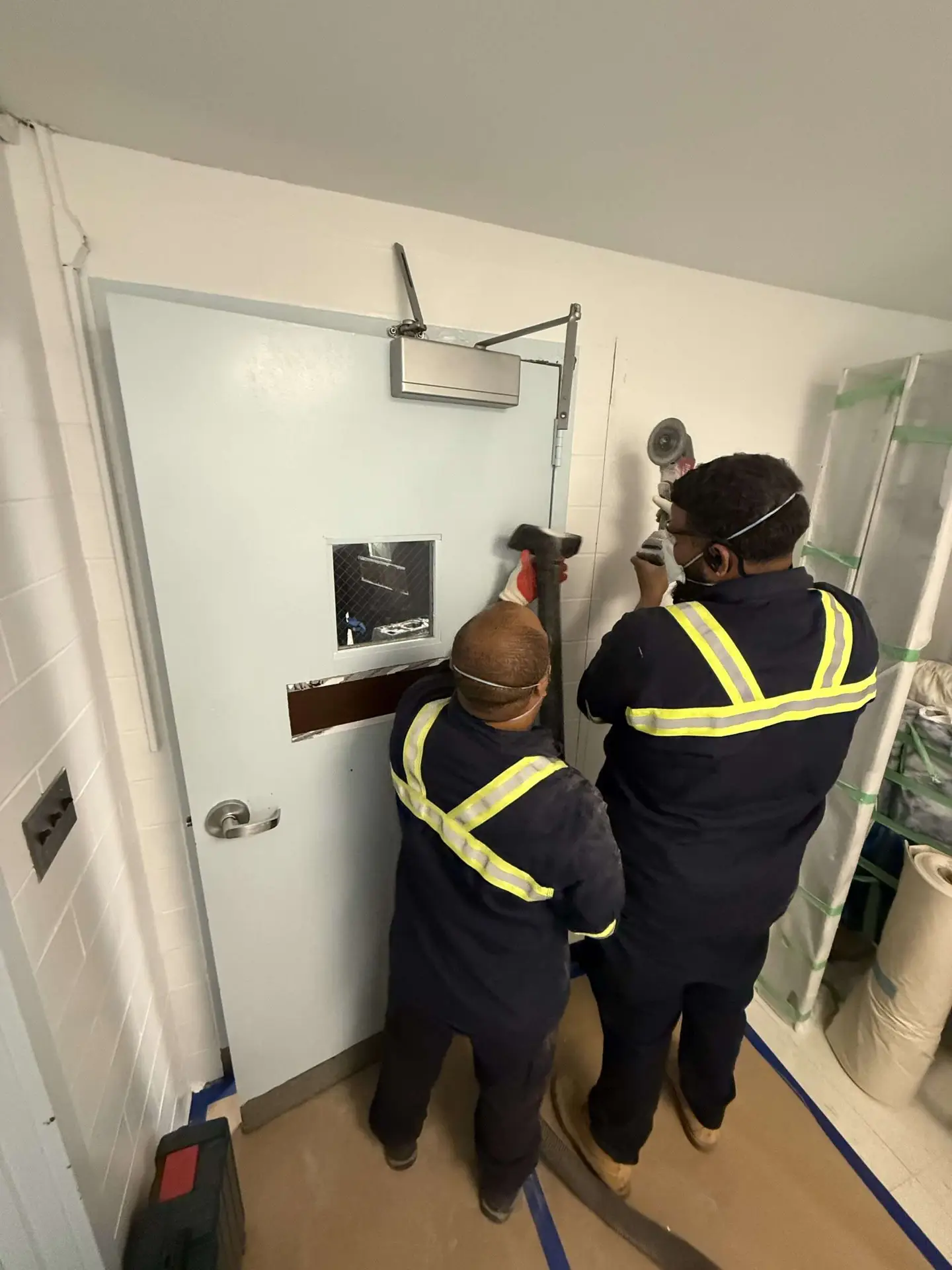
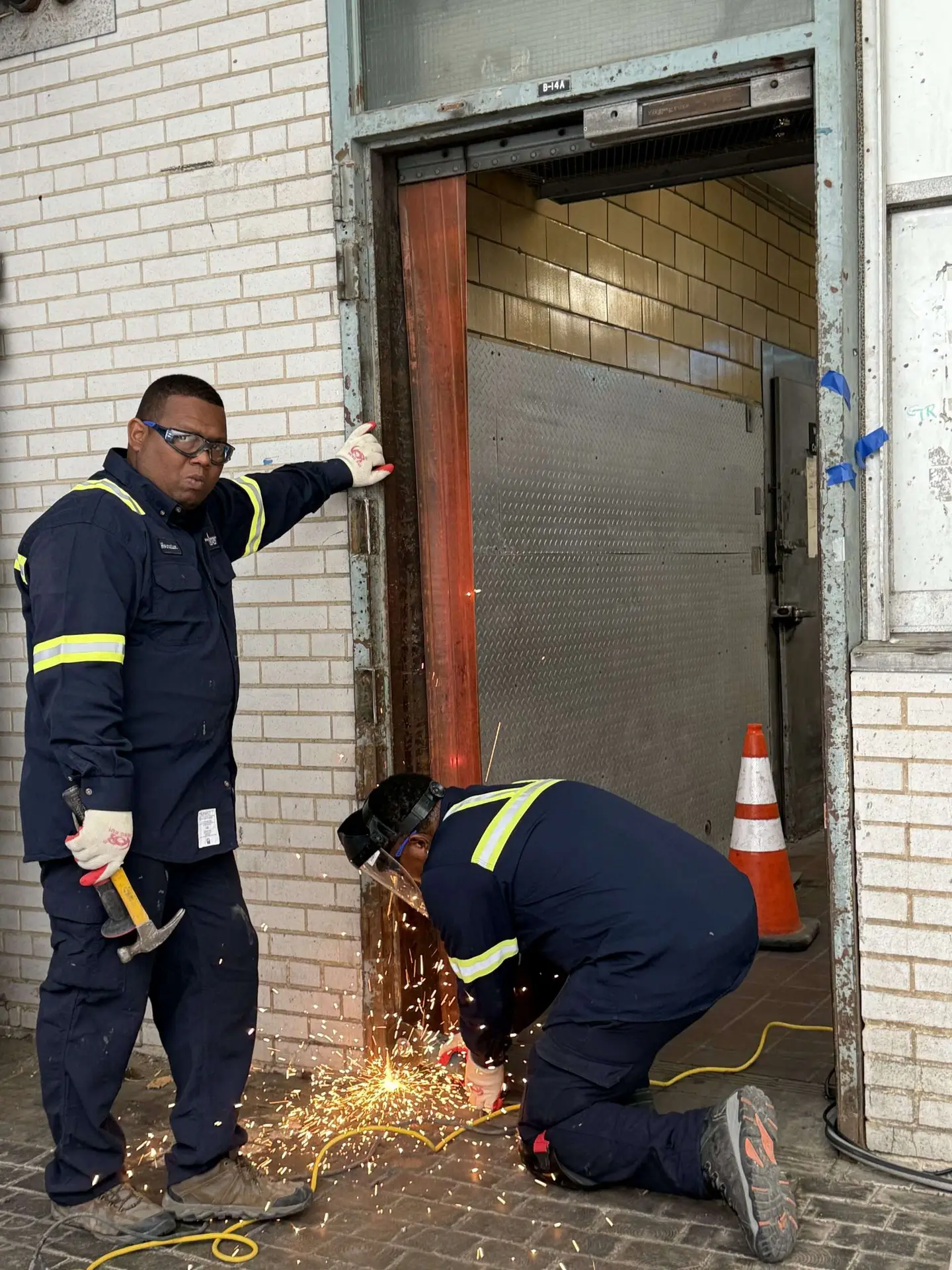
Every door manufactured in our Brooklyn factory and installed by our own licensed crew — no subcontractors, ever.
✓ FDNY Compliant✓ 100% In-House✓ Licensed Installers✓ All 5 Boroughs
We manufacture, install, and file all paperwork ourselves — A to Z, no subcontractors, no markups. We work with your budget until your violation is dismissed.
A fire door that will not latch can become an immediate life-safety and compliance problem for an NYC building. For an owner or property manager, a fire door violation NYC notice s…
Licensed & Insured NYCNFPA 80 Compliant20+ Years ExperienceSame-Day EmergencyFree Inspection
Get a Free Fire Door Quote for Your NYC Property
Fill out the form below or call us at (718) 455-8442 — we respond fast.
A fire door that will not latch can become an immediate life-safety and compliance problem for an NYC building. For an owner or property manager, a fire door violation NYC notice starts a short correction timeline, not a routine maintenance request.
A fire door violation NYC owner receives may be an HPD Class C immediately hazardous violation when a covered door fails to self-close, seal, or latch. According to NYC HPD guidance, owners must correct a self-closing door violation within 14 days after receiving notice, then certify the correction immediately. Removal begins by recording the cited opening, choosing a repair or rated replacement based on the door condition, testing its operation, and keeping closeout records for follow-up.
This guide explains what the notice means, why door assemblies fail, what to document, and how to choose repair versus replacement. Start with the condition the inspector cited.
Fire door violation NYC: what does the notice mean?
A fire door violation NYC notice means an inspector found a door safety condition that needs prompt correction. For a self-closing door, NYC HPD guidance states when a defect can lead to a Class C immediately hazardous violation. A door that does not close, seal, or latch properly can lead to that notice.
This notice is not a suggestion: it starts the correction and certification process for the owner. Under HPD guidance, owners must correct a self-closing door violation within 14 days of receiving the notice.
What the cited defect means
HPD's notice focuses on function, not just appearance. The door must swing shut and latch on its own after someone opens it. If it drags, misses the latch, or cannot form a seal, the opening may not control smoke and fire as required.
For an owner or manager, the cited condition calls for an on-site check of the complete opening. That check should cover the closer, hinges, latch, door leaf, frame, and seals. A damaged part, poor alignment, or a failed assembly can stop safe operation.
Owner response after notice
Start by confirming which door, apartment, or common area opening is listed on the notice. Record the failed condition before repair begins, then test closing and latching after the work. These records support accurate certification and follow-up.
HPD says it must reinspect self-closing door violations after the correction deadline. If repairs are not made properly, HPD may attempt emergency repair work and charge costs against the property. Early review helps owners avoid a rushed response.
If the assembly cannot close and latch as required, plan code-compliant work before certification. Universal Fire Doors' violation removal and code compliance service is intended for owners and managers responding to cited door conditions.
Steps that reduce repeat problems
After correction, test the door through full opening and normal release. It should close and latch without help. Keep records of the cited condition, work performed, and final test for building files.
Buildings with stairwell openings may also review fire door compliance requirements when setting a regular inspection plan. Do not prop or disable a working self-closing door while the notice is being addressed.
Why do fire doors fail an NYC inspection?
A fire door violation NYC inspection often begins with one simple test: the door must close and latch without help. For multiple dwellings with three or more units, NYC requires apartment and hallway doors to close and latch on their own. A defect in closing, sealing, or latching can lead to a Class C immediately hazardous violation.
Closer and latch defects
A worn, loose, or poorly set closer can leave a door short of the frame. It may shut slowly, stall, slam, or need a push at the last inch. A latch can miss its strike if hardware shifts, the leaf sags, or the closer does not pull the door shut.
On a routine check, open each door fully and release it. It should travel to the frame, and the latch should engage without a person pulling it closed. Log the floor, unit, and failed motion, so repair work targets the exact problem.
Gaps, seals, and obstructions
Look beyond the closer during a pre-inspection walk-through. Damage, warped edges, or debris can stop the assembly from closing cleanly and forming a seal. Tenants should not prop self-closing doors open with wedges, stops, taped latches, or objects.
Check both the door swing and the opening around it. Storage, mats, cords, hooks, and added hold-opens can change operation at once. In stair enclosures, review fire door compliance requirements where daily traffic makes misuse easier to miss.
Changes that alter door operation
Some failures appear after a repair or building change. New flooring can drag on the leaf, and fresh paint can bind an edge. Replacement hardware can also change how the door closes. Owners and property managers should test operation after maintenance, tenant work, or repeated complaints.
Do not wait for a notice to find a door that no longer works as intended. Build closing and latching checks into property rounds, especially after work near doors. A survey for NYC fire-rated door installation and service can show repair or replacement needs before a follow-up inspection.
What should an owner document after a violation?
After a fire door violation NYC notice arrives, create one record set for each cited opening. Keep the notice, site evidence, repair scope, and closeout records together. This file should show what was found, what changed, and when work was complete.
Use the same opening name on the survey, photographs, quote, invoice, and correction records. Consistent labels reduce confusion when one building has several doors under review.
Save the notice. Scan or photograph every page, including the issue date, receipt date, violation number, cited condition, and agency instructions. Note who received it and the receipt method.
Identify the opening. Record the address, floor, room or corridor, apartment number when listed, and door location. Give the opening a clear label that matches every photo and work record.
Photograph existing conditions. Take wide images that locate the door, then close views of the closer, latch, frame, hinges, label, hardware, gaps, and damage. Photograph the door open and closed before repairs start.
Define the repair scope. Record whether the work concerns adjustment, hardware repair, or door and frame replacement. For a rated assembly, record visible labels and planned door, frame, and hardware components. For related context, review fire door compliance requirements.
Retain closeout proof. Keep dated completion photos, invoices, work orders, installer notes, product labels, and any certification submission receipt. Pair after-work photos with the original views from the same opening.
A complete file should answer four questions during follow-up: which opening was cited, what condition existed, what changed, and when certification was sent. It also helps a contractor match later service work to the repaired opening.
Keep a working copy available for the manager handling access and inspection scheduling. Preserve the full record with building compliance files after the matter is cleared.
Fire door violation NYC repair versus replacement decisions
Repair a cited opening when a survey finds a sound door and frame with a fixable closing, latching, or hardware issue. Replace it when damage, fit, rating, or repeated failure makes a reliable repair doubtful. For an HPD self-closing door citation, defects that stop closing, sealing, or latching can trigger a Class C violation. This rule appears in NYC self-closing door guidance.
Survey findings that guide the choice
The decision starts at the opening, not with a guess from the notice alone. A survey should record the door leaf, frame, closer, latch, hinges, clearances, seals, label, and signs of damage. It should also show whether the door closes and latches from normal use.
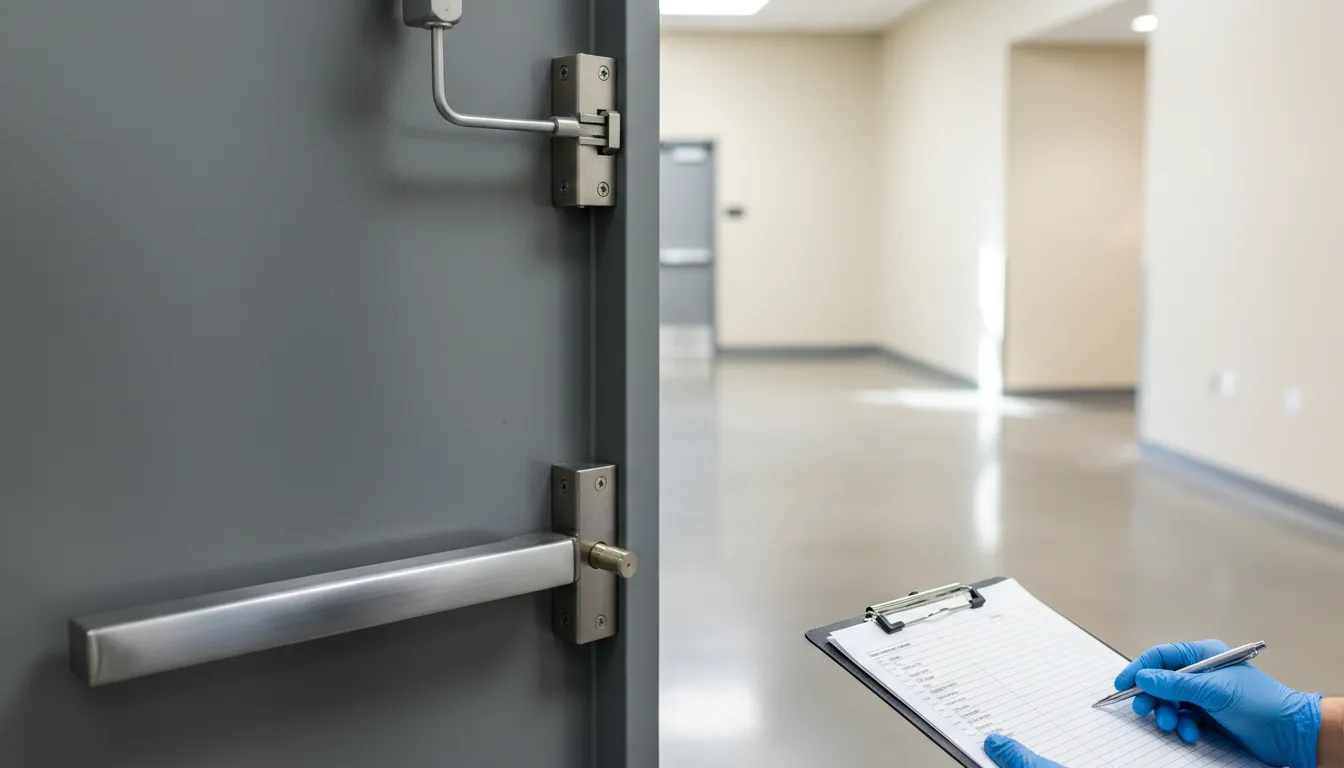
A site survey checks closer, latch, frame, and door operation before repair or replacement is selected.
That review separates a focused repair from a larger replacement scope. It also gives the owner a written basis for ordering work and testing the result. Keep these records with the violation file.
Survey question.
Repair may fit.
Replacement may fit.
Door and frame condition.
Sound leaf and frame.
Damaged, bent, or poor-fitting assembly.
Closing and latching.
Adjustment or hardware repair restores function.
Failures continue after sound repairs.
Rating and label.
Required identification remains clear.
Suitable rating cannot be confirmed.
Opening fit.
Clearances can be corrected in place.
Opening needs a matched new assembly.
Work scope.
Targeted parts and testing.
New door, frame, or both.
When a repair is practical
Repair may be practical when the assembly is sound and the defect is limited. A trained technician may adjust a closer, service a latch, correct hinge operation, or address hardware that blocks closing. The repaired opening still needs testing after the work is complete.
Do not treat a repair invoice as proof that a violation is resolved. Keep the survey, repair scope, test notes, and required certification records together. Owners managing other rated openings can also review NYC fire door compliance requirements.
Replacement may be the clear scope when the door or frame is damaged or does not fit the opening. It may also fit when a survey cannot confirm the needed rated assembly. In those cases, new work should be based on field measurements.
Owners can review fire-rated steel door replacement options after the survey defines the opening and rating need. Installation and testing address the defect, but they do not guarantee agency acceptance. Required correction and certification steps still apply to the cited property.
How quickly must a building owner act in NYC?
The 14-day correction window
For a self-closing door fire door violation in NYC, an owner should treat the notice as urgent. HPD states that the condition must be corrected within 14 days after receipt of the Notice of Violation. The owner must then certify the correction to HPD immediately.
This rule applies when a door fails to self-close, form a seal when closing, or latch as required. HPD describes that condition as a Class C immediately hazardous violation. Owners can read the timing and repair rules on HPD's self-closing doors guidance page.
Why work should start early
Fourteen days is a deadline, not a planning period. A repair may require a survey, the right closer or latch, adjustments, or a replacement door. Starting early leaves time to check that the repaired door closes and latches without being pushed.
A quick visual fix is not enough if the door still fails in use. The repair team should test the full swing and latch at the opening. For related door locations and safety needs, review NYC fire door compliance requirements before selecting a repair path.
Reinspection after the due date
HPD must reinspect all self-closing door violations within 20 days of the date correction was due. This schedule gives owners another reason to record the completed work and submit certification without delay.
If a door or latch is not repaired, HPD may attempt emergency repair work and place charges against the property. HPD may also seek civil penalties in Housing Court when an owner fails to correct the condition. These are HPD process facts, not legal advice for a specific notice.
Record the notice receipt date and calculate the 14-day correction deadline.
Arrange inspection and repair soon enough to allow functional testing.
Certify the correction to HPD immediately after the condition is corrected.
Keep repair and testing records available in case of reinspection.
How does Universal support violation removal?
Universal supports fire door violation NYC work through a clear process. It includes inspection, repair or rated replacement, completed work, and correction records. This helps owners address the cited door condition without guessing which fix the notice requires.
Site survey and repair decision
The process starts with a site survey of the cited opening and its hardware. The review checks whether the door closes, latches, seals, and remains fit for its required use. In NYC, a defect that stops self-closing, sealing, or latching can result in a Class C immediately hazardous violation.
The survey guides the next step. A repair may address a suitable door with a correctable closer, latch, or fit issue. If the assembly is damaged, unsuitable, or cannot meet the needed rating, replacement may be the sound path. Owners can use an estimate request to share the notice and schedule review.
Rated replacement and installation
When replacement is needed, Universal provides Brooklyn-built fire-rated steel doors for local building needs. The door, frame, label, and hardware must work as an assembly, not as separate parts. A new leaf alone may not correct problems in the opening or frame.
Installation is completed by OSHA-certified installers, as specified for this service. The work should match the surveyed condition and required rated assembly. Universal's services and repair support covers the path from review to door work for a cited opening.
Correction records after the work
Violation removal does not end when the installer leaves. The owner should keep the notice, site findings, scope of work, product details, and completed-work records together. Clear records help show what condition was corrected and which assembly was installed or repaired.
For an HPD self-closing door notice, the owner must correct the violation within 14 days of receipt. The owner must then certify correction immediately. A documented survey and completed repair record support that compliance step. They also guide building staff during later door checks and maintenance.
Frequently Asked Questions
What happens if a fire door does not self-close or latch properly in NYC?
In an NYC multiple dwelling, a door that cannot self-close, seal when closed, or latch properly can trigger a Class C immediately hazardous violation. The NYC Department of Housing Preservation and Development identifies these defects for life safety. An open or unlatched door can allow smoke and fire to spread beyond the affected area.
How long do property owners have to correct a self-closing fire door violation?
Property owners must correct an NYC self-closing door violation within 14 days after receiving the Notice of Violation. They must then certify the correction to the Department immediately. According to HPD, the agency must reinspect these violations within 20 days after the correction deadline, so repairs should be completed and documented promptly.
What is the penalty for an NYC self-closing fire door violation?
A self-closing door defect is issued as a Class C immediately hazardous violation in an affected NYC multiple dwelling. If the owner does not correct it, HPD may attempt emergency repair work and charge the property. HPD may also seek civil penalties in Housing Court. The exact exposure depends on the violation record and enforcement outcome.
Do all NYC apartment buildings need self-closing doors?
NYC requires self-closing and self-latching apartment and common-area doors in multiple dwellings with three or more units. These doors must swing closed and latch without someone pulling them shut. The HPD self-closing door guidance explains that this requirement helps contain fire and smoke. Owners should confirm each covered doorway operates correctly, not only doors previously cited.
What determines if a fire door is up to code in NYC?
For an NYC self-closing door inspection, inspectors look for a door that closes by itself, forms a seal when closed, and latches properly. Missing or defective hardware can prevent compliance even when the door appears intact. HPD states that a defect in any of these functions can result in a Class C immediately hazardous violation.
Ready to Request Your NYC Fire Door Estimate?
An unresolved fire door violation can leave an owner managing notices, repair questions, and the risk of further delays. Waiting to review the problem may limit scheduling choices and postpone a clear plan for required corrections. Starting now helps your team identify the next steps early and organize work toward closing the open violation.
A timely review gives building staff a focused practical path for access, repair decisions, and documentation planning. It also lets corrective work begin sooner, instead of leaving an unresolved item on tomorrow's schedule. Ready to act on the door issue? Call (718) 455-8442 to request an NYC fire door violation estimate and plan next steps for your building.
Need a fire door inspection or replacement in NYC?
NYC's trusted commercial fire door specialists — fast response, code-compliant work.
What NYC Property Owners Say
★★★★★
UFD replaced 40 fire doors in our office tower on schedule. Their team knew every code requirement and coordinated around our tenants seamlessly.
— Robert M. — Property Manager, Midtown Manhattan
★★★★★
Called them for an emergency repair after a failed inspection. They were on-site within hours and got us back to compliance the same day.
— Angela T. — Facilities Director, Brooklyn Medical
★★★★★
Transparent pricing, expert crew, and the documentation they provided for our building file was perfect. Best contractor experience in NYC.
— James W. — Building Owner, Queens
Frequently Asked Questions
Fire door violation NYC: what does the notice mean?
A fire door violation NYC notice means an inspector found a door safety condition that needs prompt correction. For a self-closing door, NYC HPD guidance states when a defect can lead to a Class C imm…
Why do fire doors fail an NYC inspection?
A fire door violation NYC inspection often begins with one simple test: the door must close and latch without help. For multiple dwellings with three or more units, NYC requires apartment and hallway …
What should an owner document after a violation?
After a fire door violation NYC notice arrives, create one record set for each cited opening. Keep the notice, site evidence, repair scope, and closeout records together. This file should show what wa…
Fire door violation NYC repair versus replacement decisions
Repair a cited opening when a survey finds a sound door and frame with a fixable closing, latching, or hardware issue. Replace it when damage, fit, rating, or repeated failure makes a reliable repair …
How quickly must a building owner act in NYC?The 14-day correction windowFor a self-closing door fire door violation in NYC, an owner should treat the notice as urgent. HPD states that the condition must be corrected within 14 days after receipt of the Notice of Violation. The owner must then certify the correction to HPD immediately.This rule applies when a door fails to self-close, form a seal when closing, or latch as required. HPD describes that condition as a Class C immediately hazardous violation. Owners can read the timing and repair rules on HPD's self-closing doors guidance page.Why work should start earlyFourteen days is a deadline, not a planning period. A repair may require a survey, the right closer or latch, adjustments, or a replacement door. Starting early leaves time to check that the repaired door closes and latches without being pushed.A quick visual fix is not enough if the door still fails in use. The repair team should test the full swing and latch at the opening. For related door locations and safety needs, review NYC fire door compliance requirements before selecting a repair path.Reinspection after the due dateHPD must reinspect all self-closing door violations within 20 days of the date correction was due. This schedule gives owners another reason to record the completed work and submit certification without delay.If a door or latch is not repaired, HPD may attempt emergency repair work and place charges against the property. HPD may also seek civil penalties in Housing Court when an owner fails to correct the condition. These are HPD process facts, not legal advice for a specific notice.Record the notice receipt date and calculate the 14-day correction deadline.Arrange inspection and repair soon enough to allow functional testing.Certify the correction to HPD immediately after the condition is corrected.Keep repair and testing records available in case of reinspection.How does Universal support violation removal?
Universal supports fire door violation NYC work through a clear process. It includes inspection, repair or rated replacement, completed work, and correction records. This helps owners address the cite…
Emergency Fire Door Service — NYC 24/7
Failed inspection? Damaged door? We respond across all five boroughs.