
Fire door removal is the process of uninstalling a rated door assembly from its frame while maintaining fire compartmentation and meeting NFPA 80 standards. Knowing how to remove old fire doors correctly protects your property, your occupants, and your legal standing. A fire door is not just a door. It is a life safety component designed to contain fire and smoke long enough for evacuation. Remove it carelessly and you breach that protection instantly. This guide walks you through every stage of the process, from deciding when removal is necessary to the final step of documentation before disposal.
When does a fire door actually need to be removed?
Not every damaged fire door requires full removal. NFPA 80 draws a clear line between what can be repaired and what must be replaced entirely.
Removal is mandatory when any of the following conditions exist:
- Missing or illegible fire label. The label is the door’s certification. Without it, the assembly has no verified rating.
- Structural damage or warping. NFPA 80 requires replacement when clearances exceed 1/8 inch on the latch side or 3/4 inch at the bottom. Those gaps allow smoke and flame to pass through.
- Unauthorized field modifications. Drilling new holes, installing unlisted hardware, or cutting the door without manufacturer approval all void the fire listing. Even small structural changes strip the door of its certification.
- Excessive trimming. Trimming beyond 3/4 inch total compromises fire door integrity and voids the manufacturer’s listing.
- Cosmetic fixes that mask structural failure. Paint, filler, and surface patches do not restore a fire rating. Only manufacturer-approved repairs preserve the listing.
Before you pull a single hinge pin, check whether repair is still an option. Many minor defects can be corrected without full removal if the work follows manufacturer guidelines. Removal becomes the only path when the door’s certification is already gone.
Pro Tip: Always photograph the fire label before any work begins. If the label is damaged during removal, that photo becomes your only record of the door’s original rating.
Local building codes add another layer. Most jurisdictions require a permit for fire-rated assembly replacement, and your Authority Having Jurisdiction (AHJ) may need advance notice before work starts. Check 2026 fire door regulations for your area before scheduling removal.
Safety precautions and prep steps before you start
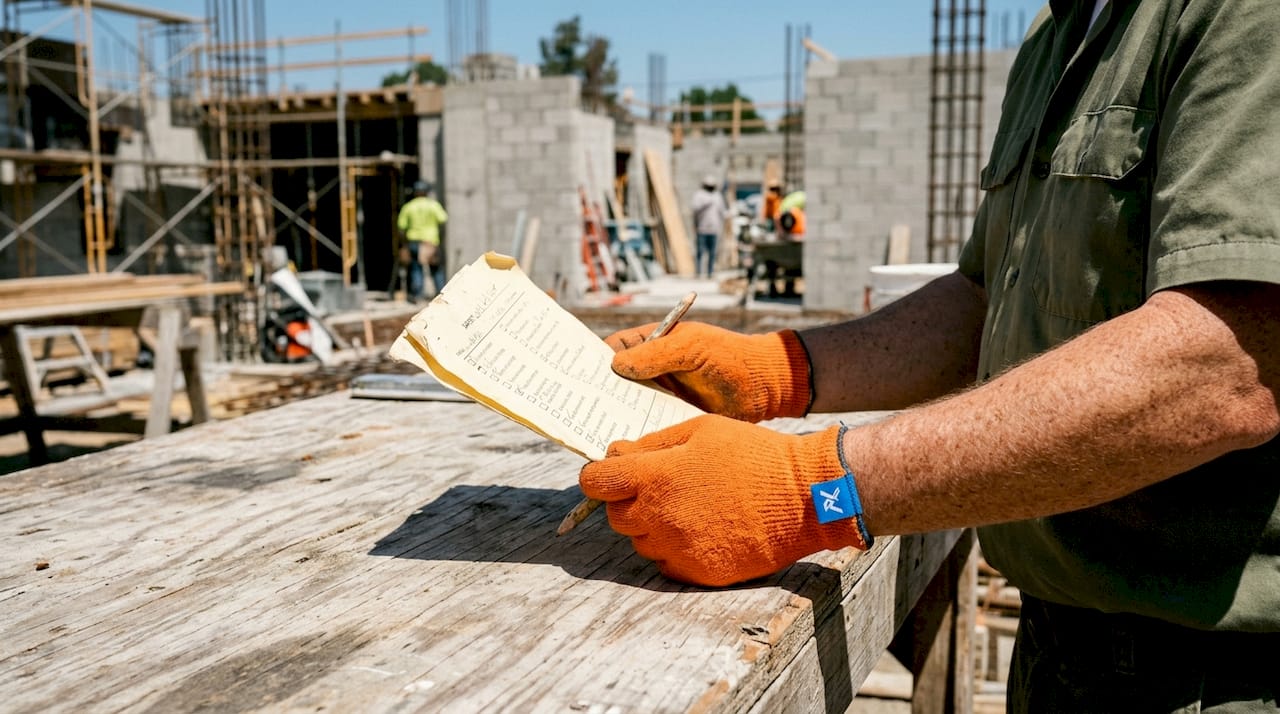
Preparation is where most DIY homeowners fall short. Skipping it creates health risks, legal exposure, and gaps in fire protection.
Check for asbestos first
Older fire doors, particularly those installed before 1990, may contain friable asbestos in their core material. Friable asbestos crumbles when disturbed and releases fibers that cause serious lung disease. Asbestos-containing fire doors require removal only by a licensed Class A asbestos contractor using strict containment, double wrapping, wetting, and lawful disposal. If your property was built before 1990, assume asbestos is present until a certified inspector says otherwise.
Authorities may require notification at least five working days before asbestos removal begins. That timeline affects your entire project schedule, so factor it in early.
Gather your permits and tools
Building permits are typically required for fire-rated assembly modifications or replacements. Contact your local building department and notify the AHJ before work starts.
Gather these tools and materials before removal day:
- Screwdrivers (flathead and Phillips)
- Power drill with appropriate bits
- Pry bar and hammer
- Utility knife
- Personal protective equipment: safety glasses, gloves, dust mask
- Camera or phone for documentation
- Temporary fire-rated board (in case installation is delayed)
Pro Tip: Have your replacement door assembly physically on-site before you remove the old one. An open doorway with no door is a fire compartment breach. Never remove a fire door before the replacement is ready to install.
Confirm that your replacement door, frame, hardware, and seals are all present and code-compliant. A fire door assembly is a certified system where every component contributes to the fire rating. Mixing old and new parts risks inspection failure.
Step-by-step procedure for removing a fire door assembly
Follow these steps in order. Skipping steps or changing the sequence creates safety and compliance risks.
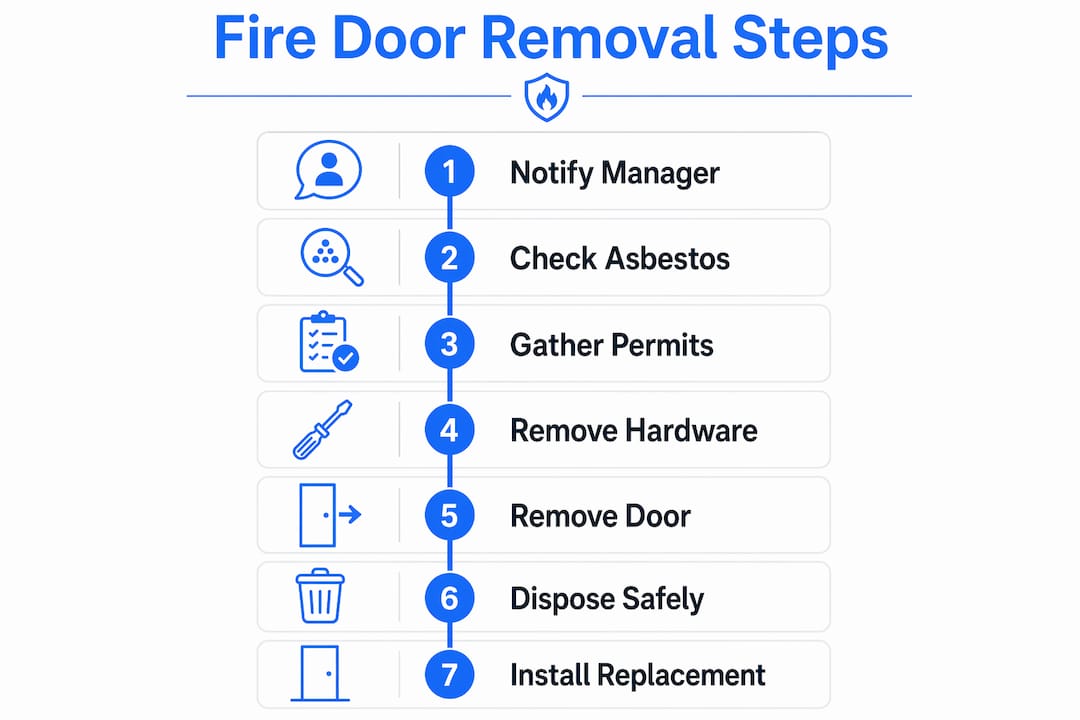
Notify building systems managers. Some fire doors connect to building fire alarm systems and hold-open devices. Disconnecting these without coordination triggers false alarms or disables safety systems. Alert your fire alarm contractor before touching the door.
Open and secure the door. Prop the door fully open. This gives you clear access to hinges and hardware on both sides without the door swinging unexpectedly.
Document everything before removal. Photograph the fire label, serial numbers, hinge positions, and hardware configuration. Proper documentation is required for compliance audits. Lack of records causes failed future inspections.
Remove door hardware. Unscrew closers, panic bars, hold-open devices, and any surface-mounted hardware first. Set screws and components aside in labeled bags.
Remove hinge pins or mounting bolts. Start from the top hinge and work down. Have a second person support the door weight as you remove the final hinge. Fire-rated steel doors are heavy. A standard steel fire door can weigh well over 100 pounds.
Lift the door clear of the frame. Carry it flat to avoid warping. Place it on a padded surface away from the work area.
Remove the frame if replacing the full assembly. Pry the frame from the rough opening carefully. Avoid damaging the surrounding wall structure, especially in fire-rated wall assemblies.
Dispose of the old door correctly. If asbestos is present, follow licensed contractor disposal protocols. If not, check local regulations for metal disposal. Never discard a fire door in standard household trash.
| Step | Action | Key compliance point |
|---|---|---|
| 1 | Notify alarm system manager | Prevents false alarms and safety failures |
| 2 | Document labels and serial numbers | Required for audit trail and future inspections |
| 3 | Remove hardware before door leaf | Reduces weight and prevents hardware damage |
| 4 | Remove door leaf with assistance | Prevents injury from heavy steel door weight |
| 5 | Remove frame if full assembly replacement | Ensures matched, compliant replacement system |
Common mistakes that compromise safety and compliance
Most errors in fire door removal are avoidable. Knowing them in advance saves you from costly rework and potential legal liability.
- Removing the door before the replacement arrives. Removing a fire door without immediate replacement creates serious life safety risks by compromising compartmentation. Keep a temporary fire-rated board ready if any delay occurs.
- Disturbing asbestos without licensed help. DIY removal of an asbestos-containing door exposes you to health risks and criminal penalties. This is not a shortcut worth taking.
- Discarding the fire label before documenting it. Once the label is gone, proving the door’s original rating becomes nearly impossible. That gap shows up in inspections.
- Leaving mismatched components after removal. Installing a new door leaf into an old, non-rated frame fails inspection. The entire assembly must be compliant. Review fire door damage assessment criteria to confirm what needs replacing.
- Failing to reconnect fire alarm devices. Hold-open devices and alarm-linked closers must be reconnected and tested after the new door is installed. Leaving them disconnected creates a code violation.
Effective scheduling and staged replacement reduce safety risks and compliance issues. DIY homeowners who plan removal and installation as a single coordinated event avoid the most common and dangerous mistakes in fire door work.
Pro Tip: Before disposal, record the door’s UL listing number, fire rating duration, and manufacturer name. That information helps your inspector verify that the replacement meets or exceeds the original specification.
Key Takeaways
Safely removing an old fire door requires advance documentation, asbestos screening, permit acquisition, and a replacement assembly on-site before the old door comes down.
| Point | Details |
|---|---|
| Removal triggers are specific | NFPA 80 mandates removal when labels are missing, clearances are exceeded, or unauthorized modifications exist. |
| Asbestos screening is non-negotiable | Pre-1990 doors may contain asbestos and require a licensed Class A contractor for removal. |
| Replace before you remove | Never take down an old fire door until the replacement assembly is physically on-site and ready. |
| Document everything | Photograph labels, serial numbers, and hardware before disposal to protect your compliance record. |
| Full assembly compliance required | Mixing old frames with new doors risks inspection failure; replace the entire rated assembly together. |
What I’ve learned after years of fire door work
Fire doors get treated like ordinary doors far too often. Homeowners see a damaged door and think “I’ll just swap it out this weekend.” That mindset is where the real danger starts.
The most important thing I’ve seen in practice is this: the door is the least complicated part of the job. The paperwork, the permits, the asbestos check, the alarm coordination, and the documentation take longer than the physical removal. Homeowners who rush the physical work and skip the prep steps are the ones who end up with failed inspections, fines, or worse.
I also want to be direct about partial replacements. Swapping just the door leaf while keeping an old, non-rated frame is not a cost-saving move. It is a compliance failure waiting to happen. A complete assembly replacement costs more upfront but passes inspection the first time. Partial upgrades almost never do.
When you are uncertain about any step, call your local AHJ before you start. They would rather answer a question than write a violation notice. That call takes ten minutes and can save you weeks of rework.
— Esteban
Ufiredoors: fire-rated door assemblies built for fast, compliant replacement
When your old fire door comes down, what goes up next determines whether your building passes inspection.
Ufiredoors manufactures and installs UL-listed fire-rated steel doors built locally in New York using UL-approved materials. Every assembly includes a matched door, frame, hardware, and seals, so you never face the compliance risk of mixing components. With over 20 years of experience and lead times as fast as 3–5 days, Ufiredoors keeps your fire compartment protected and your project on schedule. Explore pre-configured steel door assemblies with free site estimates, or contact the team directly for emergency replacement support.
FAQ
When is fire door removal required instead of repair?
Removal is required when the fire label is missing, structural damage exceeds NFPA 80 clearance limits, or unauthorized modifications have voided the door’s certification. Minor surface defects may qualify for manufacturer-approved repair instead.
Can I remove an old fire door myself?
You can remove a non-asbestos fire door yourself if you have the correct permits, tools, and a replacement assembly on-site. Asbestos-containing doors require a licensed Class A contractor regardless of your skill level.
How do I know if my old fire door contains asbestos?
Doors installed before 1990 carry a high risk of containing asbestos. Have a certified asbestos inspector test the door before any removal work begins.
What happens if I remove a fire door without a replacement ready?
Removing a fire door without an immediate replacement breaches fire compartmentation and creates a life safety violation. Keep a temporary fire-rated board on hand if any installation delay occurs.
Do I need a permit to remove and replace a fire door?
Building permits are typically required for fire-rated assembly replacement. Contact your local building department and notify the AHJ before starting work to avoid fines and failed inspections.