
Door troubleshooting is the process of diagnosing and fixing problems like sticking, sagging, misaligned latches, and faulty hardware before they become expensive repairs. 95% of common door issues can be resolved without removing the door or calling a professional. Most fixes take 30–60 minutes and require only a screwdriver, sandpaper, and a few wood screws. Whether you manage a commercial building or own a home, knowing how to troubleshoot door issues saves time, money, and the frustration of a door that never quite works right. The root causes fall into three categories: loose hardware, wood movement from humidity, and frame shifts from settling.
How to troubleshoot door issues: diagnosing the problem first
The most common mistake property owners make is jumping straight to sanding or planing before checking the actual cause. Diagnosis comes first. A door that rubs at the top corner almost always has a sagging hinge, not a swollen frame. A door that won’t latch usually has a misaligned strike plate, not a warped slab.
Start with a visual inspection. Open and close the door slowly while watching where it catches, rubs, or fails to engage the latch. Look for paint buildup along the frame edge, uneven gaps around the door perimeter, and hinge screws that sit proud of the plate.
Next, run the paper test. Slide a single sheet of paper around the door frame with the door closed. The paper pulls free where there’s a gap and tears or resists where the door binds. Do this at the top, middle, and bottom of each side. Mark the binding spots with a pencil or painter’s tape so you don’t lose track.
- Open the door and visually check all three hinges for loose screws or gaps between the hinge leaf and the jamb.
- Close the door and observe the gap around the perimeter. Uneven gaps signal hinge sag or frame movement.
- Run the paper test at six points around the frame and mark every tight spot.
- Check the latch bolt. Watch whether it enters the strike plate cleanly or scrapes the top or bottom edge.
- Use a level on the door’s face to confirm whether the door itself is plumb.
Pro Tip: Mark binding spots with a wax pencil rather than a regular pencil. Wax marks survive sanding and planing, so you always know exactly where to stop removing material.
Diagnosing the exact cause is critical because fixes vary significantly depending on whether the problem is seasonal wood swelling or structural frame movement. Treating a foundation shift like a humidity problem wastes effort and can make the door worse.
How do you fix hinge and alignment problems?
Tightening hinge screws fixes 30–40% of sticking door cases, making it the single most productive first step in any repair. Before you sand, plane, or call anyone, tighten every screw on every hinge with a manual screwdriver. Power drivers often overtighten and strip the holes.
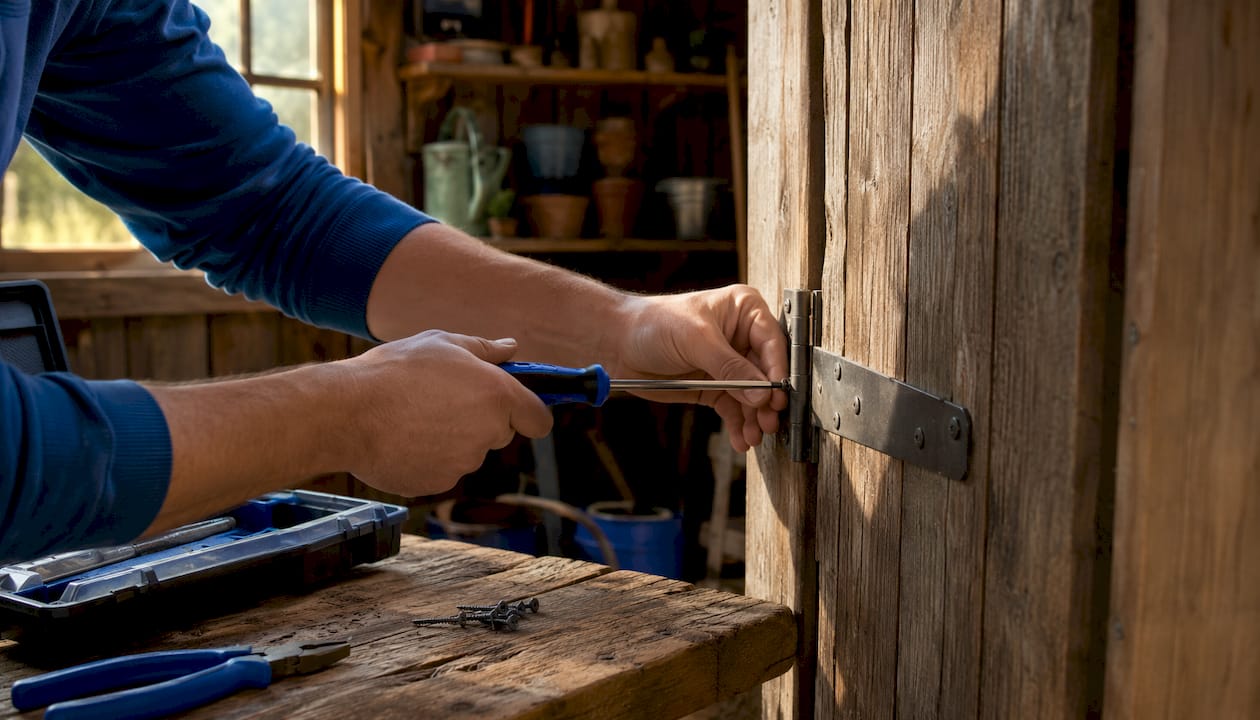
If screws spin without gripping, the wood behind them is stripped. The fix is straightforward. Fill stripped holes with wooden dowels or golf tees coated in wood glue, let them dry fully, then re-drill pilot holes and drive new screws. This creates a solid anchor point and stops the recurring sag cycle.
For doors that still sag after tightening, upgrade the top hinge. A single 3-inch wood screw driven through the hinge, through the jamb, and into the wall stud behind it pulls the door back into alignment without any sanding or planing. This is one of the most underused fixes in residential and commercial door maintenance.
- Tighten all hinge screws before any other repair. Use a manual screwdriver for better torque control.
- Replace short screws on the top hinge with 3-inch wood screws that reach the wall stud.
- Fill stripped holes with golf tees or wooden matchsticks coated in wood glue before re-driving screws.
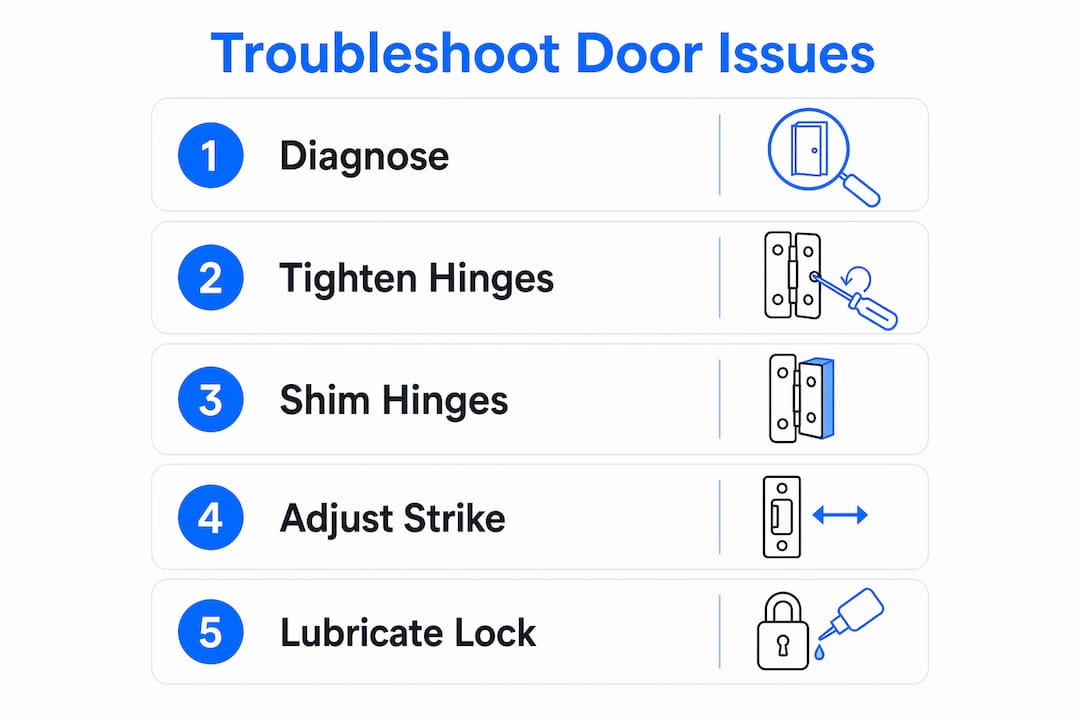
- Shim hinge mortises by placing thin cardboard behind a hinge leaf to push the door edge away from the jamb if it binds on the latch side.
- Check hinge barrel alignment. If the barrel knuckles don’t line up vertically, the door will bind regardless of screw tightness.
- Replace bent or cracked hinges rather than shimming them. A damaged hinge leaf will not hold alignment under daily use.
Pro Tip: When shimming a hinge, use playing cards as shims. They are uniform in thickness, easy to cut, and hold up well under the hinge plate.
For commercial door repair situations where hinges are heavy-duty ball-bearing types, the same principles apply. However, worn ball bearings require full hinge replacement, not shimming.
What should you do when a door drags on the frame or floor?
Door dragging is almost always caused by one of three things: wood swelling from humidity, paint buildup on the door edge, or new flooring that reduced the clearance gap. Seasonal wood swelling often resolves on its own when humidity drops, so wait a few weeks before cutting wood if the problem started in summer.
If the drag persists, identify the exact contact point using the paper test or by rubbing chalk on the frame edge and closing the door. The chalk transfers to the door face at the exact binding spot.
- For minor scraping, apply sandpaper while the door is still hung. Fold a sheet of 80-grit sandpaper and work it along the binding edge with the door closed.
- For larger binding areas, remove the door by tapping out the hinge pins from the bottom up.
- Lay the door flat on sawhorses and use a hand plane or belt sander to remove material from the marked area only.
- Remove material in thin passes and test the fit after each pass. Over-cutting creates a permanent gap.
- Once the fit is correct, seal the sanded or planed area immediately with paint or exterior-grade stain.
- Never skip sealing bare wood. Unsealed edges absorb moisture and swell again within weeks.
- Trim the bottom edge only if new flooring is the confirmed cause. Cutting too much creates a draft gap that fails energy codes.
- Use a sharp plane rather than a belt sander for edge work. Planers remove material evenly; belt sanders can create uneven bevels.
Pro Tip: Seal the bottom edge of a wood door every two years with exterior-grade paint or primer. This single step prevents the majority of humidity-related swelling problems before they start.
For guidance on when a door has reached the point of no return, the fire door repair guide from Ufiredoors covers the decision between repair and full replacement clearly.
How do you fix latch and lock hardware problems?
Strike plate misalignment is the leading cause of doors that close but won’t latch. The latch bolt hits the edge of the strike plate opening instead of entering it cleanly. To find the exact contact point, coat the latch bolt with lipstick or chalk, then close the door. The mark on the strike plate shows exactly where the bolt is hitting.
Small misalignments can be fixed by filing the strike plate opening with a metal file to enlarge it in the direction needed. Larger misalignments require repositioning the plate entirely: chisel out the mortise in the new position, fill the old screw holes with wood filler, and re-mount the plate.
Lock hardware problems follow a different diagnostic path. A lock that feels crunchy or gritty when turning signals internal wear on the cam or tailpiece. Lubrication will not fix worn metal components.
“Homeowners often overlook internal lock component wear, mistakenly attempting lubrication or minor repairs when full replacement is the correct solution. When the cam or tailpiece is stripped or disconnected, the lock cylinder must be replaced entirely.”
Lock internal parts like the cam and tailpiece can become stripped or disconnected, requiring full lock replacement rather than repair. Crunchy or disconnected movement is the clearest signal that the lock has reached end of life.
For locks that are mechanically sound but stiff, lubrication is the right fix. Use dry graphite or PTFE-based sprays, never oil or WD-40. Oil-based lubricants attract dust and create a sticky paste inside the cylinder that makes the problem worse over time. Annual lubrication with a dry product keeps lock internals clean and extends service life significantly. For a full breakdown of lock and latch terminology, the door hardware reference guide from Ufiredoors is a practical resource.
Key Takeaways
Fixing door problems starts with accurate diagnosis. Hinge tightening, strike plate adjustment, and proper lubrication resolve the vast majority of issues without professional help.
| Point | Details |
|---|---|
| Diagnose before you cut | Use the paper test and visual inspection to find the exact cause before sanding or planing. |
| Tighten hinges first | Hinge screw tightening resolves 30–40% of sticking cases and costs nothing. |
| Use 3-inch screws for sag | One 3-inch screw through the top hinge into the wall stud realigns a sagging door without cutting. |
| Dry lubricants only | Use graphite or PTFE sprays on locks. Oil-based products create sticky buildup and accelerate wear. |
| Seal bare wood immediately | Paint or stain any sanded or planed edge right away to prevent moisture from causing the problem again. |
What I’ve learned after years of watching door repairs go wrong
The most common mistake I see is skipping straight to the saw. Someone notices their door drags, grabs a belt sander, removes too much material, and ends up with a permanent gap that fails code. The fix took ten minutes. The damage took a full door replacement to correct.
My honest advice: spend the first five minutes just watching the door operate. Where does it catch? At what point in the swing? That observation alone eliminates half the possible causes before you touch a single tool.
Seasonal swelling is also massively underestimated. A door that sticks every summer and releases every fall does not need to be planed. It needs its bottom edge sealed. I have seen property managers spend hundreds of dollars on repeated adjustments for a problem that a $12 can of primer would have prevented permanently.
The other thing I push hard on is lock maintenance. People treat locks as set-and-forget hardware. Annual lubrication with a dry graphite product takes two minutes and extends lock life by years. Skipping it leads to a seized cylinder at the worst possible moment, usually at 11 PM on a Friday.
For commercial properties and multi-unit buildings, I recommend a simple door inspection log. Walk every door twice a year, check hinge screws, test latch engagement, and note any binding. Catching a loose hinge screw in march costs nothing. Catching it after the door has been dragging for six months sometimes means replacing the jamb.
— Esteban
When a door needs more than a DIY fix
Some door problems go beyond what a screwdriver and sandpaper can solve. Frame damage, fire-rating compliance gaps, and heavy commercial use all call for a different level of solution. Ufiredoors manufactures and installs steel stiffened doors built locally in New York using UL-approved materials, with free site estimates and fast lead times. For properties that need immediate attention, Ufiredoors also provides commercial door repair in NYC with emergency service available. Every installation meets current building standards, so you get durability and code compliance in one visit. Contact Ufiredoors directly to schedule a site estimate.
FAQ
What causes a door to stop closing properly?
The most common causes are loose hinge screws, a misaligned strike plate, and wood swelling from humidity. Tightening hinge screws and adjusting the strike plate resolves most cases without removing the door.
How do I fix a squeaky door hinge?
Apply dry graphite powder or a PTFE-based spray directly to the hinge pin and barrel. Avoid oil-based lubricants, which attract dust and create buildup over time.
When should I replace a lock instead of repairing it?
Replace the lock when the cylinder feels crunchy, gritty, or disconnected during operation. Those sensations indicate worn internal components like the cam or tailpiece that lubrication cannot fix.
How do I stop a door from swelling shut every summer?
Seal all bare wood edges, especially the bottom and latch side, with exterior-grade paint or primer. Moisture enters through unsealed wood and causes the swelling that makes doors stick seasonally.
Can I fix a sagging door without removing it?
Yes. Drive a 3-inch wood screw through the top hinge, through the door jamb, and into the wall stud behind it. This single screw pulls the door back into alignment without planing or removal.