
Choosing a knock down vs welded door frame starts with the wall condition, construction phase, site access, traffic level, fire-rating requirements, and total installed cost. Knock-down frames suit many finished-wall retrofits, while welded frames provide a rigid one-piece option for many new builds and high-use openings.
Request expert help specifying your hollow metal frame
For a finished-wall retrofit or a site with tight access, a knock-down frame is often the practical choice. For new construction or a high-traffic opening that benefits from a rigid seamless unit, a welded frame is often preferred. Always verify the wall, anchors, hardware, and any fire-rating requirements before ordering.
Knock down vs welded door frame: the short answer
Picking the right door frame depends on your project. A knock down (KD) frame comes in a three-piece kit. You put it together on the job site. These are best for fixing up old spaces where the walls are already up. If you are starting a new build, a welded frame is the normal choice for strength and a clean look.
How they are made
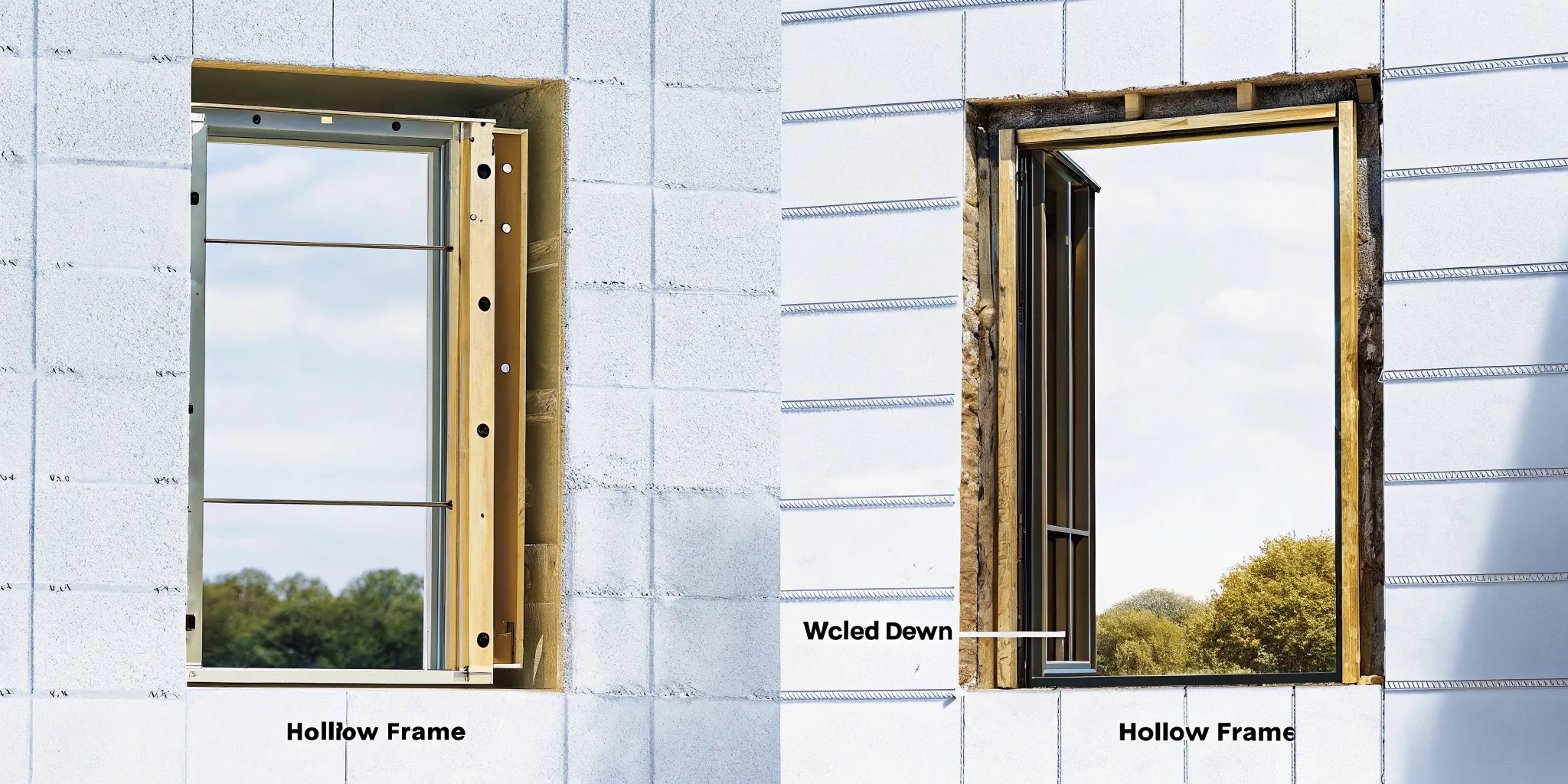
Shops build welded frames by joining the corners and sanding the seams before shipping. This creates a solid unit that gives you strong knock-down and welded hollow metal frames for high-use spots. These frames stay stiff and square because they are joined in a fixed shop setting.
Knock down (KD) frames arrive in three main parts: two jambs and a head. You use simple tabs or screws to lock the parts together at the job site. This part-based design makes them easy to carry through slim halls or up stairs in an old building. They do not need a large crew or heavy tools to move into place.
Both types use steel, but the build steps differ. Good frames often use 16-gauge steel for extra life. Precise fabrication and quality control help keep metal frame components square and consistent. Welded frames are stiff because the joints are fused at the shop.
When to use each type
If you need to put in a door fast in a finished room, a knock down frame is the best bet. You can slip the frame over the wall board without tearing it down. This is why many property managers use them for office tenant fit-outs or quick repairs. They save time because you do not have to patch the wall after the frame is in.
For new jobs where the wall studs are still bare, a welded frame is the better choice. You can build it right into the wall as the studs go up. This makes the opening more solid for heavy fire doors or busy school halls. It also avoids the small gaps you might see at the corners of a KD frame.
Shipping also plays a big role in your choice. KD frames take up much less space on a truck. For example, a truck can carry about 1,000 KD frames but only about 300 welded frames. This can lower shipping costs and make it easier to store parts on a crowded job site.
| Feature | Knock Down (KD) | Welded Frame |
|---|---|---|
| Best Use | Fixing old rooms | New construction |
| Assembly | Built on the job | Built at the shop |
| Install | Slips over walls | Set in open walls |
| Strength | Good for most jobs | Best for hard use |
| Lead Time | 3-5 day delivery | 3-5 day delivery |
Universal Fire Doors has both types of steel door frames with fast ship times. We can help you pick the right one with a free site visit. Our team checks your wall type and how much use the door gets to find the best fit. Whether you need one frame or many, we get them to your site in just a few days.
Which frame fits the construction phase?
Choosing between a knock down vs welded door frame depends on your project’s stage. New builds and small repairs need other parts to stay on track. We help you pick the right knock-down and welded hollow metal frames for your exact job site.
New builds and welded frames
Welded frames are the standard for most new big builds. These units arrive at the job site in one solid piece. Workers set them in place before the walls are built. This helps the frame bond well with the building structure. Once the walls are done, the frame is a long-term part of the room.
Welded units give great strength and a clean look. They work well for busy areas that see a lot of use. Since the corners are joined at the shop, they stay firm for years. Fabricators align, weld, and finish each joint so it is flat and square. This shop-welding step makes the frame much stiffer than one put together in the field.
These frames are also built for heavy doors. If your project needs thick fire-rated doors, a welded frame is often the best path. It handles the weight and stress of daily use without shifting. For high-rise shells or new schools, this toughness is a must.
Repairs and knock down kits
Repair projects often need a new plan. When the walls are now up, a welded frame may not fit. This is when knock down (KD) frames are the best pick. These frames come in three parts that you put together on-site. You can slide them onto a wall after the drywall and paint are done.
A KD frame wraps around the finished wall. It is a good choice for office updates or when you need to swap one door. You do not need to tear down big parts of the wall. This saves you both time and cash on the job. Our team offers fast hollow metal door installation to keep your site safe and on plan.
These frames use a 3-piece kit for fast setup. Most KD units use 16-gauge steel for a tough build. They fit standard wall sizes, like a 2×4 stud with drywall on each side. This makes them a top pick for many NYC renter fit-outs.
Moving frames in NYC
In New York City, moving parts from the truck to the room is a big task. Many old buildings have tiny lift cars. Narrow stairs and tight halls make moving one-piece frames hard. Welded frames are big and take up much space. If the frame does not fit in the lift, you face a tough job. You might have to carry it up many flights of stairs.
Knock down frames solve these moving woes. One truck can hold far more KD kits than welded units. Their small size makes them easy to carry up stairs or through small doors. This ease is key for busy sites with little room. It also cuts down on the risk of damage during the move.
When space is tight, KD frames are the winner. They allow for a fast swap without the bulk of a pre-built unit. This helps you avoid blocking halls or lift cars for too long. For buildings in midtown or downtown, this speed keeps the site running well.
How wall type changes the frame choice
Your wall type is the main factor in picking a frame. The way a frame grips the wall depends on what the wall is made of. Most jobs use either drywall or masonry.
Each one needs its own way to lock the frame in place. You must match the frame to the wall to keep the door safe and strong. If you pick the wrong one, the door might sag or fail over time.
Selecting for drywall and stud walls
Drywall is common in office and shop builds. These walls often use wood or steel studs. For these jobs, a knock-down frame is a top choice.
These frames come in three parts. You can join the parts right in the opening after the drywall is up. This makes them great for a quick fix or a new room.
A knock-down frame is best when you work in tight spots. You can move the parts through small halls or up stairs with ease. This is why many people look at knock-down and welded hollow metal frames for city jobs.
You can get a tight fit even if the floor is not level. Shims help you line things up so the door swings well. Most pros use these frames for indoor rooms where fire rules are not too strict.
- Knock-down frames are best for retrofits where the wall is already built.
- They offer a clean finish with no need for wet work on site.
- The parts are easy to move through narrow spaces.
- These frames often use strong anchors for a tight grip.
Frames for masonry and concrete walls
Masonry walls are made of brick, block, or poured concrete. These walls are much thicker and heavier than drywall. They need a frame that can handle the load.
A welded frame is often the best fit for new masonry work. You set the frame in place before the blocks are laid. The masons then build the wall around the frame.
This creates a rock-solid bond that lasts for years. It also adds more safety in busy spots. When you weigh a knock down vs welded door frame, think about the build.
Some jobs use a special masonry knock-down frame. These are made of thick steel and can handle wet mortar. They often use 16-gauge steel for extra strength.
Careful fabrication helps these frames meet the specified dimensions and performance requirements. Using the right anchors is key here. You need to know if the frame will use wire anchors or T-anchors.
This choice depends on the block type and the plan for the building. At Universal Fireproof Door, we know that timing is key. We offer custom fire-rated doors in just three to five days.
This is much faster than the weeks most shops take. Our team can help you look at your site to find the best fit. We look at the wall type and the door use to pick the right frame.
This helps you avoid costly errors and stay on track with your build. Always check your site plans to be sure of the wall type before you buy.
Durability, repairability, and long-term maintenance
Both knock-down and welded hollow metal frames are made to last for many years. Steel is a tough metal that can handle daily use in busy shops. When you look at knock down vs welded door frame choices, strength is a big deal. The choice you make changes how the frame holds up over time. It also affects how you fix or care for the door system later.
Strength of welded frames
Welded frames are known for their high strength and solid feel. They are built as one piece before they arrive at your job site for setup. This means the corners are fused as one, and the whole frame is stiff. Fabricators often use MIG welding to create a strong bond between the steel parts. Because the frame is one unit, it stays square even under heavy use.
You often see welded frames in high-abuse spots like schools or stores. They do not have gaps at the corners, which makes them very strong. This stops the frame from twisting if a door is slammed often. Their solid build helps them keep their shape for a long time. They also do not have visible seams at the corners, which makes them look smooth.
Fixing and part swaps
Knock-down frames are quick to fix if one part gets hit. Many high grade frames use 16-gauge steel to stay strong and solid. Since they come in pieces, you can swap out one side if it is bent or dented. You do not have to cut out the whole frame to fix a small spot. This saves time and money for the building owner and the crew. It also means less waste when a fix is needed at the site.
Welded frames are harder to repair than knock-down types. If a welded frame is badly dented, you might need to grind down the metal. In some cases, you must buy a whole new frame for the wall. This is a big job that involves cutting the frame out of the wall. For this reason, some choose knock-down frames for sites where damage happens often. This keeps the building safe without a full new setup of the frame.
Long term care needs
The care for both frame types is simple but vital for safety. You should check the fit of the door every year to be safe. Over time, buildings can shift and this might make a door rub against the frame. For a knock-down frame, you can use shims to adjust the fit. This helps the door close well and stay in line for years. It also stops the lock and strike from getting stuck or jammed.
A welded frame is less likely to shift, but you still need to check the paint. If the paint chips, the steel could rust and lose its strength. Keep the frame clean and dry to help it last for a long time. Routine care ensures your door stays safe and you know the types of steel door frames. Universal Fire Doors can help you find the best frame for your needs.
Keep these care tasks in mind for your steel door frames:
- Check for rust or paint chips once a year.
- Oil the hinges so the door swings smoothly.
- Make sure the door fits well in the frame.
- Clean off dirt and salt that can eat the metal.
You may also want to check the seals and the frame fit twice a year. If a frame shifts out of place, it can cause the door to sag. This puts stress on the hinges and makes the door hard to use. Fixing these small issues early saves you from a big repair later. A simple check helps your doors work well for many decades. This keeps your building safe and cuts down on long-term costs.
Can both frame types be fire rated?
Yes, both knock down and welded frames can carry fire ratings. When you compare a knock down vs welded door frame, the fire label depends on how the shop builds the part. A fire rating shows that the frame can stop flames and heat for a set time. This time often goes from 20 minutes to three hours. Both types of frames use strong steel that resists high heat. The choice between them often comes down to your project needs rather than the fire rating itself.
The complete door assembly
A fire rating does not stop at the frame. It covers the whole door unit. To pass code, you must use a labeled door, frame, and hardware together. If you mix rated and non-rated parts, the whole unit loses its rating. This is why buying knock-down and welded hollow metal frames from a known source is key. Every part of the unit must work to keep smoke and fire from moving to other rooms.
The build quality of these metal parts is vital for safety. In shops where these frames are made, experts use precise tools and controlled fabrication steps. Skilled work and quality checks help metal building parts remain strong under stress. This care in the shop supports the frame’s intended performance as part of a properly specified opening.
Wall types and anchors
Your wall type also affects the fire rating of your frame. A frame meant for a brick wall may not work the same way in a drywall stud wall. You must use the right anchors to hold the frame in place during a fire. If the anchors fail, the frame could fall out, and the fire will spread. Proper hollow metal door installation follows strict rules for anchor spacing and type. This ensures the frame stays firm even when the wall around it gets hot.
Inspectors will check these details closely. They look for the fire label on the frame and the door. They also check for gaps or loose parts that could let smoke through. Using the wrong hardware or shims can lead to a failed check. At Universal Fire Doors, we know these rules well. We help our clients find the right fit for their wall and code needs. Our team can even visit your site to check your needs before you buy.
Fast lead times for fire safety
Getting fire-rated parts quickly is a big worry for most builders. Many shops take weeks to ship custom orders. This delay can slow down your job and lead to fines. We offer a 3-5 day lead time for custom fire-rated steel doors. This is much faster than the usual wait of two or three weeks. We make sure you get the right fire-rated frame to keep your project on track and safe.
Our 100 years of work in NYC gives us deep knowledge of local codes. We build each frame to meet high standards. Whether you need a knock down or welded style, we focus on speed and quality. This helps building owners and contractors get the safety parts they need without the long wait. Contact us today to see how we can help with your next fire-rated project.
Cost drivers and a practical specification checklist
Total project costs go far beyond the base price of the door. When you look at a knock down vs welded door frame, you must think about the whole life of the part. Costs start in the shop and end with the final coat of paint. You should look at how each choice fits your job site and your plan.
Shop build styles change the way you spend your money. Some frames come in pieces while others are joined in the shop. This choice affects more than just the look of the door. It changes how much you pay for shipping, labor, and tools.
Shipping and site handling
The way a frame travels to your site is a big cost factor. Pre-built frames take up a lot of room on a truck. You might only fit a few hundred welded units on a large truck. But you can fit many more pieces of a three-piece kit in the same space. This helps lower the cost of fuel and shipping for large orders.
Handling the frames on-site also adds to the bill. Heavy welded units need more hands to move and place. They are stiff and hard to fit through tight halls or small lifts. Three-piece kits are light and easy to carry to any floor. This speed helps you stay on track with your build plan.
Labor and wall state
Shop labor is another key part of the price. Welded frames need expert hands to join the steel and sand the seams. Fabrication steps such as MIG welding and careful finishing produce smooth, aligned corners. You pay for this skilled shop work before the frame ever ships.
Site labor changes based on the wall type you have. A knock-down frame is great for a wall that is already built. You can set the pieces in place and snap them together in minutes. Welded frames are often better for new walls. You set them first and build the wall around them. This helps ensure the best base strength for high-traffic areas. You should check the types of steel door frames ready to see which fits your wall build best.
A practical planning checklist
Use this checklist to help you pick the right frames for your project. A clear plan helps you avoid mistakes and keep your costs low. You can work with experts to find the best match for your needs.
- Check the wall type and state of the build. A knock down vs welded door frame choice depends on if the walls are up or if you are starting fresh.
- Measure the rough opening with care. Leave about two inches of extra width and one inch of height to allow for a good fit during setup.
- Think about the traffic in the room. High-use areas need the strength of a welded frame to stand up to daily wear and tear.
- Review your lead time needs. Custom units often take weeks. But some shops offer a three to five day turn for knock-down and welded hollow metal frames to keep you on schedule.
- Plan for the right tools and labor. You will need shims to fine-tune the fit and a crew that knows how to handle the weight of the frames.
- Check the cost of long-term repair. Welded steel lasts a long time and helps you avoid the price of fixes later on.
Which hollow metal frame should you specify?
Choosing between a knock down vs welded door frame depends on your project’s phase and site needs. Architects and contractors must weigh ease of use against long-term strength. In NYC, where codes are strict and spaces are tight, the right choice saves time and money. Your choice will change both your labor costs and the final look of the door.
Retrofits and occupied spaces
Knock-down (KD) frames are the best choice for remodel work. These frames arrive in a three-piece kit that is easy to handle. You can move them through narrow halls and small elevators in old Manhattan buildings. They fit into openings where the walls are already standing. This makes them ideal for busy offices or apartment units where people now live.
You can use these frames with common wall types like wood studs and drywall. Standard knock-down and welded hollow metal frames can match most wall depths found in NYC. Workers use shims to fine-tune the fit for a tight seal. Since they do not need site welding, you avoid the risks of smoke and fire in rooms that are in use. High-quality KD frames for masonry often use 16-gauge steel to keep their shape for years.
New construction and high-traffic zones
Welded frames offer the best structural strength for your building. Shop teams join the corners and sand the seams smooth before the frame leaves the shop. This creates a solid, one-piece unit that can handle heavy abuse. Specify these for schools, hospitals, or main lobby doors where traffic is high. They provide a smooth look that helps prevent the frame from sagging under the weight of heavy steel doors.
In new masonry builds, workers often set the welded frames in place first. Then, they build the brick or block walls around the frame. This method locks the steel into the wall for a strong grip. These frames require precise fabrication and must match the project’s specified opening and code requirements. Our Brooklyn shop builds these units to your exact size to support a proper fit on the first try.
Logistics and site planning
Shipping and storage also play a big role in your choice. You can fit many more knock-down frames on a single truck than welded ones. A truck might hold about 1,000 kit frames but only 300 welded units. For large apartment jobs, this cuts down on shipping costs and saves great storage space on a crowded job site.
Before you place an order, you must check the field conditions. Small errors in wall thickness or floor height can cause big delays in your plan. Universal Fire Doors offers site surveys to find the best fit for your exact conditions. We provide expert hollow metal door installation support across the five boroughs. Our 3-5 day lead times help you keep your work on track even for custom orders.
Frequently asked questions
What is the main difference between a knock-down and welded door frame?
A knock-down frame arrives as separate jamb and head pieces that crews assemble at the opening. A welded frame arrives as one joined unit. The right choice depends on the wall, construction phase, access route, required opening assembly, and expected use.
Are welded frames always stronger than knock-down frames?
Welded corners create a rigid, seamless unit, which can suit high-use openings and new construction. A correctly specified and installed knock-down frame can also perform well. Gauge, anchors, wall support, hardware preparation, and installation quality all affect performance.
Can a knock-down frame be installed in an existing wall?
Yes. Knock-down frames are often useful in finished openings because separate pieces are easier to move through an occupied building and assemble around a wall. The opening still needs accurate field measurements and anchors suited to the wall condition.
Can both knock-down and welded frames be fire rated?
Both may be available as labeled products, but the complete opening must meet the project requirements. Confirm the frame, door, glazing, hardware, anchors, wall construction, installation details, and label requirements before ordering or changing any component.
Which frame costs less?
There is no universal low-cost choice. Compare the full installed cost, including fabrication, freight, site access, handling, wall readiness, installation labor, finish work, schedule risk, and future repairs.
Get help specifying your hollow metal frame
The best frame is the one matched to the wall, opening, traffic, fire-rating needs, and construction schedule. Universal Fireproof Door can review field conditions and help your team plan a compliant, practical hollow metal frame solution for a New York City property.
Request a hollow metal frame consultation or call 347-458-3542 to discuss your project.