
For NYC facility managers and contractors who need fire-rated steel doors with real compliance backing, Universal Fireproof Door Co., Inc. (Ufiredoors) is the strongest practical alternative. Local fabrication near the boroughs, UL-listed assemblies, documented FDNY/DOB project experience, and emergency repair capability make it the provider that actually fits how NYC inspections work.
Here is what to compare across any shortlist of libertydoorworks.com alternatives:
- Code & certification support: UL labels and assembly listings on every door
- Fabrication location: Local NYC-area shop vs. national plant shipping from out of state
- Lead time: a few days for standard fire doors from a local fabricator; national suppliers commonly add several weeks
- Emergency repair availability: Written SLA for same-week response
- Scope of services: Fabrication, installation, repair, and maintenance from one provider
- Warranty/maintenance: Documented coverage with a clear scope
- NYC service area: All five boroughs plus the Northeast
Single-vendor accountability matters here. When an inspection fails, you do not want to chase three separate companies to find out who owns the problem.
Pro Tip: Prioritize providers that handle fabrication, installation, and maintenance under one contract. When a DOB inspector flags a deficiency, consolidated service models eliminate the finger-pointing between fabricator and installer that delays remediation.
Table of Contents
- How do you vet a fire door vendor before signing a contract?
- What affects lead times, and how fast can you get emergency repairs?
- Why the lowest quote usually costs more over time
- How do you verify proof of code compliance?
- What NYC fire door codes actually require
- Fire-rating levels and what they mean for your project
- How to compare warranty terms across vendors
- Repair or replace: how to make the call
- Common compliance pitfalls with NYC fire door vendors
- Ufiredoors: local fabrication, fast installs, full compliance support
- Key Takeaways
How do you vet a fire door vendor before signing a contract?
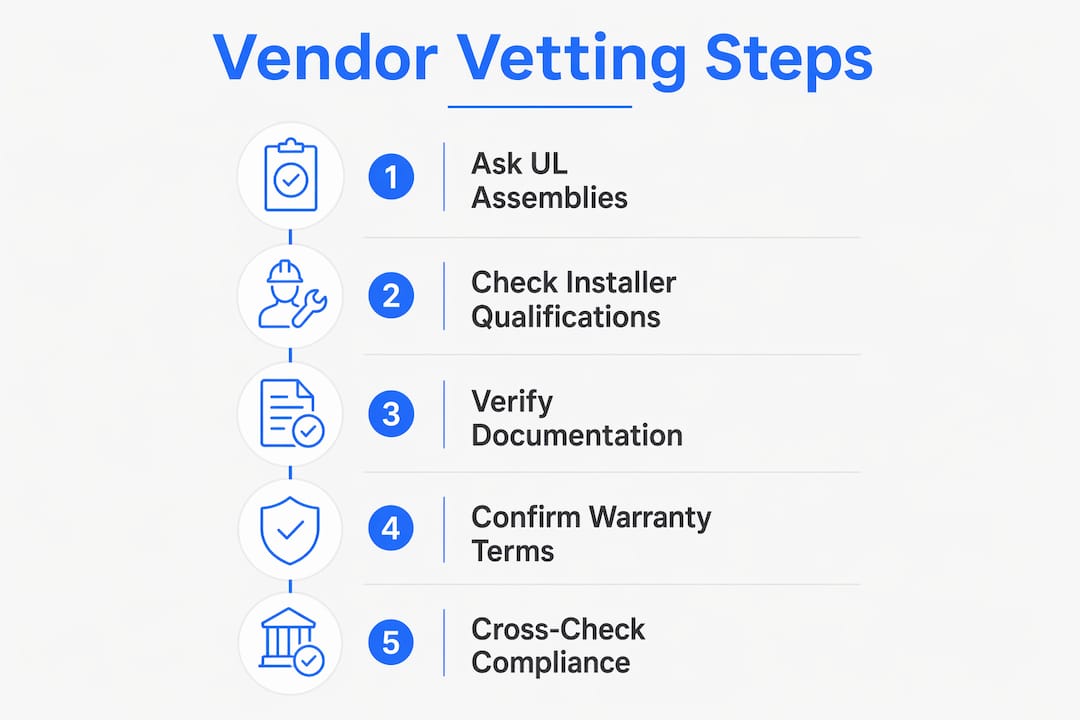
Start with three direct questions: What UL assembly numbers have you installed in NYC commercial buildings? Can you provide FDNY violation numbers you have remediated? Do you carry shop drawings from past DOB-approved projects?
A vendor who hesitates on any of those is a red flag. NYC Building Code Chapter 7 governs fire-rated assemblies, and a contractor who cannot cite specific code sections or UL listing numbers likely lacks the commercial life-safety depth NYC projects require. National, residential-focused brands are the most common offenders here.
Required documentation before you sign: UL label specifications for the proposed assembly, proof of current installer qualifications, and at least two references from comparable NYC commercial projects with DOB permit numbers you can verify.
What affects lead times, and how fast can you get emergency repairs?
Local fabrication near the boroughs typically delivers standard fire doors in a few days. National manufacturers shipping from distant plants commonly add several weeks for custom hollow metal work, which is a serious problem when a violation notice sets a compliance deadline.
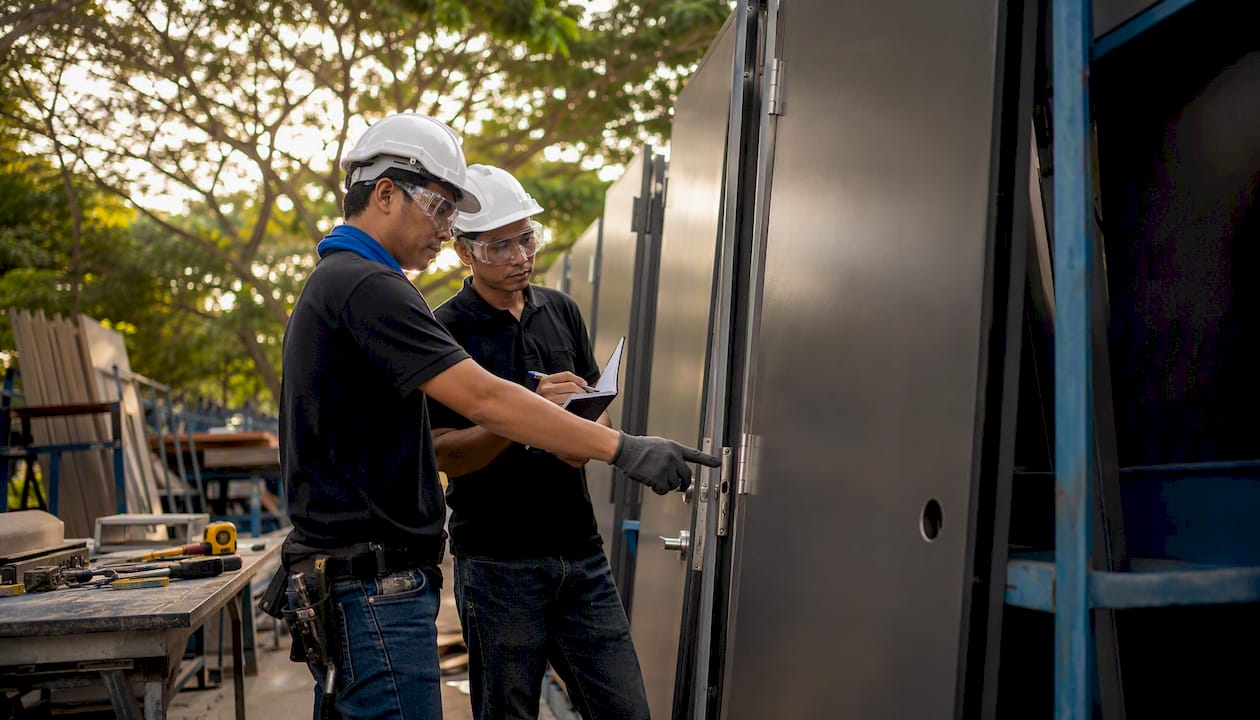
Emergency repairs are a separate question. Ask for a written SLA that specifies response time in hours, not business days. Violation remediation in NYC often requires same-week fixes to pass re-inspection, so a vendor without a committed emergency window is not a real option for active facilities. For urgent situations, fast-turnaround installation from a local shop is the only reliable path.
Regional quick-repair networks like One Day Doors & Closets of New York can also supplement capacity for non-fire-rated repairs in the metro area when timelines are tight.
Why the lowest quote usually costs more over time
The cheapest install quote rarely accounts for warranty scope, maintenance obligations, or the cost of a failed re-inspection. A door installed without a documented maintenance plan will eventually fail an annual inspection, and the repair call plus re-inspection fee quickly erases any upfront savings.
Ask every vendor for a written warranty that specifies what is covered, for how long, and who pays for labor on warranty repairs. Then ask what a maintenance contract costs annually. Vendors who bundle fabrication, installation, and maintenance under one agreement give you a single point of accountability and typically lower total cost over a five-year horizon.
How do you verify proof of code compliance?
Request the UL label number for the specific assembly being installed and cross-check it against UL’s product database. The label must match the door’s fire-rating, frame type, and hardware configuration as a complete listed assembly, not just the door leaf alone.
Beyond the label, ask for shop drawings stamped by a licensed professional, the installer’s DOB registration number, and copies of past inspection sign-offs. Vendors who can produce these quickly have done it before. Those who cannot are telling you something.
What NYC fire door codes actually require
The NYC Building Code, primarily Chapter 7 and referenced NFPA 80 standards, governs fire door assembly requirements for commercial buildings. The NYC Department of Buildings requires annual fire door inspections for most commercial occupancies, and FDNY enforces compliance through violation notices that carry remediation deadlines.
Every fire door assembly must be installed as a complete UL-listed unit: door, frame, hardware, and closer all rated and labeled together. Swapping a non-rated component into a listed assembly voids the rating and creates a code violation regardless of the door’s age.
Fire-rating levels and what they mean for your project
Fire doors in NYC commercial buildings most commonly carry 20-minute, 45-minute, 60-minute, or 90-minute ratings, with 3-hour ratings required for certain shaft and stairwell enclosures.
The rating required depends on the wall assembly the door is set into. A 2-hour fire-rated wall requires a 90-minute door. A 1-hour corridor wall typically requires a 45-minute door. Installing a lower-rated door in a higher-rated opening is a code violation even if the door is UL-listed, because the listing must match the opening’s required protection level. Confirm the wall rating before specifying any door, and get that confirmation in writing from the architect or engineer of record.
How to compare warranty terms across vendors
A warranty is only as useful as its written scope. Look for three things: duration (one year is a floor; three years on materials and labor is reasonable for commercial work), coverage scope (does it include hardware, closers, and frames, or just the door leaf?), and labor terms (some warranties cover parts but charge full labor rates for warranty repairs, which negates the value).
Also ask whether the warranty transfers if the building changes ownership. For facility managers managing multi-tenant properties, a transferable warranty is a real asset during lease negotiations.
Repair or replace: how to make the call
The decision comes down to three factors: whether the door can retain its certified fire rating after repair, the cost of a new UL-labeled assembly, and the risk of a failed FDNY re-inspection if the repair does not hold.
A door with a damaged frame, compromised intumescent seal, or non-listed hardware replacement is often faster and cheaper to replace outright than to repair and re-certify. The re-inspection risk alone can tip the math. Get a written assessment from your vendor that addresses fire-rating retention specifically, not just cosmetic condition. For a detailed look at fire door replacement versus repair costs in NYC, the scope of damage to the frame is usually the deciding variable.
Common compliance pitfalls with NYC fire door vendors
The most frequent problem is a vendor who sells a UL-listed door but installs non-listed hardware, voiding the assembly certification. The second is missing or illegible UL labels at the time of inspection, which triggers an automatic violation even on a properly installed door.
Watch for vendors who cannot produce shop drawings, who subcontract installation to crews without DOB registration, or who offer “equivalent” hardware substitutions without a listed assembly to back them up. Each of those is a compliance failure waiting to happen. Hollow metal door selection also matters: using the wrong door type for a given opening is a common specification error that only surfaces at inspection.
Ufiredoors: local fabrication, fast installs, full compliance support
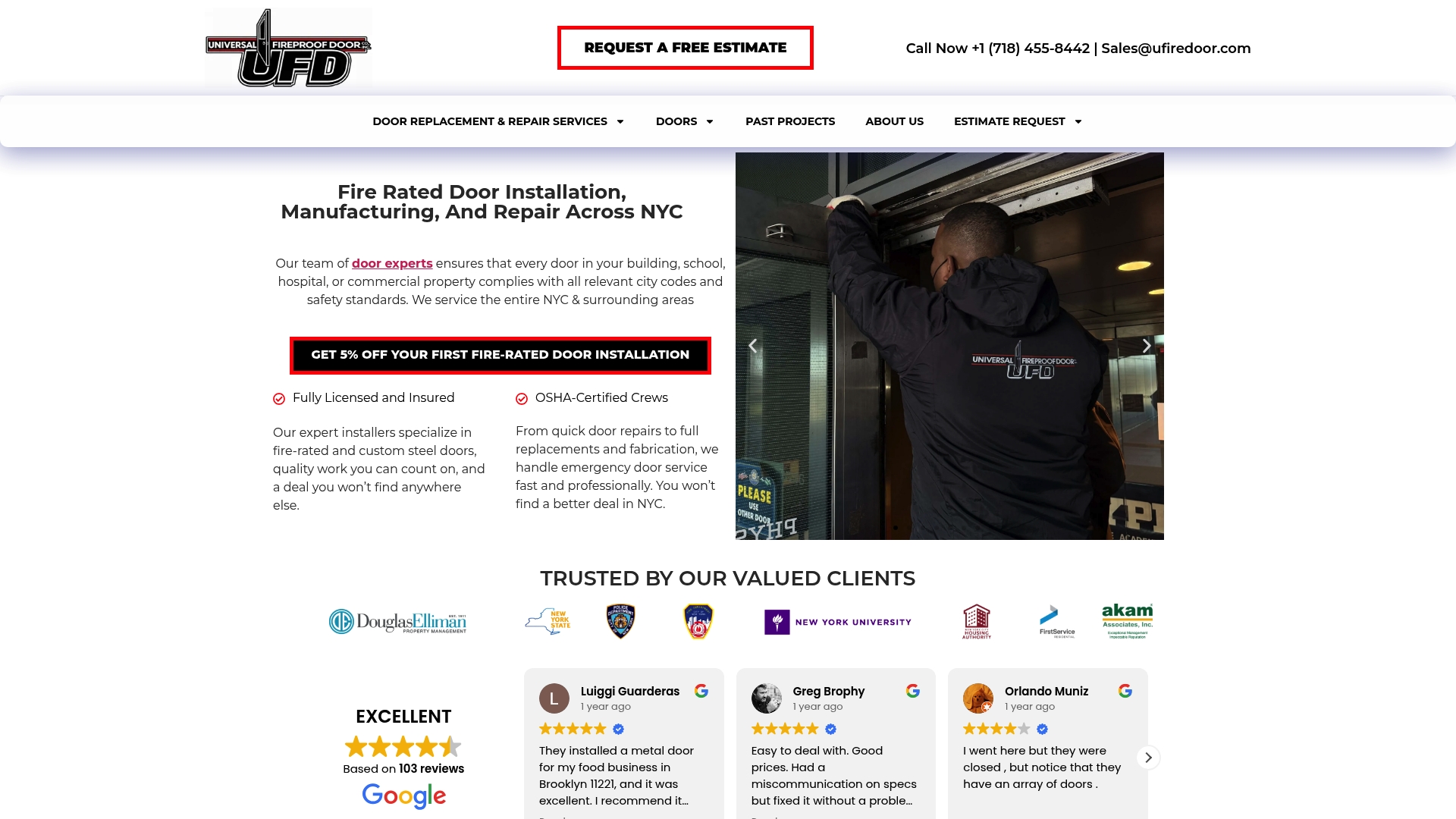
Ufiredoors builds and installs fire-rated steel doors in NYC with 3–5 day turnaround on standard assemblies, UL-approved materials, and over 20 years of FDNY/DOB project experience. Every job includes shop drawings, labeled assemblies, and a single point of contact from fabrication through inspection sign-off.
When you call, have your plan set, any open violation notices, and your existing door schedule ready. That lets Ufiredoors provide an accurate site estimate without a second visit. Request a free site estimate and ask specifically for UL assembly numbers and past FDNY remediation references on the first call.
Key Takeaways
For NYC fire door projects, local fabrication, UL-listed assemblies, and documented FDNY/DOB experience are the three factors that separate vendors who pass inspections from those who create new violations.
| Point | Details |
|---|---|
| Local fabrication wins on speed | NYC-area shops deliver standard fire doors in 3–5 days; national suppliers add 2–4 weeks for custom work. |
| UL labels cover the full assembly | The door, frame, hardware, and closer must all be listed together — a single non-listed component voids the rating. |
| Lowest quote rarely saves money | Missing warranty scope and maintenance plans lead to failed inspections and repair costs that exceed the upfront savings. |
| Verify compliance with documents | Request UL label numbers, shop drawings, DOB installer registration, and past FDNY violation remediation records before signing. |
| Ufiredoors covers the full scope | Fabrication, installation, repair, and maintenance under one contract reduces compliance risk and inspection finger-pointing. |