
Steel doors come in five core types: honeycomb, polystyrene, polyurethane, steel stiffened, and mineral/temperature rise. Each one performs differently across thermal insulation, fire resistance, physical durability, and sound control. Choosing the wrong core for your opening is not just a spec error — it can mean code violations, premature failure, or a door that simply cannot do its job. Here is what each type actually delivers:
- Honeycomb: Moderate sound reduction, minimal thermal insulation, cost-effective for general interior use
- Polystyrene: Good thermal insulation, limited soundproofing, suitable for energy-conscious commercial projects
- Polyurethane: Superior thermal insulation (lowest U-factor), but generally cannot be fire-rated
- Steel stiffened: Extreme abuse resistance, fire ratings up to 3 hours, lower insulation than foam cores
- Mineral/temperature rise: Engineered specifically to limit heat transfer through fire-rated openings like stairwells
1. What makes honeycomb core steel doors a practical choice?
Honeycomb cores use hexagonal cells bonded inside the door shell, treated to resist insect intrusion and decay. The structure gives the door reasonable rigidity without adding much weight, which is why it shows up so often in standard interior commercial openings.
- Moderate sound reduction, not suited for acoustically sensitive spaces
- Minimal thermal insulation, so exterior use in cold climates is a poor fit
- Fire-rated options available without temperature rise
- Works well for stainless steel door applications alongside polystyrene composite cores
The cost advantage is real. Honeycomb doors are among the most affordable steel door core options, making them a go-to for high-volume projects where budget matters more than peak performance. They are also the standard core in many stainless steel door configurations used in hospitals and food processing plants.
2. How do polystyrene core steel doors perform for insulation?
Polystyrene is the most commonly specified insulated core in commercial construction. The foam slab fills the door cavity and handles meaningful temperature differences between each side of the door, which is why it earns its place in energy-efficient building projects.
- Good U-factor and R-value performance, suitable for exterior openings requiring measurable insulation
- Limited soundproofing compared to steel stiffened cores
- Fire-rated without temperature rise as an option
- Available in stainless steel door configurations for corrosive environments
One critical caveat: polystyrene can melt during high-heat painting or factory finishing processes. If you are specifying a custom color or baked-on finish, confirm that the coating process is compatible with the core before ordering. Ufiredoors’s polystyrene door options are built with this finishing consideration in mind.
Pro Tip: Always verify the maximum cure temperature of any factory-applied coating against the polystyrene core’s heat tolerance. A mismatch discovered after fabrication is expensive to fix.

3. When does a polyurethane core steel door make sense?
Polyurethane foam delivers the best thermal insulation of any standard steel door core. Its U-factor is lower than both honeycomb and polystyrene, which translates directly to reduced heat loss through exterior openings in cold climates.
- Superior thermal insulation, lowest U-factor among common core types
- Minimal sound reduction
- Cannot be fire-rated due to the material’s chemical composition, limiting UL certification options
- Best suited for exterior doors where insulation is the priority and no fire rating is required
The fire rating limitation is the deciding factor for most commercial and industrial projects. If the opening requires a UL-listed fire rating, polyurethane is off the table. For unrated exterior vestibule doors or cold storage applications, though, it is hard to beat on energy performance alone.
4. Why steel stiffened cores dominate high-traffic and fire-rated openings
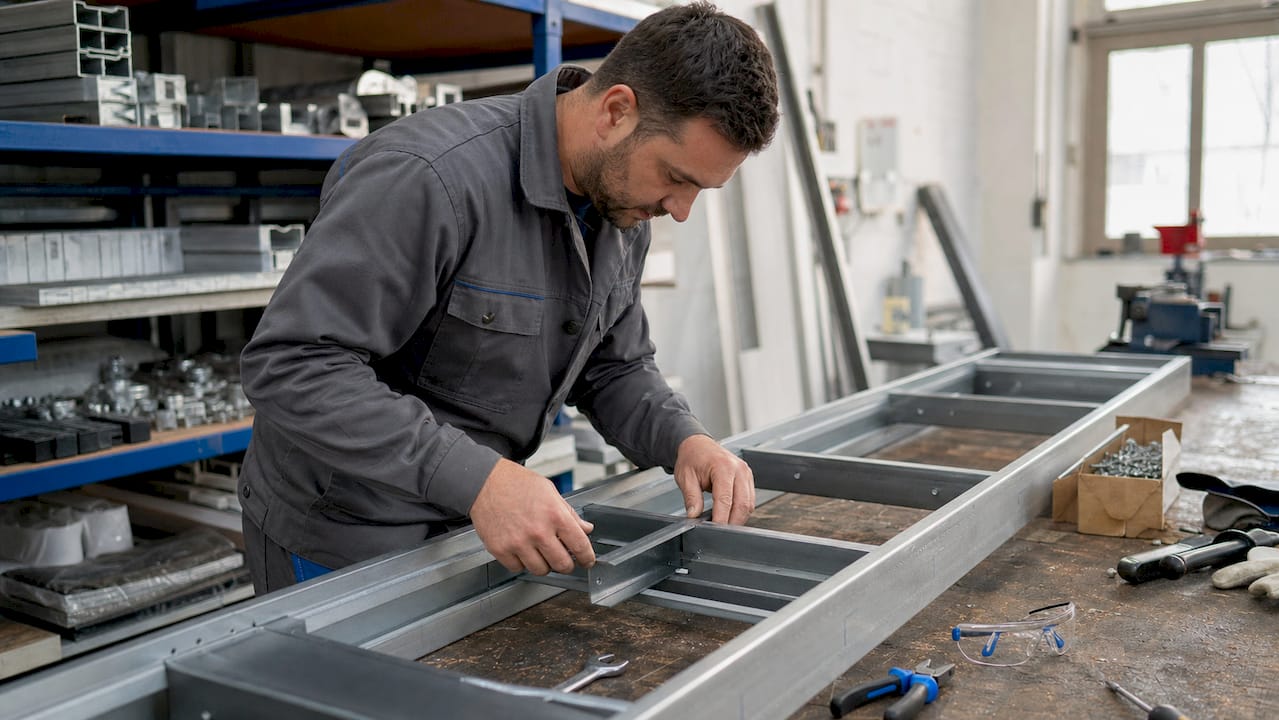
Steel stiffened cores use vertical steel stiffeners spaced closely, with fiberglass insulation fill between them. That construction is what gives these doors their reputation for taking punishment without failing.
- Extreme physical abuse resistance, ideal for loading docks, corridors, and institutional settings
- Highest fire rating capability of any core type, up to 3 hours
- Fiberglass fill aids sound dampening, though thermal insulation remains low (R-value of 1.17, U-value of 0.855)
- Supports the widest range of face sheet gauges and door sizes
Lead-lined doors, which protect against radiation in healthcare and security environments, are typically manufactured with steel stiffened cores and can achieve fire ratings up to 90 minutes alongside bullet resistance levels 1 through 4. For anyone specifying steel stiffened doors in a demanding environment, this core is the default choice for good reason.
5. What mineral core doors are designed to do
Mineral core, also called temperature rise core, is engineered for one specific job: limiting how much heat passes through a fire-rated door to the protected side. Standard fire-rated doors stop flames and smoke but can still transmit significant heat. Mineral core doors address that.
- Required when building codes mandate temperature rise ratings, typically in stairwells and exit corridors
- Fire-rated with temperature rise, meeting NFPA 80 and IBC requirements for protected egress paths
- Laminated door construction with fire-rated certification
- Not selected for insulation or acoustics — purely a life-safety specification
The distinction between “fire-rated” and “fire-rated with temperature rise” trips up a lot of specifiers. A standard fire door keeps fire out of a stairwell. A temperature rise door also limits how hot the stairwell gets, which matters when people need to use that path to evacuate.
6. How to choose the best core for your application
Core choice must match the environment: thermal requirements for exterior openings, abuse resistance for high-traffic areas, and fire ratings for stairwells are the primary drivers. No single core wins across all categories.
- Exterior, cold climate, no fire rating required: Polyurethane for maximum insulation
- Exterior or interior, energy code compliance needed: Polystyrene for measurable R/U-value performance
- High-traffic corridors, loading areas, secure openings: Steel stiffened for abuse resistance and fire ratings
- Stairwells and egress paths with temperature rise requirements: Mineral core, no substitution
- Standard interior openings on a budget: Honeycomb for cost-effective general use
Cost and lifecycle maintenance also factor in. Steel doors carry the lowest total cost of ownership over 30 years compared to wood or aluminum because they can be repaired in the field rather than replaced after damage. Within steel, steel stiffened cores tend to have the longest service life in abusive environments, while foam cores require more care around finishing and impact damage.
Pro Tip: Specify the core type explicitly in your project documents, not just the door series. Manufacturers sometimes offer multiple core options within the same product line, and a default substitution can change fire rating eligibility or finishing compatibility.
7. Durability and security: how each core type compares
| Core Type | Abuse Resistance | Fire Rating | Security Use |
|---|---|---|---|
| Honeycomb | Moderate | Up to 3 hours (without temp rise) | General commercial |
| Polystyrene | Moderate | Up to 3 hours (without temp rise) | Energy-efficient commercial |
| Polyurethane | Moderate | Not available | Exterior, unrated only |
| Steel stiffened | Highest | Up to 3 hours | High-traffic, institutional, secure |
| Mineral/temp rise | Moderate | Rated with temperature rise | Stairwells, egress |
Steel stiffened cores stand apart on security. The internal steel ribs resist forced entry, repeated impact, and the kind of daily abuse that foam cores absorb less effectively over time. For commercial steel security doors, steel stiffened is the specification standard in demanding environments.
8. Thermal insulation and energy efficiency by core type
Polyurethane leads on thermal performance, followed by polystyrene, then honeycomb. Steel stiffened cores sit at the bottom of the insulation ranking, with an R-value of 1.17 and a U-value of 0.855. The fiberglass fill between stiffeners helps with sound, not heat.
For projects subject to energy codes, polystyrene is the practical choice. It delivers a measurable U-factor and R-value, satisfies most commercial energy compliance requirements, and is available in fire-rated configurations. Polyurethane outperforms it thermally but loses fire rating eligibility, which rules it out for most interior commercial openings.
9. Acoustic performance and what the STC scale actually means
The STC scale is logarithmic: a 3-point increase doubles the sound transmission reduction. That means a small upgrade in core performance yields a large real-world acoustic gain, which is why core selection matters so much for noise-sensitive spaces.
Steel stiffened cores with fiberglass fill offer the best acoustic performance among standard options, with STC ratings for full door assemblies reaching up to 55–66 when paired with the correct seals and frames. For spaces like recording studios, conference rooms, or medical offices, pairing the right core with acoustic commercial door hardware and perimeter seals is what actually moves the needle.
Honeycomb provides moderate sound buffering. Polystyrene and polyurethane offer minimal acoustic benefit. If sound control is a primary requirement, steel stiffened is the only core that meaningfully addresses it.
Ufiredoors builds the right core into every door from day one
Picking the right core on paper is one thing. Getting it fabricated correctly, fire-rated, and installed to code is another. Ufiredoors manufactures and installs fire-rated steel doors in New York using UL-approved materials, with lead times of 3–5 days and emergency repair services when something goes wrong. Every door is built locally, which means you get direct control over core specification, gauge, and finish without the guesswork of a distant supply chain.
Whether your project calls for a steel stiffened core in a high-abuse corridor or a polystyrene core for an energy-compliant exterior opening, Ufiredoors matches the core to the opening, not the other way around. Get a free site estimate and have a door specialist review your opening requirements before you finalize specs.
Key Takeaways
The right steel door core depends on your opening’s fire rating, insulation, and durability requirements — no single core type covers all three equally well.
| Point | Details |
|---|---|
| Five core types exist | Honeycomb, polystyrene, polyurethane, steel stiffened, and mineral/temperature rise each serve distinct applications. |
| Polyurethane cannot be fire-rated | Its chemical composition limits UL certification, so it is restricted to unrated exterior openings. |
| Steel stiffened leads on durability | Internal steel ribs deliver the highest abuse resistance and fire ratings up to 3 hours. |
| STC scale is logarithmic | A 3-point STC increase doubles sound reduction, making core selection critical for acoustic performance. |
| Ufiredoors | Manufactures and installs UL-approved steel doors in New York with 3–5 day lead times and free site estimates. |