
Choosing between steel and wood fire doors shapes both your building safety and your long-term upkeep budget. In New York City, architects and general contractors must meet complex local codes while picking types of steel fire doors that take heavy daily wear.
Call Universal Fire Doors at (718) 455-8442 for a professional fire door consultation.
Steel fire doors serve as the industry standard for high-traffic commercial openings, delivering up to a three-hour fire rating, while wood doors are typically limited to 90 minutes. According to the FDNY Fire Code, fire-resistance-rated construction must prevent fire and smoke spread, which makes hollow metal doors essential for service rooms, stairwells, and key commercial exits. Wood fire doors offer a warmer aesthetic that suits multi-family housing interiors, but they cannot withstand the daily wear and high-traffic demands of busy commercial buildings. Selecting the right door for your site requires evaluating the exact building code rules for your opening. The required fire rating levels, and long-term door maintenance or replacement costs.
This guide compares steel fire doors and wood fire doors across every critical specification so you can make an informed decision for your NYC project. We examine fire ratings, material performance, code requirements, maintenance differences, and long-term value.
Understanding Fire Ratings for Steel and Wood Doors
Fire ratings measure how long a door assembly can contain fire and smoke, with ratings ranging from 20 minutes to three hours. Steel fire doors can achieve the full range including the critical three-hour (180-minute) rating, while wood fire doors max out at 90 minutes. Temperature rise doors add an extra layer of protection by limiting heat transfer through the door during a fire.
Fire ratings indicate how long a door can block fire and smoke, with ratings ranging from 20 minutes to three hours. These ratings are determined through standardized testing under strict protocols to verify performance in commercial buildings. When planning a layout, you must select the right doors to meet local codes and pass safety inspections.
Can steel doors be fire doors?
Yes, steel fire doors are standard in most commercial settings because steel inherently resists combustion and maintains structural integrity under extreme heat. These doors block heat and stop smoke from migrating between compartments. The rules in the NYC Fire Code specify where they must be used in exit corridors, stairwells, and service rooms. These areas require doors that will not warp or fail under high heat.
Wood doors can also be fire-rated, but they have inherent limitations because the material is combustible. For this reason, wood doors cannot achieve the highest fire ratings. They perform adequately for standard interior rooms where fire risks are lower. For maximum safety, steel remains the standard choice for meeting all local requirements.
What is the fire rating of a steel fire door?
The fire rating of a steel fire door depends on its construction and intended use, and every door carries a label indicating its rating. Common ratings for steel doors are 20, 45, 60, or 90 minutes. Steel doors with stiffened core construction can achieve a three-hour (180-minute) rating, which is the highest available for any door assembly. The rating must match the wall assembly to maintain the fire barrier across the entire floor.
Steel is the only door material that can reliably achieve a three-hour rating, while wood doors top out at 90 minutes. This makes types of steel fire doors necessary for high-risk zones such as stairwells and fire walls. NFPA 80 governs the installation and maintenance of these assemblies, ensuring that doors latch and close properly to prevent fire from spreading.
Temperature rise limits and standards
Some fire doors are designed to limit heat transfer across the door face, known as temperature rise doors. During a fire, the non-fire side of the door must remain below a specified temperature for a set duration to protect people during evacuation. The rating measures the maximum temperature rise over a 30-minute test period. These doors are required in stairwells where occupants gather to exit.
Three standard temperature rise ratings are available: 250 degrees, 450 degrees, and 650 degrees Fahrenheit. The 250-degree rating is the most stringent option, keeping the non-fire side the coolest. By comparison, a standard hollow metal door without temperature rise construction can reach 1,400 degrees Fahrenheit within the same 30-minute span. Specifying temperature rise doors protects occupants from radiant heat as they evacuate.
Steel Fire Doors: Durability and Performance for Commercial Applications
Steel fire doors deliver exceptional durability in high-traffic commercial environments. Construction options range from 18-gauge to 12-gauge steel, with lower gauges providing thicker metal for heavy-duty applications. Steel doors achieve acoustic ratings from STC 32 to STC 55, and they are the only door material capable of a three-hour fire rating.
Commercial buildings demand robust protection. For high-traffic locations, steel fire doors in NYC provide the best combination of strength and life safety. Steel withstands daily abuse and resists extreme heat during a fire, making it the optimal choice for buildings with heavy foot traffic.
Steel gauge options and structural strength
Hollow metal doors are constructed from sheets of steel formed around a core material. The core may consist of paper honeycomb, dense foam, or steel stiffeners. The thickness of the steel face sheets is expressed as gauge, where a lower number indicates thicker steel. A heavy-duty door uses 16-gauge steel, while standard doors use 18-gauge steel. For extreme applications, 14-gauge and 12-gauge steel are available. These thick steel sheets resist warping and withstand heavy impact in busy areas, ensuring the door lasts for decades.
A robust door also requires a compatible frame. Selecting the right frame ensures steel door frame compatibility with your wall type. This complete assembly prevents air gaps and ensures the door remains secure during a fire.
The three-hour fire rating advantage
When fire safety is the top priority, steel is the most reliable choice. Hollow metal is the only door product available with a three-hour fire label. Tested wood doors can block fire but typically max out at a 90-minute rating. This 180-minute defense is critical for exit stairwells, elevator shafts, and fire walls. It provides building occupants more time to evacuate and helps fire crews contain the blaze.
To comply with strict local regulations, building owners must follow the New York City Fire Code. These doors are tested under extreme heat to verify performance. The three-hour rating is mandated in locations where fire could block exit paths. Installing these doors helps buildings remain compliant and avoids costly code violations.
Acoustic performance and high-traffic durability
Steel fire doors excel in active environments such as NYC schools, hospitals, and commercial offices. These high-use buildings require doors that resist constant wear. Steel doors also provide sound attenuation, which is valuable in noisy environments. Standard steel doors achieve acoustic ratings from STC 32 to STC 55, depending on core construction. This sound control helps create quieter spaces for work and recovery.
Under local building codes, fire doors must self-close and self-latch during an emergency. Heavy-duty steel hinges and latch hardware work reliably with hollow metal frames, ensuring the door closes and seals every time. This consistent sealing prevents smoke and toxic gases from spreading. Regular inspections verify that these components function correctly when needed.
Wood Fire Doors: Aesthetic Appeal and Limitations
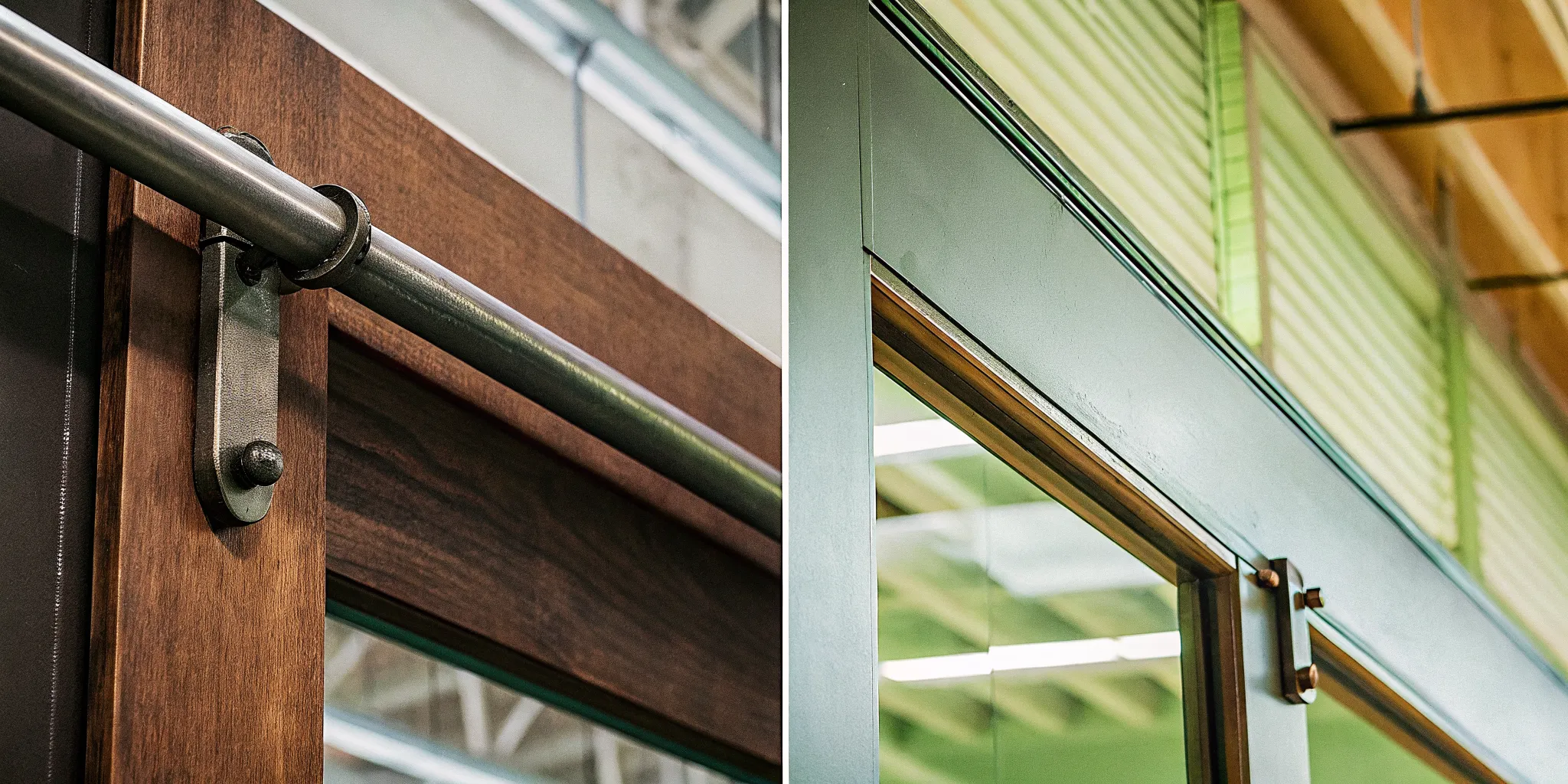
Wood fire doors offer a warm, finished appearance that suits interior office suites, multi-family apartment entries, and hotel rooms. However, their fire rating is capped at 90 minutes, and they are more susceptible to scratches, dents, and moisture damage. Wood doors are appropriate where the required fire rating is 45 minutes or less and where foot traffic is moderate.
Wood fire doors are a common choice for interior spaces where appearance matters. They allow design projects to meet aesthetic goals while still satisfying basic safety requirements. However, wood has inherent limitations because it is combustible, so it cannot match the fire ratings of steel.
Aesthetic advantages of wood doors
In many buildings, a steel fire door can appear too industrial or sterile. Architects often select wood doors for executive office suites and building lobbies. These doors are available in many wood species, stains, and paint finishes to match interior trim. They provide a warm appearance that steel cannot easily replicate.
When specifying a wood fire door, you must evaluate both appearance and safety. While they look polished, wood doors do not withstand heavy wear as effectively as metal. They can scratch or dent in high-traffic areas, diminishing their appearance over time. Wood doors are best suited for locations with low to moderate foot traffic where aesthetic continuity matters.
The 90-minute fire rating limit
Because wood is combustible, wood fire doors have firm fire rating limits. Certified wood doors can achieve ratings of 20, 45, 60, or 90 minutes. However, they cannot achieve a three-hour rating like steel doors can. This limitation is a critical factor when planning your building layout and specifying door assemblies.
For walls that require a three-hour fire barrier, steel fire doors are mandatory. To review the range of wood fire door options available for projects where lower ratings are acceptable, visit our product pages. These options help you balance aesthetics with fire code compliance.
Steel vs wood fire door comparison
The table below compares steel and wood fire doors across key criteria to help you select the right material for your project.
| Criterion | Steel Fire Doors | Wood Fire Doors |
|---|---|---|
| Fire Rating | Up to 3 hours (180 minutes) | Up to 90 minutes |
| Durability | High resistance to wear and impact | Moderate, prone to scratches and dents |
| Acoustic Performance | STC 32 to 55 | STC 30 to 35 |
| Typical Applications | High-traffic commercial, exits, stairwells | Multi-family interiors, offices, hotels |
| Maintenance | Minimal; occasional cleaning and paint | Regular sealing, polishing, and repair |
| Long-Term Cost | Lower due to extended service life | Higher due to more frequent replacement |
Where wood fire doors meet code
Wood fire doors perform well inside multi-family residences and apartment entryways. In these settings, a 20-minute or 45-minute rating is typically sufficient to meet code requirements. They provide safety while maintaining a residential aesthetic. You will commonly find them in hotel guest rooms, school administrative offices, and similar interior applications.
To verify that your doors comply with all local regulations, review the applicable building codes. Under Chapter 7 of the New York City Fire Code, all fire-rated doors must meet strict design and testing standards. Wood doors can satisfy these requirements only when they carry proper testing labels and are paired with certified hardware.
NYC Building Code Requirements for Fire Rated Doors
New York City enforces fire safety through Chapter 7 of the NYC Building Code and the FDNY Fire Code. Fire-rated door assemblies must be self-closing and self-latching. Steel fire doors are mandated in high-traffic commercial settings, schools, hospitals, and any location requiring a fire rating above 90 minutes. Temperature rise doors are required in stairwells serving as means of egress.
Building safety in New York City depends on strict fire protection standards. The New York City Fire Code is a city law that establishes fire safety regulations governing all buildings across the five boroughs. Under this code, commercial steel fire door installation must meet precise fire-resistance ratings to protect commercial spaces and residential buildings throughout the city.
Chapter 7 fire protection standards
The core of these safety regulations is Chapter 7 of the NYC Building Code, which governs fire-resistance-rated construction to prevent fire from spreading. All components of the opening assembly must meet these standards to block smoke and heat, including the door leaf, frame, hinges, locks, and any glazing. Owners must ensure each door assembly carries the correct rating for its location.
The code specifies clear ratings for different building zones:
- Doors in corridors or smoke barriers typically require a 20-minute rating.
- Doors in exit stairwells require a 90-minute rating.
- Doors serving shaft openings require a 90-minute rating.
- Doors in fire walls can require up to a three-hour rating.
Where steel fire doors are required
The type of door you select depends on the specific building zone. The city mandates steel fire doors in high-traffic locations including public schools, hospitals, and commercial spaces. These buildings accommodate large crowds and experience high levels of daily wear. Heavy-gauge steel stands up to intense use while providing the highest level of fire protection.
Certified wood fire doors are permitted inside multi-family properties and are commonly used for apartment entry doors. They provide a natural appearance for interior rooms and corridors. However, even certified wood cannot achieve the three-hour rating that steel doors provide. If the code requires a rating exceeding 90 minutes, steel doors are the only compliant option.
Self-closing and self-latching requirements
Every fire door on your property must function correctly during an emergency. The Fire Code regulates the design, installation, operation, and maintenance of all fire protection systems. To maintain the fire barrier, fire doors must be self-closing and self-latching. These devices ensure the door closes and latches automatically, preventing fire and toxic smoke from spreading beyond the compartment of origin.
In NYC stairwells and egress paths, temperature rise doors may be required to limit heat transfer to the safe side of the door, protecting occupants as they evacuate. All fire door assemblies must be maintained per NFPA 80 guidelines. Regular testing and inspections ensure these assemblies remain fully code compliant.
Maintenance and Longevity: Steel vs Wood Fire Doors
Steel fire doors require minimal maintenance and typically last for decades in commercial service, while wood fire doors need regular sealing, repainting, and more frequent hinge repairs. Annual inspections per NFPA 80 are mandatory for both types. Over a 20-year building lifecycle, steel fire doors deliver significant cost savings due to reduced maintenance and replacement frequency.
Commercial fire doors must withstand heavy daily use while protecting lives during a fire. The choice between wood and steel depends significantly on long-term maintenance requirements. Wood doors offer a warm appearance for office interiors, but steel fire doors provide a longer service life in high-traffic settings.
Impact resistance and daily wear
High-traffic areas in New York City buildings expose doors to constant physical contact. Handcarts, luggage, equipment, and foot traffic can dent, scratch, or splinter wood doors over time. Hollow metal doors resist these daily impacts without significant damage. This durability prevents the door from warping, sagging, or losing its flush fit within the frame.
Wood fire doors require regular sealing and painting to protect their core from moisture absorption. If the protective coating deteriorates, wood doors can absorb moisture and swell, causing the door to stick in its frame. A door that sticks will not close and latch properly, creating a serious fire safety hazard. Steel fire doors are not susceptible to moisture damage and require only routine cleaning and occasional repainting.
Annual fire door inspection requirements
Safety codes mandate strict maintenance protocols for all fire door assemblies. NFPA 80 requires building owners to inspect every fire door at least once per year. Under the NYC Fire Code, all fire protection systems must be maintained in safe working condition.
Annual inspections verify specific components of the door assembly. Both wood and steel fire doors must have functioning self-closing and self-latching devices. If a door fails to close or latch automatically, the hardware must be repaired or replaced immediately. Wood doors typically require more frequent hinge repairs because the weight of the door can cause screws to loosen or strip over time.
Long-term cost comparison
While wood fire doors have a lower initial purchase price, they cost more to maintain over their service life. Wood fire doors in high-traffic corridors often need replacement within a few years due to dents, scratches, or moisture-related warping. Heavy-duty steel doors, by contrast, can remain in service for decades under continuous commercial use. This extended service life makes steel a cost-effective choice over the long term.
For best results, work with experienced professionals to install and maintain your fire doors. Expert teams ensure that steel fire doors fit correctly in their frames and latch securely to meet local safety codes. For projects in the NYC area, you can engage specialists for steel fire door installation services to keep your property safe and compliant.
Frequently Asked Questions
Do steel fire doors need to be self-closing?
Yes. Under Chapter 7 of the NYC Fire Code and NFPA 80 standards, all fire-rated door assemblies must be self-closing and self-latching. This requirement ensures the door closes and seals during a fire to block heat and smoke. Property managers must use compliant hardware to avoid fire code violations and safety risks.
Can you add vision panels to a steel fire door?
Yes, but you must use certified fire-rated glass and frames. The glass size is strictly limited by the door fire rating. For example, a three-hour fire-rated door is limited to 100 square inches of glass per NFPA 80 guidelines. Licensed installers must fit these panels to maintain the fire rating.
How often must NYC commercial fire doors be inspected?
Commercial fire doors must be inspected and tested at least once per year. NFPA 80 and the NYC Fire Code require building owners to verify that all hinges, latches, and self-closing devices function correctly. Written records of these annual tests must be maintained for at least three years for review by FDNY inspectors.
Are wood fire doors ever acceptable in commercial buildings?
Yes, wood fire doors are acceptable in commercial buildings where the required fire rating is 90 minutes or less. Common applications include interior office corridors, hotel guest room doors, and multi-family apartment entries. Wood doors provide a finished aesthetic while meeting code requirements for these rating levels, though they cannot substitute for steel where a three-hour rating is required.
Ready to choose the right fire doors for your NYC property?
Delaying fire door decisions can lead to costly code violations, failed inspections, and safety hazards for building occupants. Addressing these requirements today keeps your property safe and fully compliant before the next city inspection. Our Brooklyn-based team handles every stage of the process in-house, from custom manufacturing to professional installation, ensuring fast turnaround and reliable results.
Ready to secure your building? Call (718) 455-8442 to schedule a free fire door consultation.