
Fireproofing is the application of protective materials to structural steel and other load-bearing components to delay heat transfer and preserve their strength during a fire. The goal is not to stop a fire from spreading. It is to buy critical time for evacuation and firefighting before steel reaches failure temperatures. Unprotected steel loses about half its load-bearing strength above 1,100°F and can reach that temperature in as little as 10 minutes in a fully developed fire. For Northeast property owners managing compliance under the 2026 International Building Code (IBC), understanding the fireproofing process explained here is the foundation of any serious fire safety plan.
What are the primary fireproofing materials and how do they work?
Two material types dominate commercial fireproofing: spray-applied fire-resistive materials (SFRM) and intumescent coatings. Each works through a different mechanism, and choosing the wrong one for your application creates both performance and inspection problems.
Spray-applied fire-resistive materials (SFRM)
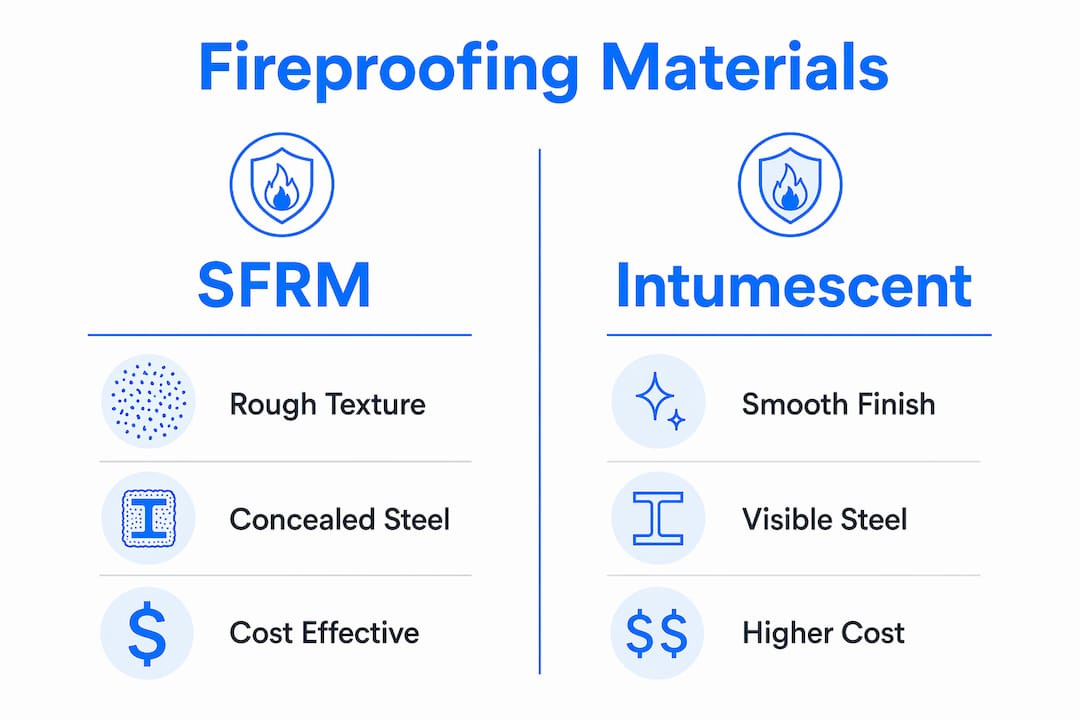
SFRM is the standard choice for concealed structural steel in commercial and industrial buildings. It uses mineral fibers or cementitious binders to create a thick thermal barrier around steel members. Mineral fiber SFRM systems at 1.5–2.0 inches achieve up to 4 hours of fire resistance per ASTM E119 and can lower steel temperature rise by 300–400°F during a 2-hour fire. That performance margin is what keeps a building standing long enough for occupants to get out.
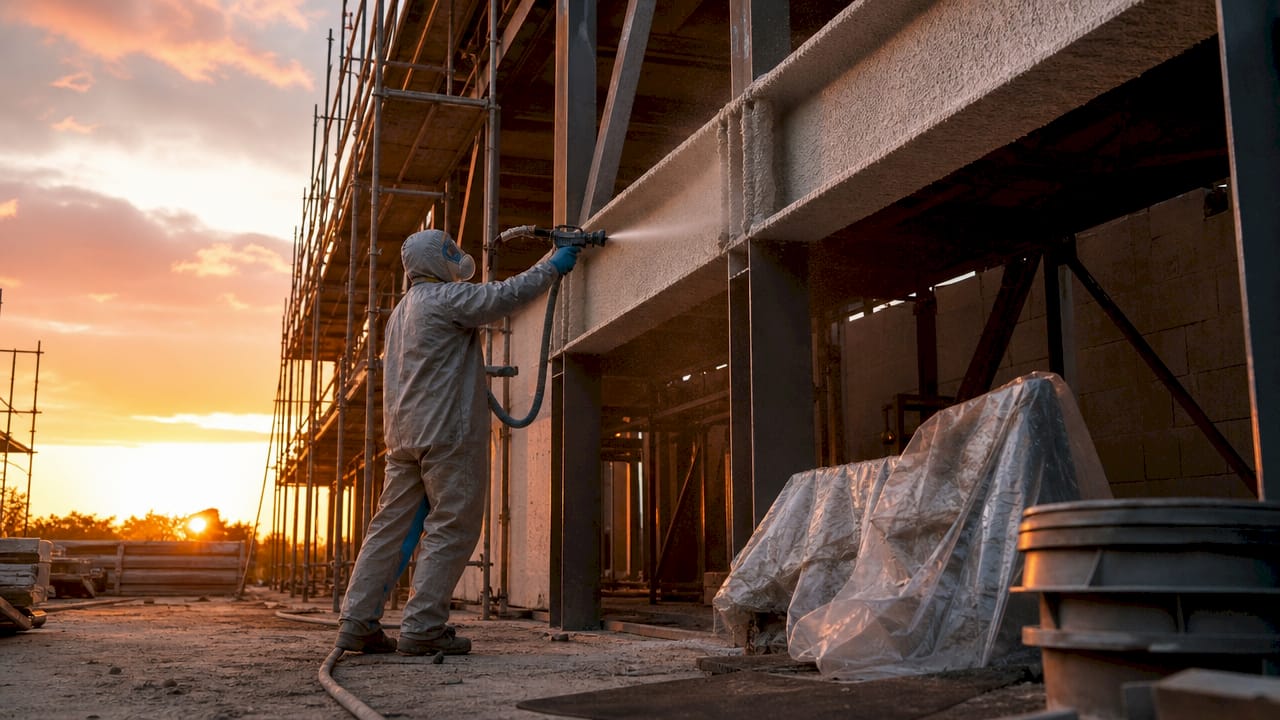
SFRM applies quickly over large surface areas, which makes it cost-effective for new construction. The tradeoff is appearance. The finished surface is rough and gray, which is why SFRM stays hidden above ceilings and inside mechanical spaces. It is not a finish material.
Intumescent coatings
Intumescent coatings are the right choice when steel is exposed and visible, such as in open-plan offices, atriums, or architectural steel features. These coatings look like paint when applied. Under heat, they expand 10–100 times their original thickness, forming an insulating char layer that slows heat transfer to the steel beneath. The char acts as a thermal blanket, protecting the steel long enough to meet the required fire resistance rating.
Intumescent coatings cost more per square foot than SFRM. They also require more surface preparation and careful application conditions. But for exposed architectural steel, they are the only practical option that meets both aesthetic and code requirements.
Pro Tip: The choice between SFRM and intumescent depends on exposure, aesthetics, and site conditions, not just cost. Specifying the wrong material type for your environment will cause inspection failures regardless of how well it was applied.
| Feature | SFRM | Intumescent coating |
|---|---|---|
| Appearance | Rough, textured | Smooth, paintable |
| Best use | Concealed structural steel | Exposed or architectural steel |
| Fire resistance mechanism | Thick thermal barrier | Expanding char layer |
| Application speed | Fast over large areas | Slower, more prep required |
| Relative cost | Lower per sq ft | Higher per sq ft |
How is the spray-applied fireproofing process performed step by step?
The spray-applied fireproofing process follows six defined sequential steps. Skipping or rushing any one of them creates defects that fail inspection and require costly rework.
Verify the UL-listed design. Before any material touches steel, confirm the approved UL system design for the project. This document specifies the exact product, thickness, and substrate conditions required to achieve the rated fire resistance. Any deviation voids the listing.
Prepare and inspect the steel substrate. Steel must be clean, dry, and free of oil, loose mill scale, and incompatible primers. Contaminated surfaces prevent proper adhesion. The general contractor is responsible for confirming the substrate meets the spec before the fireproofing crew arrives.
Confirm temperature and ventilation conditions. Ambient and substrate temperatures must stay at or above 40°F during application and for at least 24 hours afterward. Temperatures below 40°F cause binder hydration failure, leading to poor adhesion and delamination. In Northeast winters, this means active heating of the work area before and during application.
Mix materials and set up spray equipment. SFRM is mixed with water on site to a specific consistency. Equipment calibration determines spray pressure and output rate. Incorrect mixing ratios produce material that is either too dense or too weak to meet the UL listing requirements.
Apply spray in controlled passes to design thickness. The applicator builds up the coating in multiple passes, checking thickness with a wet-film gauge throughout. Rushing to single-pass application creates uneven coverage and voids. The target thickness is set by the UL design, typically measured in fractions of an inch.
Cure and protect coated surfaces before inspection. SFRM requires 24–48 hours of initial curing before any mechanical contact or moisture exposure. Other trades must stay off the floor during this window. After curing, the surface is ready for the formal ASTM E605 and E736 inspections.
Pro Tip: Schedule fireproofing as a protected phase in your project timeline. Allowing MEP trades back onto a floor before curing completes is the single most common cause of impact damage and expensive rework on commercial projects.
What are the key compliance and inspection requirements for fireproofing in 2026?
The 2026 IBC makes independent third-party inspection of fireproofing mandatory before a certificate of occupancy is issued. This is not a formality. It is a legal requirement that directly affects your ability to open and operate the building.
Inspections follow a three-stage structure:
- Pre-application inspection: The inspector verifies the approved UL system design, confirms substrate preparation, and checks environmental conditions before any material is applied.
- In-progress inspection: The inspector observes application technique, checks wet-film thickness during spraying, and confirms mixing ratios are within spec.
- Final inspection: ASTM E605 and E736 tests measure thickness, density, and bond strength of the cured material. A minimum of 4 thickness tests per 1,000 square feet is required. Bond strength must meet the values specified in the UL listing.
The inspection report becomes part of the building’s permanent record. Without it, the authority having jurisdiction (AHJ) will not issue occupancy approval. For Northeast property owners, this means coordinating inspection scheduling well in advance of your target occupancy date.
The fire rating standards that govern fireproofing systems connect directly to the standards applied to fire-rated doors and other passive fire protection components throughout your building. A gap in any one system can affect the overall fire resistance rating of the assembly.
ASTM E119 is the performance standard that defines fire resistance ratings. A system rated at 2 hours under ASTM E119 means the assembly maintained its structural integrity for 2 hours under standardized fire conditions. That rating only holds if the installed system matches the UL-listed design exactly.
What are common challenges and maintenance considerations?
Fireproofing does not stay effective on its own after installation. Physical damage, moisture, and aging all degrade performance over time. Northeast property owners face specific environmental risks that make ongoing maintenance a real operational concern.
The most common application failures include:
- Poor substrate preparation: Oil, dust, or incompatible primers prevent adhesion. The material looks applied but peels away under thermal stress.
- Temperature control failures: Cold weather application without adequate heating produces weak, brittle material that fails ASTM E736 bond tests.
- Premature trade re-entry: Mechanical and electrical crews walking on freshly applied SFRM before the 24–48 hour cure window causes physical damage that requires full reapplication in affected areas.
- Wrong binder selection for site conditions: Gypsum-based SFRM in damp or semi-exposed environments raises corrosion risk on the steel beneath. Selecting the correct binder type for conditioned versus semi-exposed spaces is a detail that gets overlooked and causes inspection failures.
After installation, periodic inspections are the only way to confirm fireproofing remains effective. Impact damage and moisture can degrade fireproofing even when it was correctly installed. Building renovations, mechanical work above ceilings, and water intrusion events are the most common causes of post-installation damage.
Pro Tip: Add fireproofing condition to your annual building inspection checklist. Any area where ceiling tiles were removed for mechanical access should be visually checked for SFRM damage before tiles go back in.
Coordinate fireproofing inspections with your fire door maintenance schedule. Both are passive fire protection components, and inspecting them together reduces scheduling overhead and keeps your compliance documentation current.
Key Takeaways
Fireproofing is a passive thermal barrier system that requires correct material selection, controlled application, independent inspection, and ongoing maintenance to remain code-compliant and effective.
| Point | Details |
|---|---|
| Fireproofing buys time, not immunity | It delays steel failure during a fire, giving occupants time to evacuate before structural collapse. |
| Material choice depends on exposure | Use SFRM for concealed steel and intumescent coatings for exposed or architectural steel. |
| Temperature control is non-negotiable | Application and curing must occur above 40°F; cold weather application causes adhesion failure. |
| 2026 IBC requires third-party inspection | Independent inspectors verify thickness, density, and bond strength before occupancy is approved. |
| Maintenance is ongoing | Inspect fireproofing annually and after any mechanical work that disturbs ceilings or structural areas. |
What Northeast property managers often get wrong about fireproofing
Most property managers I work with treat fireproofing as a one-time construction task. You get it applied, you pass inspection, and you move on. That mindset is the source of most compliance problems I see in Northeast commercial buildings.
The reality is that fireproofing is a passive system. It sits hidden above ceilings and inside walls, doing nothing visible until the moment it matters most. That invisibility makes it easy to forget. But SFRM is a physical material that gets knocked, wet, and degraded over years of building operation. A renovation in 2019 that required ceiling access may have left damaged fireproofing that nobody documented. That gap is your liability today.
The other thing I see consistently is poor project coordination during new construction. General contractors know the temperature rules. They know other trades need to stay off the floor during curing. But schedule pressure wins, and MEP crews walk back in at hour 18. The fireproofing looks fine to the eye. It fails the bond test. Now you have a rework delay that costs more than the original application.
The 2026 commercial fire door regulations follow the same compliance logic as fireproofing. Both systems require documented inspection, both are passive, and both get overlooked until an AHJ flags a deficiency. Treat them as a package, not as separate line items.
My honest advice: build fireproofing inspection into your standard building operations calendar, not just your construction closeout checklist. The cost of a periodic inspection is trivial compared to the cost of a failed occupancy renewal or a liability claim after a fire event.
— Esteban
Fire-rated doors that complete your passive fire protection system
Fireproofing protects your building’s structural steel. Fire-rated doors protect the openings in your fire-rated assemblies. Both are required for a complete passive fire protection system, and a gap in either one affects your overall compliance standing.
Ufiredoors manufactures and installs UL-listed fire-rated steel doors built locally in New York, with lead times of 3–5 days for most commercial projects. Every door is fabricated to meet 2026 IBC requirements and comes with full installation and documentation support. For Northeast property owners who need fast, code-compliant door solutions, Ufiredoors also offers free site estimates on steel stiffened door systems. Contact Ufiredoors to confirm your building’s fire door compliance alongside your fireproofing program.
FAQ
What is the fireproofing process in simple terms?
Fireproofing is the application of heat-resistant materials to structural steel to slow temperature rise and prevent collapse during a fire. The process includes substrate preparation, controlled spray application, curing, and third-party inspection to verify compliance with UL-listed system requirements.
How long does fireproofing last on a commercial building?
Properly applied SFRM can last the life of the building when protected from physical damage and moisture. Annual inspections are recommended to catch degradation from mechanical work, water intrusion, or renovation activity that disturbs ceilings or structural areas.
Is fireproofing required by code in New York and the Northeast?
Yes. The 2026 IBC requires fireproofing for structural steel in most commercial buildings, along with mandatory independent third-party inspections before a certificate of occupancy is issued. Local amendments in New York City may impose additional requirements beyond the base IBC standard.
What is the difference between SFRM and intumescent fireproofing?
SFRM creates a thick mineral fiber or cementitious thermal barrier and is used on concealed steel. Intumescent coatings expand up to 100 times under heat to form an insulating char and are used on exposed or architectural steel where appearance matters.
How do inspectors test fireproofing after application?
Inspectors use ASTM E605 and E736 protocols to measure thickness, density, and bond strength of the cured material. A minimum of 4 thickness tests per 1,000 square feet is required, and results must match the values specified in the approved UL-listed system design.