
Self-closing doors are mechanical devices that automatically return a door to the closed position after each use, making them the primary physical defense against fire spread, unauthorized access, and structural wear in commercial and residential buildings. The role of self-closing doors goes far beyond convenience. They are a code-mandated safety component under standards like NFPA 80 and the Fire Safety (England) Regulations 2022, and self-closing devices are widely recognized as the single most important component in maintaining fire compartmentation during the critical first minutes of a fire. For property managers and building owners, understanding how these devices work, what the law requires, and how to keep them functional is not optional. It is a core facility management responsibility.
How do self-closing doors work and what mechanisms control them?
Self-closing doors rely on a door closer, a mechanical device mounted to the door frame or door leaf that uses stored energy to pull or push the door shut after it opens. The three most common closer types are hydraulic, spring-based, and electromagnetic hold-open devices. Each serves a different operational need.
Hydraulic closers use oil-filled cylinders to control the speed and force of closure. They offer the most precise adjustment and are standard on commercial fire doors. Spring-based closers use coil tension to return the door. They are simpler and cheaper but offer less control over closing speed. Electromagnetic hold-open devices hold a fire door open during normal building use and release automatically when the fire alarm activates.
Three key adjustable settings control how a hydraulic closer performs:
- Sweep speed: Controls how fast the door moves from fully open to about 15 degrees from the frame. Set too fast, and the door slams. Set too slow, and it may not close against air pressure.
- Latch speed: Controls the final few degrees of closure to pull the latch into the strike plate. This setting is the most commonly misadjusted.
- Backcheck: Slows the door as it opens wide, preventing it from slamming against the wall and damaging the frame or closer arm.
Closer power size is graded 1–7 under EN 1154. Grade 3 is the minimum for a standard FD30 fire door, while heavier doors or those in mechanically ventilated buildings require Grade 4 or higher. A closer with insufficient power will fail to overcome air pressure differentials and leave the door unlatched. That is a direct fire safety failure.
Hold-open electromagnetic devices add another layer of complexity. NFPA 101 requires these devices to be wired into the building’s fire alarm and smoke detection systems so they release automatically upon alarm activation. A manual wedge or door stop used in place of a proper hold-open device is a code violation, not a workaround.
Pro Tip: If your building uses electromagnetic hold-open devices, test their release function during every scheduled fire alarm system maintenance cycle, not just during door inspections. These are two separate maintenance tracks that must coordinate.
What are the main benefits of self-closing doors in buildings?
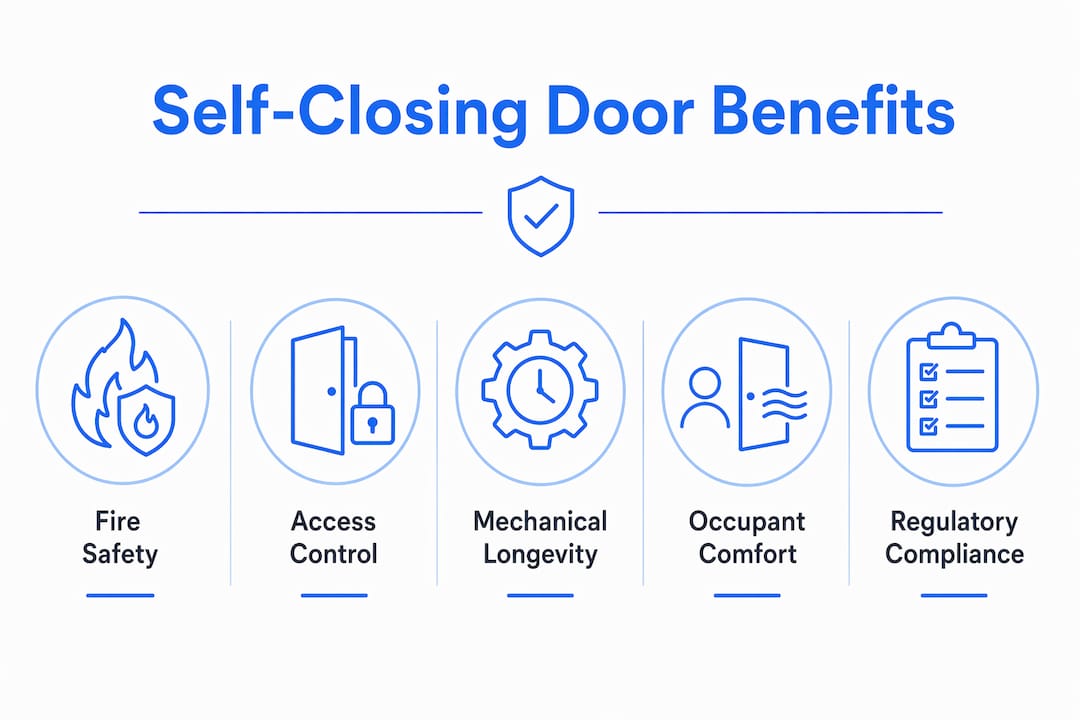
Self-closing doors deliver four distinct benefits that matter directly to property managers: fire and smoke containment, security, reduced mechanical wear, and occupant safety.
Fire and smoke containment
Fire compartmentation depends on doors being closed. A door left open, even briefly, can allow smoke and toxic gases to spread through a building within minutes. Self-closing devices act as a fail-safe against human error, the most common reason fire doors are found open during emergencies. A properly adjusted closer ensures the door closes and latches every single time, without relying on anyone to remember.
Security and access control
“Automatic closing ensures doors in secure areas are not inadvertently left open, maintaining building security and reducing the risk of unauthorized entry.”
Controlled door closure removes the human variable from access control. In stairwells, server rooms, and restricted corridors, a self-closing door is a passive security measure that works around the clock without staff intervention. For multi-tenant commercial buildings, this is a meaningful liability reduction.
Reduced mechanical wear and longer door life
Door closers control the speed and force of every closing cycle. Without a closer, doors slam, hinges loosen, frames rack, and latch bolts wear unevenly. Controlling door movement extends the life of the entire door assembly, including the frame, hinges, and lock hardware. Facility managers who track repair costs often find that buildings with well-maintained closers have significantly lower door hardware replacement rates.
Occupant comfort and safety
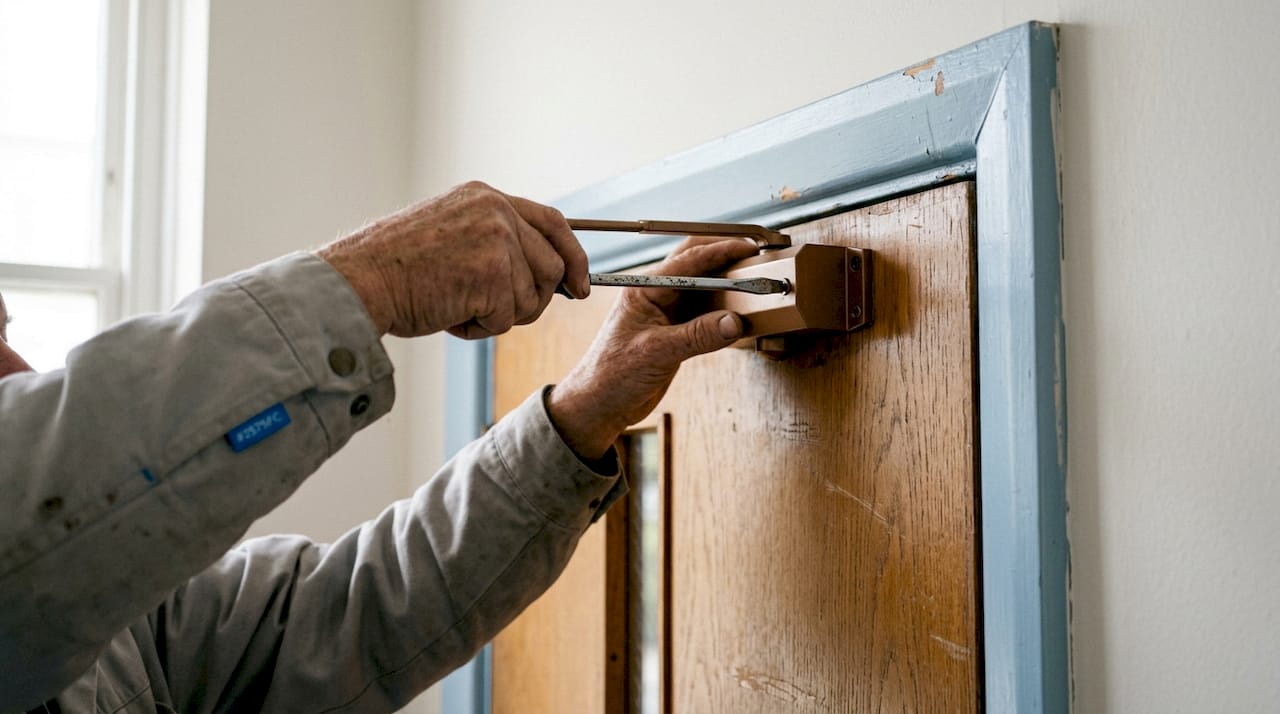
A door that closes quietly and consistently creates a better environment for building occupants. It reduces noise transfer between spaces, limits drafts in climate-controlled areas, and prevents the hazard of a door swinging back unexpectedly. For fire-rated residential doors, this combination of safety and comfort is especially relevant in apartment buildings where occupants move through fire doors dozens of times daily.
What are the regulatory and inspection requirements for self-closing doors?
Regulatory requirements for self-closing doors are specific, and non-compliance carries real consequences. Property managers need to know which standards apply to their building type and what inspection cadences are legally required.
| Regulation | Building Type | Key Requirement |
|---|---|---|
| NFPA 80 | Commercial (US) | All fire door closers must be listed and labeled; manual wedges are prohibited |
| NFPA 101 | Commercial (US) | Electromagnetic hold-opens must connect to fire alarm and release automatically |
| Fire Safety (England) Regulations 2022 | Residential (UK) | Annual checks for common-parts fire door closers; quarterly for flat entrance doors |
| UK Building Regulations (Part B) | Residential and commercial (UK) | Self-closing devices required on all fire doors |
Under the 2026 fire safety regulations, common-parts fire door closers in multi-occupied residential buildings must be checked annually, while flat entrance doors require quarterly inspections. That frequency reflects how much use those doors see and how quickly closers can drift out of adjustment.
NFPA 80 is equally strict on the hardware side. An off-the-shelf closer without fire-rated certification does not satisfy NFPA 80, even if it physically closes the door. Every component in a fire door assembly must be listed and labeled. A damaged or leaking closer invalidates the entire assembly’s fire rating, which means the door no longer counts as a fire barrier for code purposes.
Common inspection failures include doors propped open with wedges, closers adjusted so slowly the door fails to latch, and hold-open devices not wired to the fire alarm. Each of these is a code violation, not just a maintenance issue.
Pro Tip: Add a closer function check to your fire door inspection checklist as a standalone item. Test sweep speed, latch speed, and full latching under the building’s normal air pressure conditions, not just with the HVAC off.
For a full breakdown of what commercial fire door regulations require in 2026, including documentation and record-keeping obligations, review the current compliance guidance before your next inspection cycle.
What are common problems with self-closing doors and how do you fix them?
Self-closing door failures follow predictable patterns. Knowing what to look for makes diagnosis faster and prevents small issues from becoming code violations.
Failure to latch. This is the most common and most serious problem. Lead Fire Door Inspector Thomas Cork identifies misbalanced closing speeds as the primary cause. The sweep speed is often set too fast, causing the door to bounce off the frame, while the latch speed is too slow to pull the bolt home. Adjust latch speed first, then recheck sweep speed.
Insufficient closer power. A closer rated too low for the door weight or building pressure will fail to close the door reliably. Check the EN 1154 grade against the door specification. Mechanically ventilated buildings often need a Grade 4 or higher closer even on standard-weight doors.
Damaged or leaking hydraulic fluid. A closer leaking oil has lost its damping capacity. The door will either slam or fail to close consistently. A leaking closer must be replaced, not adjusted. Under NFPA 80, a damaged closer invalidates the fire door assembly’s rating.
Hold-open devices not integrated with the fire alarm. A hold-open device that does not release on alarm activation is a code violation under NFPA 101. Automatic closing devices must be tested during fire system maintenance cycles, not just during door inspections.
Worn or damaged intumescent seals. Seals that are compressed, torn, or missing reduce the door’s ability to contain smoke even when the door is fully closed. Routine remediation includes replacing seals and re-hanging doors to restore proper tolerances without requiring full door replacement.
Pro Tip: Never use non-certified ironmongery as a replacement part on a fire door. Substituting an uncertified hinge, seal, or closer changes the door’s tested configuration and voids its fire certification. Always use UL-approved installation components.
Key Takeaways
Self-closing doors are a code-required safety system, and their reliability depends on correct power sizing, proper speed adjustment, certified components, and scheduled inspections tied to both door and fire alarm maintenance cycles.
| Point | Details |
|---|---|
| Power size matters | Match the EN 1154 grade to door weight and building pressure; Grade 3 minimum for FD30 doors. |
| Latch speed is the critical adjustment | A door that does not latch fully fails inspection and provides no fire compartmentation. |
| Hold-opens need alarm integration | Electromagnetic hold-open devices must wire to the fire alarm and release automatically on activation. |
| Inspection cadence is legally set | Flat entrance fire doors require quarterly checks; common-parts closers require annual inspection under 2026 regulations. |
| Certified components are non-negotiable | An uncertified closer or replacement part voids the fire door assembly’s rating under NFPA 80. |
What I’ve learned from years of fire door closer failures in the field
The most expensive fire door problems I’ve seen were not caused by bad products. They were caused by good products that were never adjusted correctly after installation. A hydraulic closer installed on a mechanically ventilated floor and never tuned for that building’s air pressure will fail to latch within weeks. Nobody notices until the inspection.
The second pattern I see constantly is the accessibility conflict. Building managers get complaints that a fire door is too heavy to open, so they reduce the closer’s spring tension. The door then fails to latch under normal air pressure. That is a real tension between accessibility requirements and fire safety performance, and the answer is not to detune the closer. The answer is to specify the right closer type for the application from the start, whether that is a low-energy power-assisted closer or a concealed overhead closer with a lighter spring profile.
What most property managers miss is that the closing cycle settings are a living adjustment, not a one-time setup. Buildings change. HVAC systems get upgraded. Occupancy patterns shift. A closer that was perfectly tuned three years ago may now be fighting a pressure differential it was not designed for. Building in a semi-annual closer check, separate from the formal fire door inspection, catches these drift issues before they become compliance failures.
The bottom line is this: treat the closer as a precision component, not a commodity fitting. The fire door is only as good as the device that closes it.
— Esteban
Ufiredoors’ fire-rated steel doors for compliant buildings
Property managers who need self-closing fire doors that meet NFPA 80 and current building codes have a clear path forward with Ufiredoors.
Ufiredoors designs, fabricates, and installs fire-rated steel doors built with UL-approved materials at its Brooklyn facility, with installation completed in 3–5 days. Every assembly ships with certified closers, frames, and hardware that satisfy code requirements out of the box. For property managers who need a site assessment before committing to a specification, Ufiredoors offers free site estimates on steel stiffened door projects. With over 20 years of experience serving commercial, residential, and industrial buildings across New York, Ufiredoors delivers doors that pass inspection the first time.
FAQ
What is the role of self-closing doors in fire safety?
Self-closing doors maintain fire compartmentation by ensuring fire doors close and latch after every use, preventing smoke and flames from spreading between building zones. They act as a mechanical fail-safe against human error during emergencies.
How often do self-closing fire doors need to be inspected?
Under the 2026 Fire Safety (England) Regulations, flat entrance fire doors require quarterly inspections and common-parts fire door closers require annual checks. In the US, NFPA 80 requires annual fire door inspections with documented records.
Can I use a regular door closer on a fire door?
No. NFPA 80 requires all closing devices on fire doors to be listed and labeled for fire door use. An uncertified closer invalidates the fire door assembly’s rating, even if it physically closes the door.
What causes a self-closing door to fail inspection?
The most common failure is a door that does not latch without manual assistance, usually caused by misadjusted sweep or latch speed settings. Other failures include propped-open doors, leaking closers, and hold-open devices not connected to the fire alarm.
What EN 1154 grade closer do I need for my fire door?
Grade 3 is the minimum for a standard FD30 fire door. Heavier doors or doors in mechanically ventilated buildings require Grade 4 or higher to reliably overcome air pressure differentials and close fully under all conditions.