
Door materials are the single biggest factor determining a door’s durability, security, and long-term maintenance cost. The seven most common types of door materials are wood, fiberglass, steel, aluminum, composite, vinyl (uPVC), and glass, each with distinct strengths suited to specific climates, budgets, and building codes. Fiberglass is the most popular exterior door material in North America as of 2026, driven by its low maintenance and energy performance. Choosing the wrong material costs you money on repairs, replacements, and energy bills before the decade is out.
1. wood doors: premium appeal with real maintenance demands
Wood doors deliver the warmest, most customizable aesthetic of any door material on the market. Species like mahogany, oak, and Douglas fir allow for intricate carvings, custom stains, and architectural detailing that no manufactured material fully replicates. Wood doors are the most expensive option but offer premium craftsmanship and a level of customization that builders and high-end homeowners consistently prioritize.
The trade-off is maintenance. Wood expands and contracts with humidity, which means you need to repaint or restain every few years to prevent warping, cracking, and rot. In moderate climates with low humidity swings, a quality wood door with proper sealing can last 30 or more years. In wet or coastal regions, wood is a poor choice without aggressive upkeep.
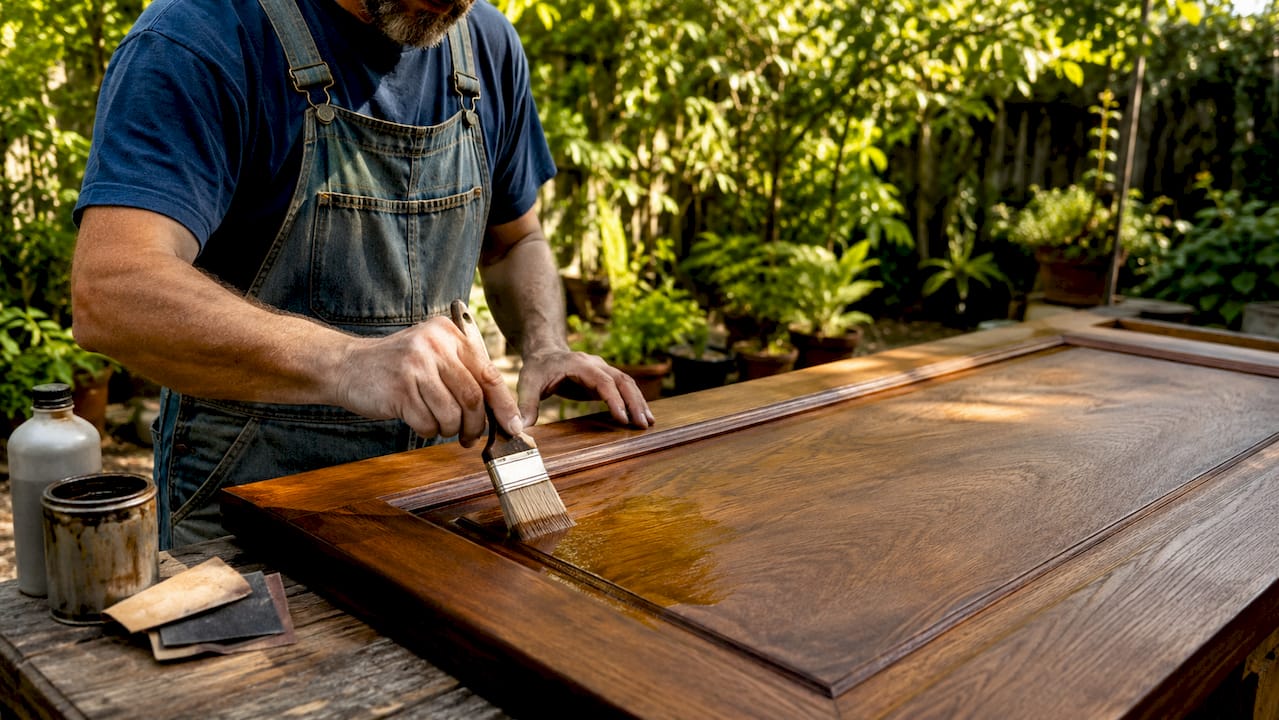
Pro Tip: If you love the look of wood but want less maintenance, choose a solid wood door with a factory-applied finish and a covered entryway to reduce direct weather exposure.
2. fiberglass doors: the 2026 performance standard
Fiberglass doors are the consensus pick for most residential exterior applications in 2026. They resist denting, warping, and corrosion, and they replicate wood grain textures convincingly enough that most visitors cannot tell the difference from ten feet away. Carlton Doors and similar manufacturers offer finish warranties up to 15 years, which is longer than typical steel or wood coatings.
One underreported failure point: finish micro-cracking on fiberglass is caused by insufficient UV protection in the topcoat, not by the fiberglass substrate itself. This means the quality of the finish coating matters as much as the door’s core material. For coastal environments, fiberglass is the clear winner because saltwater corrodes steel and degrades wood far faster than it affects fiberglass composites.
Fiberglass doors also accept foam insulation cores, which improves thermal performance significantly compared to hollow-core alternatives. For homeowners prioritizing energy costs, this is a material worth the mid-range price premium.
3. steel doors: best security at the lowest entry price
Steel doors offer the highest forced-entry resistance of any residential door material and typically cost less upfront than wood or fiberglass. They come standard with insulated cores that improve energy efficiency, making them a practical choice for budget-conscious builders who do not want to sacrifice security. For fire-rated applications, steel is the industry standard in commercial and multi-family residential construction.
The main vulnerability is rust. Without a quality galvanized coating or regular touch-up painting, steel doors will corrode at the edges and bottom rail within a few years in humid or coastal climates. Steel doors also dent more visibly than fiberglass, and dents are difficult to repair without full panel replacement.
For security-focused upgrades in urban settings, steel doors excel in fire resistance and forced-entry protection. Ufiredoors specializes in UL-approved fire-rated steel doors built and installed in New York City, which is a practical option for commercial and residential projects that require code compliance alongside security.
4. aluminum doors: lightweight and built for modern architecture
Aluminum doors are the preferred choice for large-format, pivot-style, and automated entry systems in premium commercial and architectural projects. Aluminum storefront stiles are narrow, typically 1-3/4 to 2 inches, and require specialized hardware that is not interchangeable with standard steel door components. That specificity makes aluminum a poor fit for standard residential replacement projects but an excellent fit for modern glass-and-metal facades.
Aluminum does not rust, which makes it well-suited for coastal and high-humidity environments. It is also significantly lighter than steel, which reduces stress on hinges and automated door operators over time. The downside is lower impact resistance compared to steel, and aluminum frames can conduct cold in winter without thermal break technology built into the profile. Read more about aluminum door advantages before specifying them for your next project.
5. composite doors: engineered for balanced performance
Composite doors combine materials, typically a timber or foam core wrapped in glass-reinforced plastic (GRP) or fiberglass skins, to deliver properties that no single material achieves alone. They resist warping, do not require painting, and hold their shape across a wider temperature range than solid wood. In the UK market, composite doors dominate the residential replacement segment. In the U.S., they are gaining ground as homeowners become more aware of their long-term cost advantages.
The key selling point is dimensional stability. A composite door will not swell shut in summer or shrink and draft in winter the way a wood door can. Quality composite doors from manufacturers like Endura and Therma-Tru carry multi-decade warranties on their structural core. For builders working in climates with extreme seasonal temperature swings, composite is worth serious consideration.
6. vinyl (uPVC) doors: budget-friendly and low maintenance
Vinyl doors, sold as uPVC (unplasticized polyvinyl chloride) in most product catalogs, are the most affordable door material option for interior and light-duty exterior applications. They do not rot, do not require painting, and resist moisture effectively. For interior utility doors, closet entries, and secondary exterior doors in mild climates, vinyl performs reliably at a low cost.
The limitation is structural. Vinyl lacks the rigidity of steel or fiberglass, which makes it unsuitable for high-security applications or large exterior openings. In extreme heat, some vinyl formulations soften and distort. For primary entry doors in regions with high UV exposure or temperature extremes, manufacturer marketing generalizations can mislead, and thermal stability data should be verified before specifying vinyl in harsh environments.
7. glass doors: modern aesthetics with specific security needs
Glass doors, built with tempered or laminated safety glass, are standard in commercial storefronts, interior office partitions, and contemporary residential entries. Tempered glass is four to five times stronger than standard glass and shatters into small, blunt fragments rather than sharp shards. Laminated glass adds a plastic interlayer that holds the pane together on impact, which improves both security and sound insulation.
For residential use, full-glass entry doors require laminated glass with a security film to meet forced-entry resistance standards. Frameless glass doors in interior applications are primarily aesthetic choices. In commercial settings, glass doors are almost always paired with aluminum frames, which is why the two materials are frequently specified together in architectural projects.
Door material comparison: durability, security, and cost
Choosing the right material requires comparing performance across the factors that matter most to your project.
| Material | Lifespan | Security Level | Maintenance | Cost Range |
|---|---|---|---|---|
| Wood | 20–50 years | Moderate | High | $$$ |
| Fiberglass | 25–50 years | High | Low | $$ |
| Steel | 20–40 years | Very High | Low to Medium | $ |
| Aluminum | 30–50 years | Moderate | Very Low | $$$ |
| Composite | 30–50 years | High | Very Low | $$ |
| Vinyl (uPVC) | 15–25 years | Low | Very Low | $ |
| Glass | 20–30 years | Low to High | Low | $$–$$$ |
Finish warranties tell you more than marketing copy. Fiberglass doors with 15-year finish warranties signal that the manufacturer has confidence in UV and weather resistance. Steel doors without galvanized coatings will show rust at cut edges within five years in humid climates. Door durability depends more on frame sealing and threshold design than on door material alone, which is a fact most buyers overlook entirely.
Pro Tip: Ask your supplier for the specific UV protection rating on any fiberglass or composite door finish before purchasing. A door that looks identical to a competitor’s product may carry a five-year finish warranty versus a fifteen-year one.
How environment and use should drive your material choice
Climate and site conditions narrow your options faster than any other factor.
- Coastal environments: Fiberglass is the consensus choice for saltwater exposure because it does not corrode. Steel requires aggressive coating maintenance within a mile of the ocean.
- High UV and heat (central U.S.): Thermal stability and UV resistance are critical in harsh climates. Fiberglass and composite outperform vinyl and uncoated steel in these conditions.
- Security-first applications: Steel is the top choice for forced-entry resistance and fire ratings. For commercial buildings, check fire door compliance standards before specifying any material.
- Modern architectural projects: Aluminum is the standard for large pivot doors, automated entries, and glass-and-metal facades where weight and corrosion resistance matter.
- Moderate climates with aesthetic priorities: Wood remains the premium choice where maintenance is manageable and curb appeal is the primary driver.
No one door material is universally ideal. Best performance comes from integrated door-frame-hardware systems engineered together, not from selecting a door material in isolation.
What types of door frames work with each material
Door frames are not interchangeable across materials or installation contexts. The frame determines sealing quality, structural integrity, and fire rating performance.
- Hardwood and engineered timber frames pair with wood and composite doors for residential exterior applications. They provide the rebate depth and threshold design needed to seal against weather effectively.
- Steel frames are the standard for fire-rated steel doors in commercial and multi-family construction. Welded steel frames suit masonry and concrete walls; knock-down frames suit metal stud walls and retrofits.
- Aluminum frames are specified with aluminum and glass doors in storefront and curtain wall systems. They require thermal break profiles in cold climates to prevent condensation and heat loss.
- MDF and softwood frames are appropriate for interior doors only. They lack the structural strength and weather resistance for exterior use.
In commercial construction, welded frames are used with masonry or concrete walls, while knock-down frames suit retrofits or metal stud walls. Incorrect frame selection causes construction delays and code compliance failures. Even premium fiberglass or steel doors fail prematurely if moisture intrudes at the frame-to-wall interface. The frame is not a secondary decision. It is half the system.
Key takeaways
The best door material is determined by climate, security requirements, and frame compatibility, not by price or appearance alone.
| Point | Details |
|---|---|
| Fiberglass leads in 2026 | It offers the best balance of durability, low maintenance, and finish warranty for most exterior applications. |
| Steel wins on security and fire rating | Steel is the top material for forced-entry resistance and fire-rated commercial or residential doors. |
| Frame quality drives longevity | Even the best door material fails early if the frame sealing and threshold design are poor. |
| Climate narrows your options fast | Coastal sites favor fiberglass; high-UV climates require verified thermal stability ratings on any material. |
| Integrated systems outperform isolated choices | Door, frame, and hardware must be specified together for reliable long-term performance. |
What i’ve learned after years of watching door choices go wrong
Most homeowners and builders focus almost entirely on the door slab itself. They compare prices, look at finishes, and pick the material that fits the budget. Then they wonder why the door is drafting, warping, or rusting within five years. The frame and threshold are where most failures actually start.
I have seen fiberglass doors from reputable manufacturers develop finish cracking within three years because the installer used a frame with inadequate weather stripping and the door faced direct southwest sun. The fiberglass was fine. The system around it failed. That distinction matters enormously when you are specifying a door for a building that needs to perform for decades.
My honest recommendation: treat the door, frame, hardware, and finish warranty as one purchasing decision, not four separate ones. If a supplier cannot tell you the UV protection rating on the finish or the frame anchoring method for your wall type, find a different supplier. The fire-rated residential door segment is where I see this done right most consistently, because code compliance forces the integrated system approach that every door installation deserves.
Wood is still my personal favorite for a covered residential entry in a moderate climate. Nothing else delivers that warmth and craftsmanship. But I would never specify it for a coastal property or a high-traffic commercial entry without a serious conversation about maintenance commitments and finish protection.
— Esteban
Ufiredoors builds the steel doors your project requires
Ufiredoors is a New York-based manufacturer and installer of fire-rated steel doors, frames, and commercial door hardware with over 20 years of experience. Every door is built locally using UL-approved materials to meet fire safety codes and forced-entry standards.
Whether you need a steel stiffened door with a free site estimate or a fast-turnaround fire-rated steel door installation for a commercial or residential project in New York City, Ufiredoors delivers in 3–5 days. The team handles fabrication, installation, and ongoing maintenance so you get a complete door system, not just a slab. Contact Ufiredoors directly for a tailored solution built to your exact specifications and local code requirements.
FAQ
What is the most durable door material?
Fiberglass and composite doors offer the best long-term durability for most exterior applications, with lifespans of 25–50 years and low maintenance requirements. Steel is the most durable option specifically for security and fire resistance.
Which door material is best for coastal climates?
Fiberglass is the top choice for coastal environments because it does not corrode from saltwater exposure the way steel does and does not absorb moisture like wood.
How do i choose between wood vs metal doors?
Choose wood for premium aesthetics in moderate climates where you can commit to regular maintenance. Choose steel when security, fire rating, or budget is the primary driver.
What are the main types of door frames?
The main types of door frames are hardwood or engineered timber for residential exterior use, steel for fire-rated commercial applications, aluminum for storefront and glass systems, and MDF or softwood for interior doors only.
Do door frames affect fire ratings?
Yes. A fire-rated steel door requires a compatible fire-rated steel frame to maintain its code-compliant rating. The door and frame are tested and certified as a system, not as separate components.