
An exit device is a mechanical door hardware assembly engineered to allow immediate, single-motion egress from a building, typically requiring no more than 15 pounds of force to operate. You may also hear it called panic hardware or a crash bar. These terms all describe the same category of emergency exit hardware governed by ANSI standards and local building codes. For property managers and facility managers, understanding exit devices is not optional. Getting them wrong means failed inspections, liability exposure, and real danger to occupants during emergencies.
What is an exit device and how does it work?
An exit device works through a horizontal actuating bar or pushpad mounted across the interior face of a door. When a person pushes the bar, it retracts the latch bolt and releases the door in a single motion. No turning, no gripping, no key required from the inside.
Latch bolts retract simultaneously in vertical rod configurations, engaging both the top and bottom of the door frame at once. This matters in high-traffic corridors where door alignment shifts over time. The latch automatically re-engages when the door closes, so the door never stays unlatched after use.
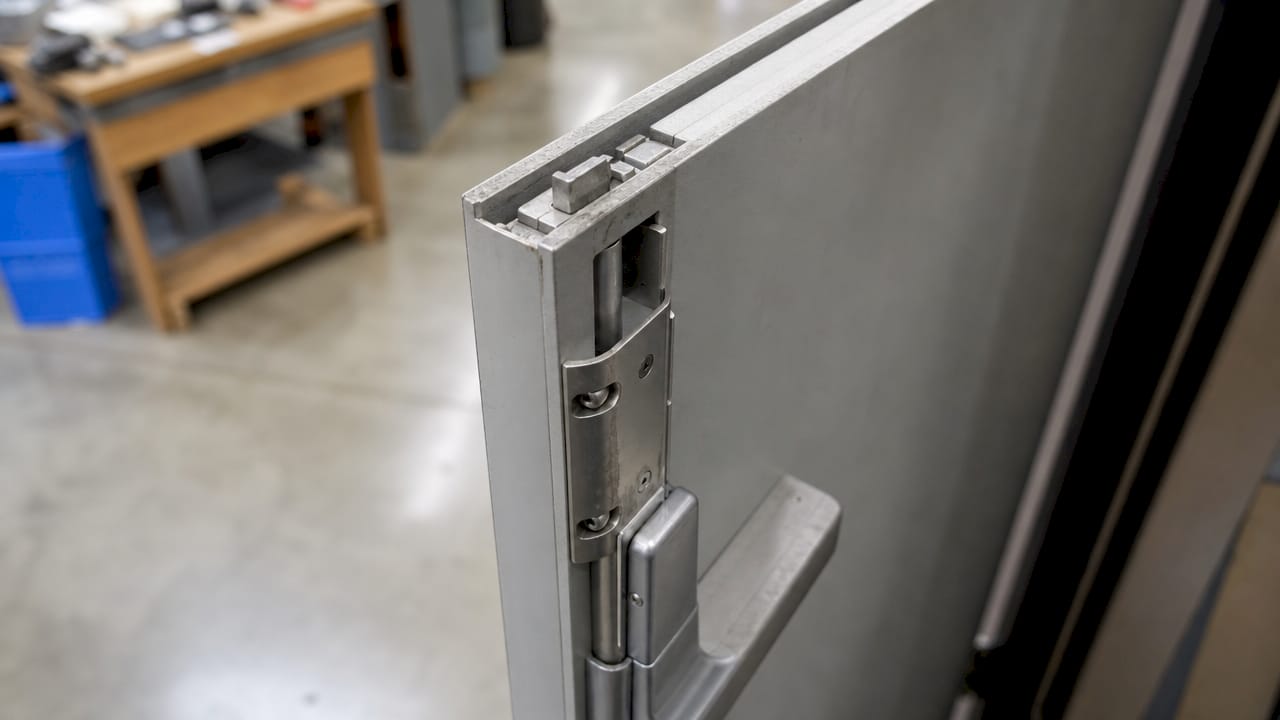
Most exit devices also integrate with electric strikes, magnetic locks, or access control systems. That integration lets you control entry from the outside while preserving free egress from the inside. The result is a door that stays locked to unauthorized visitors but opens instantly for anyone leaving.
Pro Tip: If your building uses an access control system, confirm that your exit device is compatible with electric dogging or electric latch retraction before purchasing. Retrofitting later costs significantly more than specifying correctly upfront.
What are the main types of exit devices?
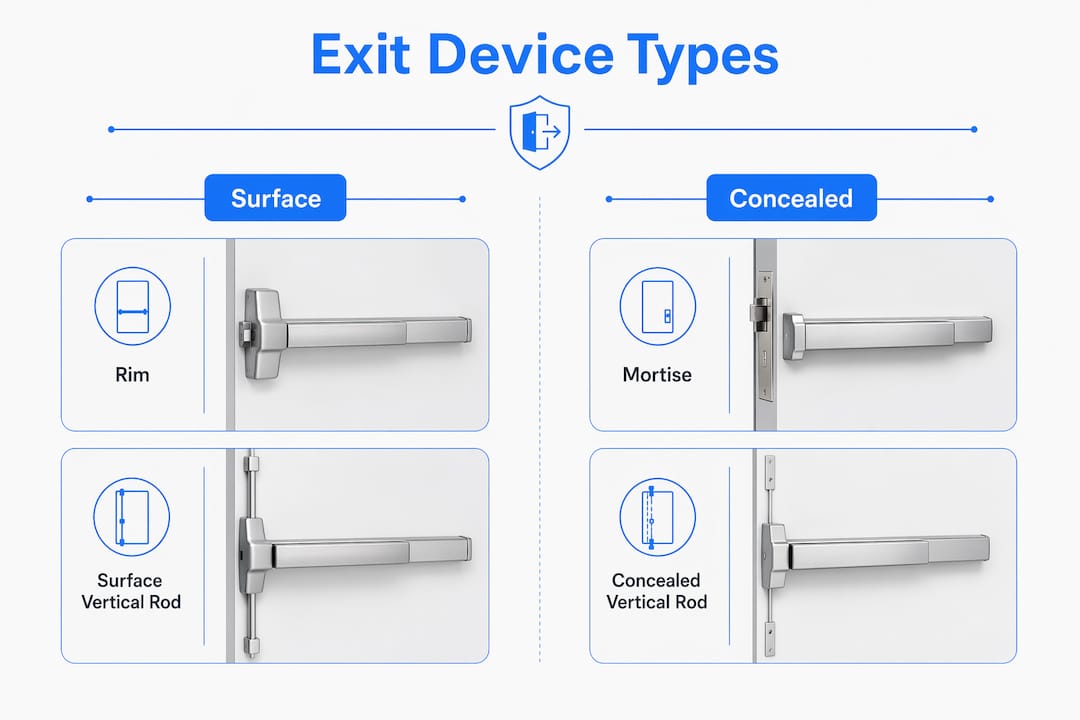
The four primary types of exit devices are Rim, Mortise, Surface Vertical Rod, and Concealed Vertical Rod. Each type differs in how it latches to the door frame and where its components are mounted.
| Type | Latching method | Best for | Key consideration |
|---|---|---|---|
| Rim | Surface-mounted, strikes rim of frame | Single doors | Easiest to install and maintain |
| Mortise | Mortised into door edge | Single doors needing high security | Requires thicker door preparation |
| Surface Vertical Rod | Rods run on door surface to top and bottom | Pairs of doors | Visible rods; lower cost |
| Concealed Vertical Rod | Rods hidden inside door | Pairs of doors needing clean appearance | Higher cost; more complex service |
Rim devices are the most common choice for single doors. Rim devices are generally easier to maintain and better suited for single-door applications, while vertical rod devices provide superior latching for pairs of doors without astragals. That distinction matters when you manage a building with double-door fire exits.
Concealed vertical rod devices offer a cleaner look but require more labor to service. Surface vertical rod devices expose the rods along the door face, which some facility managers find easier to inspect during routine walkthroughs. Mortise devices sit inside the door edge and deliver the tightest security profile, but they demand precise door preparation during installation.
Pro Tip: For pairs of doors where you want to remove the center mullion, rim devices with removable mullions often provide better security and easier alignment than vertical rod alternatives. Specify this configuration when ordering.
When do building codes require exit devices?
Building codes mandate exit devices based on occupancy load and door use. The threshold most facility managers encounter is 50 occupants. For rooms holding more than 50 occupants, panic hardware is strongly advised to prevent crushing hazards when occupants push doors en masse during an emergency.
The logic is straightforward. A crowd in a panic does not stop to turn a knob. Exit devices are designed for exactly that scenario.
Code requirements that typically apply include:
- Occupancy load thresholds. Spaces classified as assembly, educational, or high-occupancy require panic hardware on egress doors when occupant loads exceed code minimums.
- Fire-rated door requirements. Fire-rated doors must maintain positive latching at all times. Mechanical dogging is prohibited on fire-rated doors because holding the latch open defeats the door’s ability to stop fire and smoke spread.
- Egress path compliance. Doors on required egress paths must open with a single motion and without special knowledge or effort, per the International Building Code and NFPA 101.
- Local amendments. New York City, for example, applies its own building code amendments on top of model codes. Always verify local requirements with your authority having jurisdiction.
Exit devices are also recommended for rooms with capacity over 50 people even when not strictly mandated. Installing panic hardware on non-required doors is a low-cost way to reduce liability and improve occupant safety. Review your egress door code obligations before your next inspection cycle.
What are the benefits of exit devices beyond code compliance?
Exit devices deliver real operational value beyond satisfying an inspector. Here are the five benefits that matter most to property and facility managers:
- Faster emergency egress. Single-motion operation removes the cognitive load of turning a handle under stress. Occupants exit faster, which reduces injury risk in fires, active threats, and other emergencies.
- Maintained building security. Exit devices allow buildings to remain locked from the outside while permitting free egress from the inside. You get security without sacrificing safety.
- Reduced occupant injury. Panic hardware is designed so a door opens if someone falls against it. That design principle, often called “when in doubt, let them out,” prevents crushing and trampling at bottleneck exits.
- Durability in high-traffic areas. Commercial-grade exit devices are built for thousands of cycles per year. They outlast standard lever hardware on busy egress doors by a wide margin.
- Access control integration. Modern exit devices pair with card readers, intercoms, and alarm systems. That integration gives facility managers real-time data on door use and unauthorized access attempts.
The security benefit deserves extra attention. Many building owners assume that free egress means a security gap. It does not. The outside of the door remains locked. Only the inside push function is always available. That balance is the core design principle of every exit device on the market.
How to select and install exit devices correctly
The right exit device depends on four factors: door type, fire rating, mounting method, and usage frequency. Getting any one of these wrong creates either a code violation or a hardware failure within months.
The choice of exit device depends critically on door configuration, fire rating, and mounting methods to comply with codes and operational needs. Start with the door itself. A hollow metal door handles rim and mortise devices well. A glass door or aluminum storefront door requires a device rated for that substrate.
Common pitfalls to avoid during selection and installation:
- Dogging on fire-rated doors. Never specify mechanical dogging on a fire-rated opening. Use electric dogging only, and confirm it fails to the latched position on alarm.
- Incorrect backset. Exit devices have specific backset requirements. Measure the door thickness and stile width before ordering.
- Bottom rod trip hazards. Less-bottom-rod configurations eliminate trip hazards but must still meet positive latching requirements per code. Confirm compliance before removing bottom rods.
- Skipping fire label verification. Fire-rated doors require exit devices with matching fire labels. An unlabeled device on a labeled door voids the door assembly’s rating.
- Neglecting periodic adjustment. Exit devices drift out of alignment over time, especially on high-use doors. Schedule routine door maintenance at least annually.
Pro Tip: Always request the manufacturer’s installation template before drilling. Exit device mounting holes are precise, and a misaligned hole in a fire-rated door cannot be patched without voiding the label.
For a deeper look at hardware selection, the panic hardware buyer’s guide from Ufiredoors covers grade ratings, finish options, and specification checklists for commercial projects.
Key Takeaways
Exit devices are the single most critical piece of hardware on any high-occupancy egress door, and selecting the wrong type or skipping maintenance creates both code violations and genuine safety risk.
| Point | Details |
|---|---|
| Core function | Exit devices allow single-motion egress requiring no more than 15 pounds of force. |
| Four device types | Rim, Mortise, Surface Vertical Rod, and Concealed Vertical Rod each suit different door configurations. |
| Code threshold | Spaces with more than 50 occupants typically require panic hardware on egress doors. |
| Fire door restriction | Mechanical dogging is prohibited on fire-rated doors; always use electric dogging that fails latched. |
| Security balance | Exit devices keep the outside locked while allowing free egress from the inside at all times. |
What I have learned managing exit hardware in the field
Working around commercial door hardware for years, the mistake I see most often is treating exit devices as a one-time purchase. Facility managers specify the hardware, install it, and move on. Then two years later, a vertical rod device is misaligned, the latch is not catching, and nobody noticed because the door still opens when you push it.
The problem is that “opens when you push it” is not the same as “latches when it closes.” A door that does not latch positively fails its fire rating silently. You will not know until an inspector flags it or, worse, until a fire tests it.
My honest recommendation: treat exit device inspection as part of your quarterly fire door audit, not a separate task. Check latch engagement, rod alignment, and pushpad tension at the same time you check door gaps and closer speed. It takes five minutes per door and catches problems before they become violations.
The other thing I would tell any facility manager is to stop treating the “when in doubt, let them out” principle as a liability concern. It is the right design philosophy. A building that makes egress easy saves lives. Pair that with proper access control on the outside, and you have a door that does both jobs well.
— Esteban
Ufiredoors: steel doors built for exit hardware
Exit devices perform only as well as the doors they are mounted on. A misaligned frame or an undersized steel stiffener will cause even a top-grade panic bar to fail prematurely. Ufiredoors manufactures and installs fire-rated steel doors built to UL-listed standards, with frames fabricated to accept commercial exit hardware from the start. Every door ships with the correct preparation for rim, mortise, or vertical rod devices, so your hardware installs correctly and your opening passes inspection. With over 20 years of experience serving New York commercial properties, Ufiredoors delivers steel stiffened doors with fast lead times and full installation support. Get a free site estimate and put the right foundation under your exit hardware.
FAQ
What is the difference between a panic bar and an exit device?
A panic bar is a common name for an exit device, specifically the horizontal bar style. Exit device is the broader industry term that includes rim, mortise, and vertical rod configurations.
Are exit devices required on all commercial doors?
Exit devices are required on egress doors serving occupancies above code-specified thresholds, typically spaces with more than 50 occupants. Not every commercial door requires one, but any door on a required egress path in a high-occupancy space does.
Can exit devices be used on fire-rated doors?
Exit devices can be installed on fire-rated doors, but they must carry a matching fire label. Mechanical dogging is prohibited on fire-rated openings because it prevents the door from latching and stops fire and smoke spread.
How often should exit devices be inspected?
Exit devices should be inspected at least annually as part of a fire door audit. High-traffic doors benefit from quarterly checks to catch latch misalignment and rod drift before they create code violations.
What does “dogging” mean on an exit device?
Dogging holds the latch retracted so the door operates as a simple push-pull door without triggering the exit device mechanism. Electric dogging is permitted on non-fire-rated doors; mechanical dogging is never permitted on fire-rated assemblies.