
Emergency repair service is defined as immediate, unscheduled maintenance required when a building failure poses an acute threat to human safety, risks extensive property damage, or renders a space uninhabitable. Property owners and managers who understand this definition make faster, smarter decisions when a crisis hits. The industry standard for initial dispatch response is 45–60 minutes, with full resolution typically within 1–3 hours. Knowing what qualifies as a true emergency, and what does not, separates a controlled response from a costly overreaction.
What situations qualify as emergency repairs?
Emergency repair service applies when a failure creates an immediate risk to life, threatens to cause cascading structural damage, or eliminates a critical utility. Three categories drive most emergency calls in commercial and residential properties.
Plumbing failures are the most common trigger. A burst pipe actively flooding a basement qualifies. A slow drip under a sink does not. The distinction matters because after-hours emergency rates can run significantly higher than standard service fees.
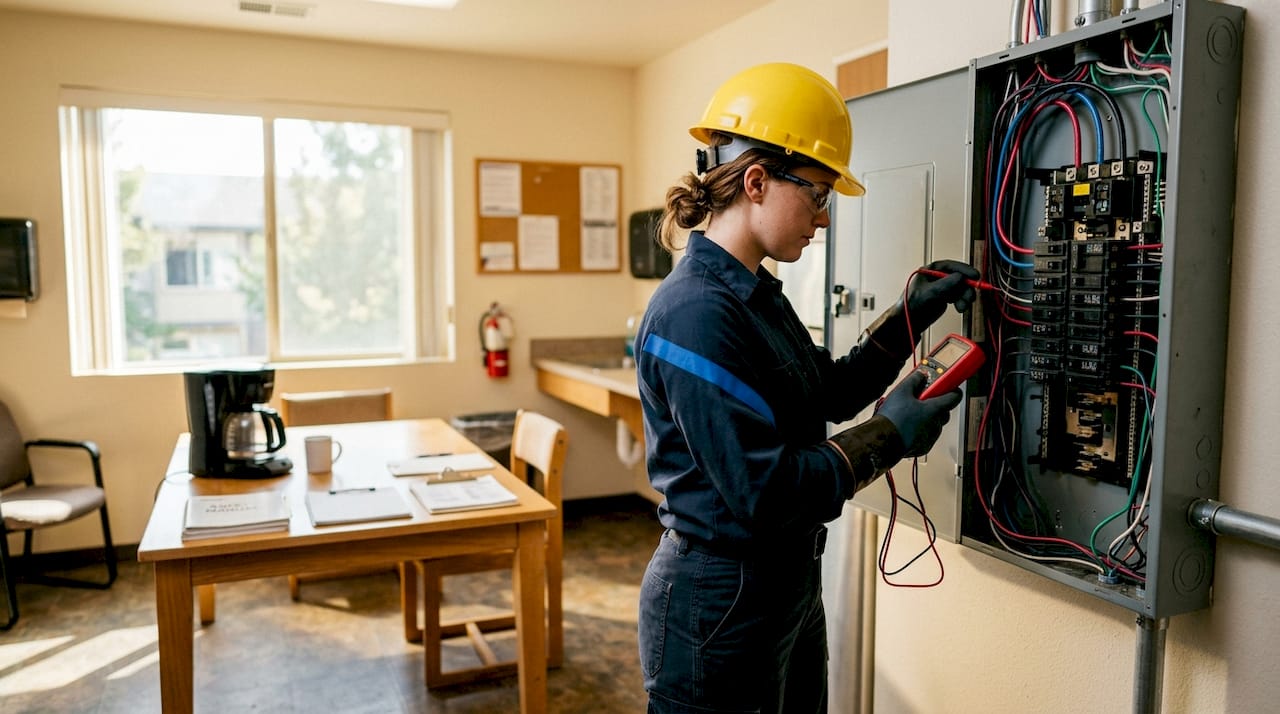
Electrical faults represent the highest safety risk. A tripped breaker is not an emergency. A burning smell from a panel, exposed live wiring after storm damage, or a short that kills power to an entire floor all qualify for immediate intervention.
Structural and security failures include fire damage to load-bearing elements, a collapsed ceiling, or a compromised entry point that leaves a building unsecured. A damaged fire door that no longer latches properly falls into this category because it eliminates a critical fire barrier.
Common emergency repair categories include:
- Burst or leaking pipes causing active flooding
- Electrical shorts, panel failures, or exposed live wiring
- Total loss of heating in freezing temperatures
- Fire or smoke damage to structural or safety components
- Broken entry doors, locks, or fire exits that compromise security
- HVAC failure in extreme heat affecting vulnerable occupants
Pro Tip: Not every urgent problem is a true emergency. A non-functioning dishwasher or a broken interior door handle is urgent but not an emergency. Calling it one costs you after-hours fees without the benefit of priority dispatch.
How does emergency repair work from call to resolution?
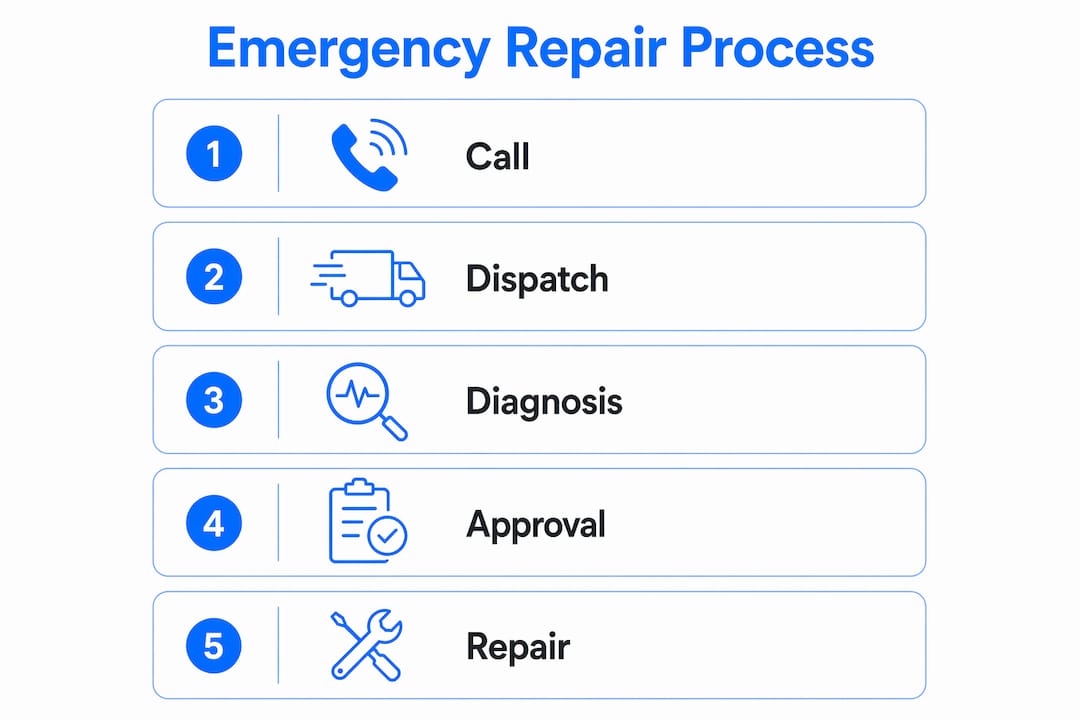
Understanding how emergency repair services operate helps property owners get faster results and avoid miscommunication under pressure. The process follows a consistent sequence across most professional providers.
Initial call intake. The dispatcher collects your exact address, a description of the failure, and whether you have already isolated the problem (shut off water, cut power to a circuit, or secured the area). Providing a structured summary of what happened, where, and the current utility status speeds up dispatch and prioritization.
Dispatch and arrival. A qualified technician is sent within the industry-standard 45–60 minute window. Verify at the time of your call whether the provider dispatches directly or routes through a call center. Many “24/7” emergency lines are handled by call centers rather than direct dispatchers, which can add meaningful delays before a technician is even assigned.
On-site diagnosis. The technician assesses the failure, identifies the root cause, and provides a written estimate for any work beyond the initial diagnostic fee. No reputable provider proceeds with major repairs without your approval.
Repair and documentation. The technician completes the repair and provides a written record of work performed. Professional providers document the failure with photos and a detailed report. That documentation supports insurance claims and future maintenance planning.
Follow-up assessment. For complex failures like water intrusion or fire damage, a follow-up visit confirms that secondary damage has not developed. This step is often skipped by general handymen but is standard practice among specialized providers.
Pro Tip: When you call, lead with the utility status. “The water is shut off” or “the circuit is isolated” tells the dispatcher the immediate risk is contained and helps them prioritize your call accurately.
What costs should property owners expect for emergency repairs?
Emergency repair costs vary by failure type, severity, and time of call. Understanding the billing structure before a crisis hits prevents unpleasant surprises when you are already under pressure.
Most providers charge a flat diagnostic fee covering the first hour of labor. This fee applies regardless of whether you proceed with the repair. For after-hours calls, that base fee is typically higher than standard rates. As of 2026, some 24/7 providers have eliminated emergency surcharges entirely, so it is worth asking directly when you call.
The table below outlines typical cost ranges by repair type.
| Repair Type | Typical Cost Range | Key Variable |
|---|---|---|
| Diagnostic fee (first hour) | $75–$200 | Time of day, provider type |
| Burst pipe repair | $200–$1,000 | Pipe location, extent of damage |
| Water damage remediation | $500–$5,000 | Area affected, drying time required |
| Electrical fault repair | $150–$800 | Complexity, parts required |
| Fire door repair or replacement | $300–$2,500 | Door type, code compliance requirements |
| HVAC emergency service | $200–$1,500 | System type, parts availability |
Approval before major work begins is non-negotiable with any reputable provider. If a technician pressures you to authorize work without a written estimate, that is a warning sign. Transparent billing protects you legally and financially.
How can property owners prepare for emergency repair situations?
Preparation reduces both the frequency and the cost of emergency repairs. The most effective property managers treat emergency readiness as a standing protocol, not a reactive scramble.
Defining emergencies clearly in lease agreements is the single most important step for landlords managing tenants. Leases that lack explicit definitions create liability exposure and tenant disputes. A well-drafted lease specifies which failures qualify for emergency response, who to call, and what tenants must do first (such as shutting off water at the main valve).
Key preparation steps for property owners and managers:
- Maintain a written emergency contact list with provider names, phone numbers, and service categories (plumbing, electrical, HVAC, structural)
- Post utility shutoff locations (water main, electrical panel, gas valve) in accessible areas and include them in tenant orientation
- Establish a pre-approved provider relationship so you are not searching for a contractor at 2:00 AM
- Define emergency versus non-emergency repairs in all lease and management agreements
- Keep a dedicated emergency repair fund separate from routine maintenance budgets
Post-repair documentation is equally critical. Photos, vendor invoices, and written repair reports support insurance claims, satisfy code compliance audits, and feed directly into your long-term maintenance plan. General handymen rarely provide this level of documentation. Specialized providers do.
The financial case for preparation is straightforward. A pre-approved provider relationship typically means faster dispatch, negotiated rates, and a technician already familiar with your building’s systems. That familiarity alone can cut diagnostic time significantly.
Key Takeaways
Emergency repair service is a last-resort intervention for genuine safety threats, and property owners who prepare protocols, define emergencies clearly, and document every repair will spend less and recover faster.
| Point | Details |
|---|---|
| Clear definition matters | Emergency status requires an immediate threat to safety, property, or habitability. Not every urgent issue qualifies. |
| Response time standard | Industry dispatch targets are 45–60 minutes, with full resolution typically within 1–3 hours. |
| Billing transparency | Reputable providers charge a flat diagnostic fee and require written approval before proceeding with major repairs. |
| Lease definitions protect owners | Leases with explicit emergency repair definitions reduce tenant disputes and limit landlord liability. |
| Documentation drives compliance | Post-repair photos, invoices, and reports support insurance claims and code compliance audits. |
Why I think most property managers misuse emergency repair service
Emergency repair service is necessary. It is also one of the most misused tools in property management. After working with building owners across commercial and residential properties, the pattern I see most often is this: managers treat emergency repair as the default response to any unexpected failure, then wonder why their maintenance budgets are consistently over.
The real issue is that emergency repair is reactive by design. It exists to catch failures that slip through preventive maintenance. When it becomes the primary maintenance strategy, costs compound fast and system degradation accelerates. A rapid response maintenance program, one that catches early warning signs before they become failures, consistently outperforms emergency-only approaches on both cost and building reliability.
The second mistake I see is poor triage. A tenant calls at midnight reporting “no heat.” The manager dispatches an emergency HVAC technician at premium rates. The technician arrives and finds a tripped breaker. That call cost $300 and took 90 minutes. A simple troubleshooting checklist given to tenants at move-in would have resolved it in five minutes. Triage is a skill, and it is worth building into your protocols before you need it.
My practical advice: build a tiered response system. True emergencies (active flooding, fire damage, total power loss, security breaches) get immediate emergency dispatch. Urgent but non-critical issues (broken appliance, minor leak, HVAC underperformance) get next-business-day service. That single distinction will reduce your emergency repair spend meaningfully without compromising tenant safety.
— Esteban
Ufiredoors provides expert emergency door repair when it matters most
When a fire door fails, a building entrance is compromised, or an exit becomes non-compliant after an incident, the repair cannot wait. Ufiredoors has served New York property owners and managers for over 20 years with emergency fire door repair and replacement services built around fast response, UL-approved materials, and full code compliance.
Every repair Ufiredoors completes uses locally fabricated steel doors and frames built to UL standards, so your building stays compliant after the fix, not just functional. Free site estimates are available for fire-rated steel doors and emergency replacements. Whether you need a same-day repair or a planned replacement after an incident, Ufiredoors delivers professional workmanship with transparent pricing and no hidden fees. Contact Ufiredoors directly to schedule an assessment or request emergency service.
FAQ
What is emergency repair service in property management?
Emergency repair service is immediate, unscheduled maintenance triggered by failures that threaten safety, cause major property damage, or make a building uninhabitable. Common triggers include burst pipes, electrical faults, fire damage, and compromised entry points.
How fast should an emergency repair provider respond?
Industry standards target dispatch or arrival within 45–60 minutes of the initial call, with most repairs resolved within 1–3 hours depending on complexity and parts availability.
Are emergency repairs more expensive than standard service calls?
Emergency repairs typically carry higher base fees due to after-hours labor and priority dispatch. Costs for water damage remediation alone range from $500 to $5,000. Some providers have eliminated emergency surcharges as of 2026, so confirming the fee structure at the time of your call is worth doing.
What information should I give when calling for emergency repair?
Provide the exact address, a clear description of the failure, and the current utility status (whether water, power, or gas has been isolated). This structured summary helps dispatchers prioritize your call and assign the right technician faster.
Does a broken fire door count as an emergency repair?
A fire door that no longer latches, closes, or maintains its rated seal qualifies as an emergency because it eliminates a critical fire barrier required by code. Emergency exit door failures that compromise building egress carry the same urgency.