
Fire door relabeling is the authorized process of replacing a missing, painted-over, or illegible fire-rated assembly label with a new permanent label issued by an accredited testing and listing agency. Under NFPA 80, a fire door without a legible label is treated as non-rated, regardless of its physical condition. That single fact carries enormous consequences for property managers, building owners, and safety compliance officers who face annual inspections, insurance audits, and life-safety obligations. Labels from agencies like UL and Intertek are not decorative. They are traceable proof that a specific door assembly was tested and certified to contain fire and smoke for a defined period.
The distinction between relabeling and replacement is where most compliance mistakes happen. Relabeling is permitted only when the door assembly itself remains compliant. The moment unauthorized modifications enter the picture, the label’s validity is voided and replacement becomes the only path forward. Understanding that boundary before an inspection saves time, money, and significant regulatory exposure.
What is fire door relabeling and when is it required?
Fire door relabeling is the process of replacing an invalid fire-rated assembly label with a new permanent label issued by an accredited testing or listing agency. NFPA 80 is explicit: if a label is painted over, removed, or damaged beyond legibility, the door is treated as non-rated and requires either relabeling or full replacement. That standard applies to every fire door in service, from a hospital stairwell to a Manhattan apartment corridor.
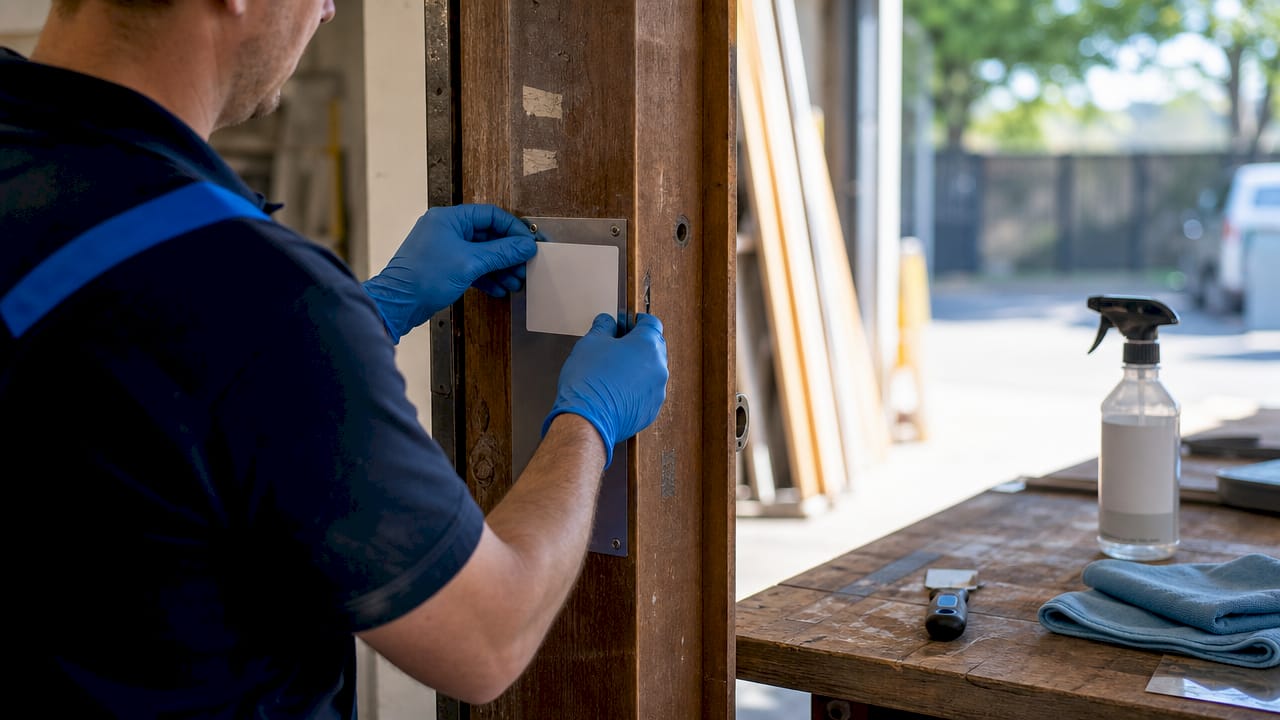
Labels function as an assembly’s identity card, linking the installed door to a full tested configuration. Agencies like UL, Intertek, and FM Approvals each maintain listing files that document the exact combination of door leaf, frame, hardware, glazing, and seals that earned a specific fire rating. When a label is lost or defaced, the connection between that physical door and its tested configuration is severed. Relabeling restores that connection, but only after a field evaluation confirms the assembly still matches the original listing.
Label issues are among the most frequent non-compliance findings during fire door inspections because labels must remain intact for the assembly’s entire service life. That makes relabeling one of the most common corrective actions property managers encounter after a failed inspection.
When can you relabel vs. when must you replace?
The relabeling decision hinges on one question: does the current door assembly match the original tested configuration? If the answer is yes, relabeling is the appropriate path. If the answer is no, replacement is required. The following conditions determine which direction you go.
Conditions that allow relabeling:
- The label is missing, painted over, or illegible, but the door leaf, frame, hardware, and seals are original and unmodified.
- The door assembly can be cross-referenced to an existing listing file number from the original certifying agency.
- No field modifications have been made without prior approval from the listing agency.
- The door passes a physical inspection confirming gaps, hardware function, and seal integrity meet NFPA 80 requirements.
Conditions that require replacement:
- Unauthorized field modifications such as hardware changes or added devices void the label and disqualify relabeling. NFPA 80 requires prior approval of any modification to maintain label validity.
- Hardware, glazing, or frame components differ from the original tested listing, making the current assembly a different configuration than what was certified.
- Deviations in components void the label’s validity even if the label is physically attached. A label on a non-compliant assembly provides no legal or safety protection.
- The door has sustained structural damage that affects its ability to perform as rated.
Pro Tip: Before scheduling a relabeling service, photograph every hardware component and note any changes made since the door was originally installed. This pre-check takes 15 minutes and can prevent a wasted field evaluation visit if replacement turns out to be the only option.
How does the fire door inspection process verify label validity?
The fire door inspection process begins with confirming the certification label’s presence, legibility, and rating match before evaluating any other assembly component. This systematic approach ensures the door assembly remains consistent with its tested performance rating. Label verification is not a formality. It is the foundation on which every subsequent inspection step depends.
A qualified inspector following NFPA 80 and Fire Door Alliance Institute (FDAI) criteria works through the assembly in a defined sequence:
- Confirm the label. Verify the label is present, legible, and shows the correct fire rating for the door’s location and use. A 20-minute-rated door in a 90-minute-rated opening is a compliance failure regardless of label condition.
- Inspect the door leaf. Check for warping, holes, or damage that would compromise the door’s ability to contain fire and smoke.
- Examine the frame. Confirm the frame matches the listing and shows no unauthorized modifications or structural damage.
- Verify hardware. Closers, latches, hinges, and coordinators must match the tested configuration. Refer to hardware compatibility requirements to confirm each component is listed for use with the specific door assembly.
- Check seals and glazing. Intumescent seals, smoke seals, and any glazing must match the original listing specifications.
- Measure gaps. Clearances between the door leaf, frame, and floor must fall within NFPA 80 tolerances.
The listing file number on the label is the key to this entire process. Inspectors use it to pull the original tested configuration from the agency’s database and compare it against what is physically installed. If the installed assembly matches the file, relabeling is viable. If it does not, the inspector documents the discrepancies and the owner receives a replacement recommendation instead.
Pro Tip: Request the original listing file number from the door manufacturer or installer before any inspection. Having it on hand accelerates the field evaluation and gives the inspector a direct reference point rather than working backward from an unknown assembly.
Who is authorized to perform fire door relabeling?
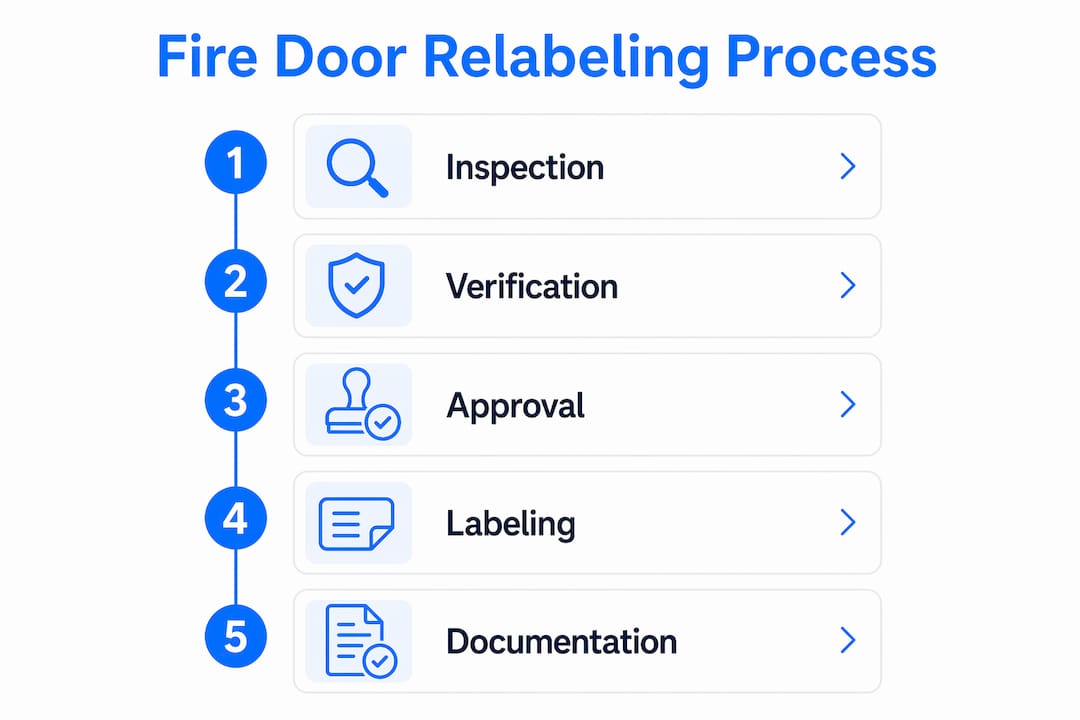
Only accredited agencies and NRTLs (Nationally Recognized Testing Laboratories) can issue new labels after a field inspection confirms the assembly matches the original listing. Building owners and contractors are not authorized to self-relabel under any circumstances. Placing an unofficial label on a fire door does not restore its rating and creates significant liability exposure.
The authorized parties include UL’s field labeling services, Intertek’s field evaluation programs, and other OSHA-recognized NRTLs with fire door listing authority. Each agency sends a trained field evaluator to the site to conduct a physical inspection and documentation review before issuing any replacement label.
What the field evaluation covers:
- Physical inspection of the door leaf, frame, hardware, seals, and glazing against the original listing.
- Documentation review, including original listing numbers and hardware inventories. Without proper documentation, relabeling may be refused, pushing the owner toward full door replacement.
- Confirmation that no unauthorized modifications exist. Facility managers should verify no unauthorized modifications exist before relabeling, as voided labels present one of the biggest compliance risks.
- Issuance of a new permanent label if all criteria are met, or a written denial with documented reasons if they are not.
The field evaluation often requires detailed documentation, including original certifications and hardware identification, to support the relabeling request. Assembling this package before the evaluator arrives is the single most effective way to avoid delays or outright denial.
Pro Tip: Contact the original door manufacturer to request a copy of the listing file before scheduling a field evaluation. Manufacturers like those working with UL-listed assemblies typically maintain these records and can provide them quickly, often at no cost.
What are best practices for maintaining fire door labels?
The most cost-effective compliance strategy is preventing label damage in the first place. Painting over labels without protection remains a leading cause of label damage, and NFPA 80 treats a painted-over label as missing. That means a routine maintenance painting job can trigger a relabeling requirement or, worse, a replacement order.
Property managers and building owners can implement the following practices to protect labels and avoid unnecessary relabeling costs:
- Mask labels before any painting. Use painter’s tape to protect the label area during every painting or refinishing project. This takes seconds and prevents a compliance failure that could cost thousands.
- Prohibit unauthorized hardware changes. Establish a written policy requiring approval from the listing agency before any hardware is added, removed, or swapped on a fire door assembly. A single unapproved hinge change can void the entire label.
- Schedule routine label inspections. Include label legibility checks in your regular fire door maintenance program. Catching a fading or damaged label early allows for proactive relabeling before an official inspection flags it as a deficiency.
- Maintain a documentation file for every fire door. Store original listing numbers, hardware inventories, and installation records in a centralized system. This documentation is the foundation of any successful relabeling request.
- Train maintenance staff on NFPA 80 label requirements. Staff who understand that fire door labels are legally significant are far less likely to paint over them, remove them, or ignore damage. A 30-minute training session can prevent a five-figure compliance problem.
Reviewing commercial fire door regulations annually keeps your team current on any updates to labeling and inspection standards that affect your compliance obligations.
Key takeaways
Fire door relabeling is only valid when the existing assembly matches its original tested listing. Any deviation in hardware, glazing, or frame makes replacement the required path.
| Point | Details |
|---|---|
| Relabeling defined | Replacing a missing or illegible label with a new one issued by an accredited NRTL after field verification. |
| NFPA 80 mandate | A painted-over or missing label renders the door non-rated; corrective action is mandatory before the next inspection. |
| Authorization requirement | Only NRTLs like UL or Intertek can issue replacement labels; building owners and contractors cannot self-relabel. |
| Documentation is decisive | Original listing file numbers and hardware inventories determine whether relabeling is approved or denied. |
| Prevention beats correction | Masking labels during painting and prohibiting unauthorized hardware changes eliminates most relabeling triggers. |
Why relabeling deserves more attention than it gets
Most property managers I speak with treat fire door labels as an afterthought until an inspector flags them. That is a costly mistake, and I say that from watching relabeling projects stall for weeks because a building owner could not locate the original listing file number. The field evaluator shows up, the documentation is incomplete, and the relabeling is denied. Now the owner is looking at full door replacement for a door that was otherwise perfectly functional.
The deeper issue is that labels are treated as administrative details rather than structural compliance components. A fire door label is not a sticker. It is the legal and technical link between a physical door and the tested assembly that earned its rating. Lose that link and you lose the rating, regardless of what the door looks like or how well it closes.
My strongest advice to compliance officers is to build a documentation system before you need it. Every fire door in your building should have a file: original listing number, hardware inventory, installation date, and any approved modifications. That file is worth more than any inspection checklist when a relabeling request is on the table.
The other point worth making is that relabeling projects can stall due to discrepancies in hardware or assembly details. A careful pre-evaluation, where you physically compare installed components against the listing before calling in an NRTL, saves time and eliminates futile relabeling attempts. Partnering with a qualified fire door service provider who understands NFPA 80 at this level is not optional for large facilities. It is the difference between passing inspections and managing a perpetual backlog of corrective actions.
— Esteban
Keep your fire doors compliant with Ufiredoors
When a fire door label is missing or a full assembly replacement is the only path forward, Ufiredoors delivers. As a New York-based manufacturer and installer with over 20 years of experience, Ufiredoors builds fire-rated steel doors using UL-approved materials and installs them in 3 to 5 days. Every door ships with proper labeling and full documentation to satisfy NFPA 80 inspection requirements from day one. For buildings facing failed inspections or label-related deficiencies, Ufiredoors also provides door installation and replacement services tailored to commercial, residential, and industrial properties. Contact Ufiredoors for a free site estimate and get your compliance documentation in order before your next inspection.
FAQ
What is fire door relabeling?
Fire door relabeling is the process of replacing a missing, damaged, or illegible fire-rated assembly label with a new permanent label issued by an accredited NRTL such as UL or Intertek. It requires a field evaluation confirming the door assembly still matches its original tested configuration.
Can a building owner or contractor relabel a fire door themselves?
No. Only accredited agencies and NRTLs are authorized to issue replacement fire door labels. Self-relabeling by building owners or contractors is not permitted under NFPA 80 and provides no legal or safety protection.
What happens if a fire door label is painted over?
NFPA 80 treats a painted-over label as missing, which renders the door non-rated. The building owner must arrange for relabeling by an authorized NRTL or replace the door assembly to restore compliance.
What documentation is needed for a fire door relabeling request?
A successful relabeling request typically requires the original listing file number, a hardware inventory, and any original installation certifications. Without this documentation, the NRTL may deny the relabeling and recommend full door replacement.
When is door replacement required instead of relabeling?
Replacement is required when unauthorized hardware modifications have been made, when assembly components differ from the original tested listing, or when the door has sustained structural damage. In these cases, relabeling cannot restore the door’s certified fire rating.